DNV and NTNU join Samsung Heavy and Tesser’s nuclear LNG carrier project
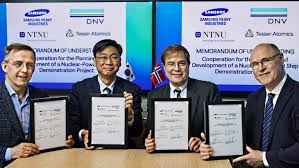
Samsung Heavy Industries is spearheading an ambitious project to create a revolutionary nuclear-powered vessel. This initiative brings together a consortium of leading experts, including Tesser, DNV, and NTNU. The collaboration focuses on vessel design, reactor technology, and maritime safety, aiming to transform the future of shipping.
The project leverages Samsung Heavy’s expertise in shipbuilding to explore feasible construction methods for this groundbreaking vessel. Tesser is responsible for developing the reactor technology, specifically the Triton, a compact fluoride-salt-cooled high-temperature reactor (FHR). This advanced reactor uses TRISO fuel and operates with low-pressure molten salt coolant, allowing for online refueling. The reactor’s design ensures it is small enough to fit within the ship’s hull while delivering sufficient power for propulsion.
According to reports from World Nuclear News, liquefied natural gas (LNG) carriers typically require between 30 to 75 MW of power. The Triton’s energy output is engineered to meet these requirements, potentially revolutionizing the way ships operate. The nuclear module’s compact design and efficient performance promise to enhance the sustainability and operational efficiency of maritime transport.
Collaborative Efforts for Safety and Licensing
Safety and risk assessment are critical components of this nuclear ship project. DNV, a prominent leader in maritime safety, plays a vital role in ensuring that all safety protocols are met. They are tasked with conducting hazard identification and developing a thorough roadmap for classification and verification of the vessel. This rigorous approach enhances the project’s credibility and ensures that safety remains a top priority throughout the development process.
NTNU is also integral to the project’s success. This renowned institution oversees project management, coordinates research activities, and secures funding proposals. Their efforts are focused on building a strong consortium of partners while facilitating simulations, modeling, and testing necessary for the project’s advancement.
The collaboration among these partners signifies a major step forward in the field of nuclear maritime technology. By combining their expertise, they aim to create a safe, efficient, and environmentally friendly alternative to traditional fuel sources in shipping. As the project progresses, it could pave the way for a new era of nuclear-powered vessels, reshaping the industry’s landscape and contributing to global sustainability goals.
