
Alang Shipyard Faces Crisis Amid Global Shipping Boom
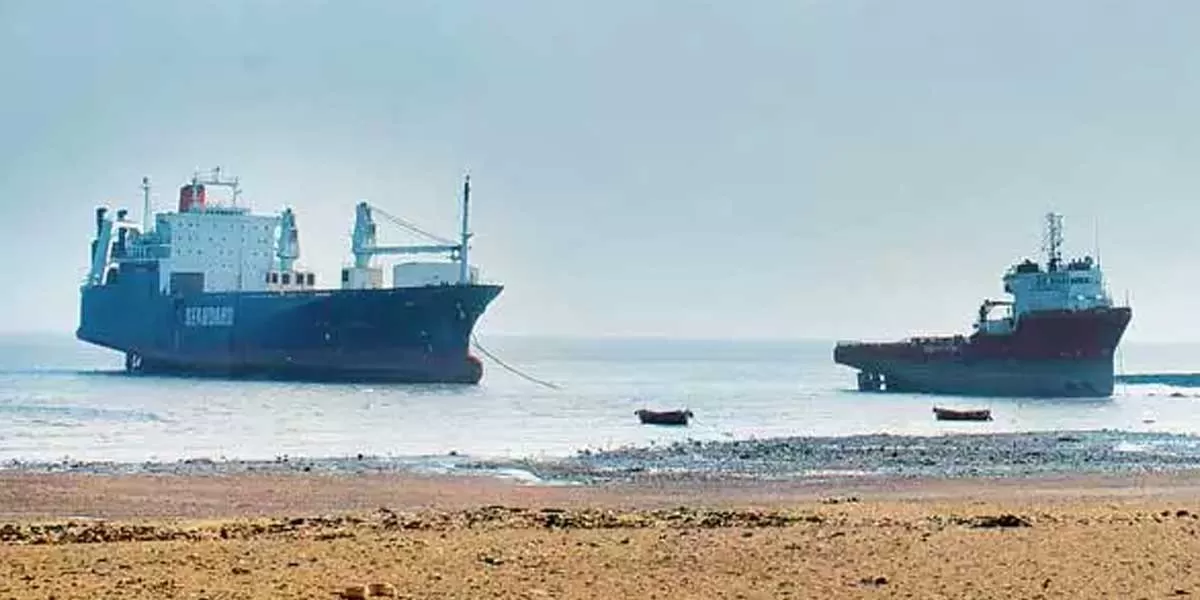
Alang, India’s largest ship-recycling yard located in Gujarat, is experiencing a significant downturn after decades of prominence in dismantling end-of-life vessels. Once a leader in the industry, Alang has seen a sharp decline in ship arrivals, with only a fraction of its operational capacity being utilized. The downturn is attributed to a combination of high freight rates and stricter environmental regulations, which have made it less appealing for shipowners to scrap their vessels.
Declining Ship Arrivals and Economic Impact
Alang was once responsible for nearly 98 percent of India’s ship recycling and about one-third of the global total. However, over the past decade, the number of ships arriving at the yard has plummeted. Currently, only around 20 of the 153 ship-breaking plots along its 10-kilometre coastline remain operational, with most running at just 25 percent capacity. In 2011-12, Alang reached its peak, dismantling 415 ships, but by 2024, that number had dropped to just 124, a stark decline from 166 in 2023. Competing shipyards in Bangladesh, Pakistan, and Türkiye have seen growth during this period, further exacerbating Alang’s challenges.
ClassNK issues world’s first approval in principle (AiP) for bunkering boom for ammonia fuel
The global shipping boom following the COVID-19 pandemic has played a significant role in this decline. High freight rates and disrupted trade routes, influenced by ongoing conflicts such as the war in Gaza and the Russia-Ukraine war, have incentivized shipowners to extend the operational life of their aging vessels rather than opting for scrapping. Haresh Parmar, secretary of India’s Ship Recycling Industries Association, noted, “When shipowners are earning well, they don’t scrap vessels.”
Additionally, Alang’s challenges are compounded by stricter environmental and safety regulations. Since India joined the Hong Kong International Convention (HKC) in 2019, ship-breaking yards have been required to invest heavily in pollution control and worker safety. While these reforms have improved compliance, they have also significantly increased operational costs, making Alang less competitive. Currently, Alang offers lower prices to shipowners—approximately $500–510 per light displacement tonne (LDT)—compared to $540–550 in Bangladesh and $525–530 in Pakistan.
Wider Economic Consequences and Employment Decline
The decline of Alang has had a ripple effect on the regional economy. Hundreds of businesses that rely on salvaged ship materials, including steel and machinery, have seen demand collapse. This downturn has led to steel shortages, disrupting operations in furnaces, rolling mills, and manufacturing units in nearby Bhavnagar. The economic impact is profound, as many local businesses struggle to survive without the influx of materials from ship dismantling.
Employment at Alang has also taken a hit. At its peak, the yard employed over 60,000 workers; today, that number has dwindled to fewer than 15,000, according to labor unions. Many migrant workers now only return to Alang when ships arrive, seeking alternative employment in the meantime. Despite improvements in safety and environmental standards, industry leaders express concern over Alang’s uncertain future. Ramakant Singh, a veteran ship-breaker, remarked, “The work is safer now. But safety doesn’t help if there is no work. Everything depends on whether the next ship arrives or not.”
