
Foreign Labour Crisis Looms Over South Korea’s Shipbuilding Industry
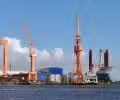
On the afternoon of the 17th, a group of around 20 employees at HD Hyundai Heavy Industries’ Ulsan Shipyard rallied together, chanting “Safety, good!” Among them were more than 15 foreign workers from countries like Thailand. This scene reflects the growing multicultural workforce in South Korea’s shipbuilding sector, where foreign labor has become essential. However, the industry now faces a potential crisis as the government considers abolishing the ‘foreign visa quota’ system, which has been a vital support for addressing labor shortages. Industry leaders warn that cutting off foreign workers could jeopardize the ability to fulfill existing orders.
Government Review of Foreign Worker Quota
The Ministry of Employment and Labor is set to discuss the future of the ‘E-9 (Non-Professional Employment) Shipbuilding Industry-Dedicated Quota’ on the 19th. This quota was introduced to alleviate labor shortages in the shipbuilding sector, allowing for a specific allocation of foreign workers. Initially, the E-9 quota provided 5,000 workers in its first year and 2,500 this year, with approximately 80% of foreign workers in shipyards hired through this system. The proportion of foreign workers in major domestic shipbuilding companies surged from 5% in 2021 to 18% last year, highlighting the reliance on foreign labor.
Despite this, the Ministry claims that the current labor supply has been sufficiently replenished, with only one-third of the quota being utilized. Local politicians and labor sectors are advocating for the quota’s abolition, citing concerns over domestic job opportunities and the perceived lack of benefits for local workers. Unions argue that the availability of low-wage foreign labor discourages improvements in wages and working conditions for domestic employees. Additionally, local commercial districts are feeling the impact, as the influx of foreign workers has not translated into increased local consumption, leading to high vacancy rates in areas like Geoje.
The shipbuilding industry, however, continues to express concerns about recruitment challenges. With orders worth 135 trillion Korean won secured until 2028, the demand for labor remains high. Companies like HD Hyundai are expanding operations internationally, further increasing the need for skilled foreign workers. The potential abolition of the E-9 quota raises fears that foreign workers may migrate to less demanding jobs in other sectors, exacerbating the labor shortage in shipbuilding. As the industry prepares for a surge in container ship construction, the call for foreign labor remains critical to sustaining the momentum of South Korea’s shipbuilding renaissance.
