
Huntington Ingalls Industries Innovates Shipbuilding Amid Workforce Challenges
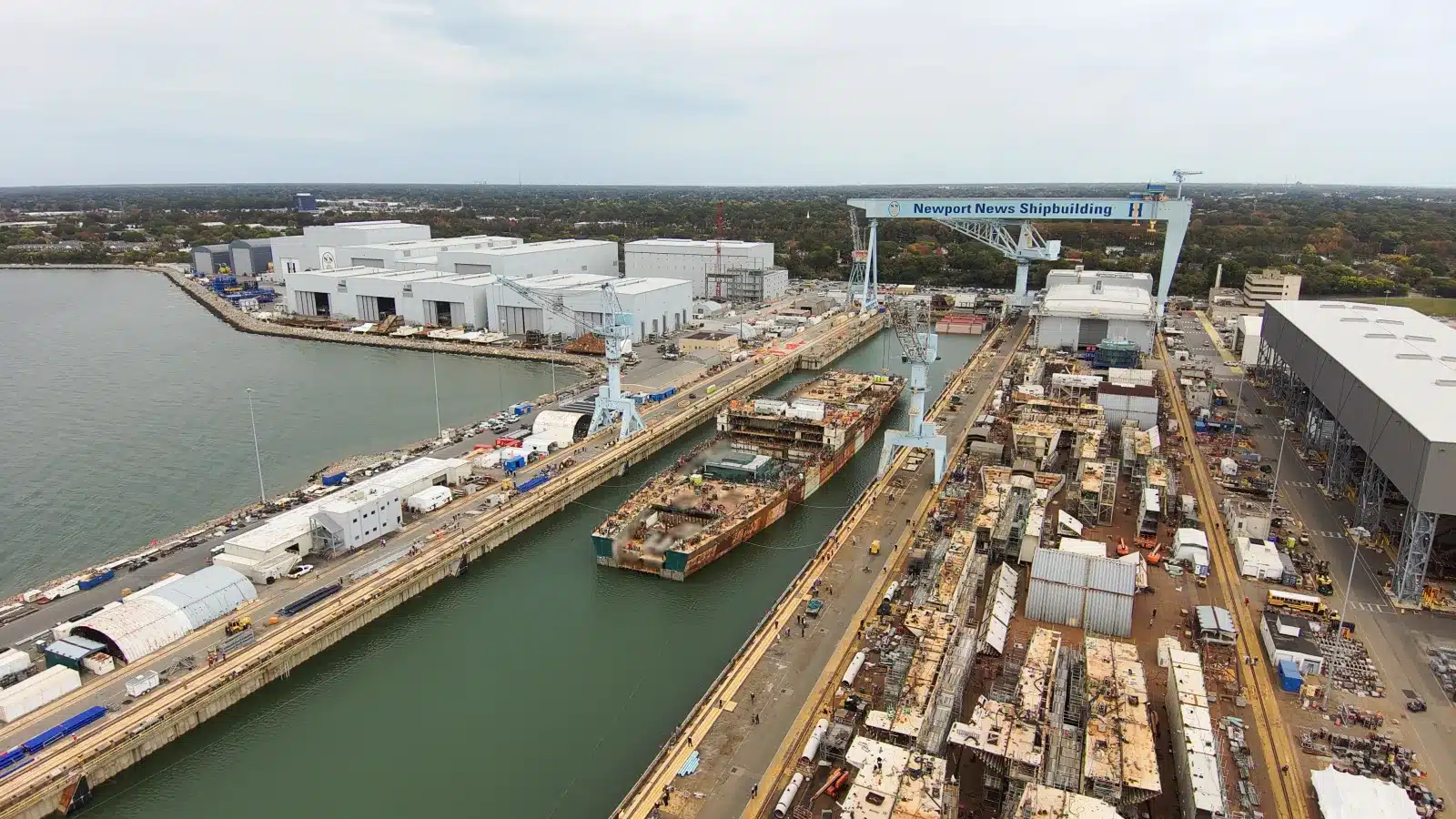
On December 24, 2025, Huntington Ingalls Industries (HII), the largest naval shipbuilder in the United States, announced its implementation of new manufacturing methods aimed at enhancing efficiency in ship production. This innovative approach, known as distributed shipbuilding, allows various firms across the country to construct different sections of a warship’s hull and superstructure. These components are then transported to a central shipyard for final assembly. Currently, this method is primarily utilized for the construction of Burke-class destroyers, marking a significant shift in traditional shipbuilding practices.
Despite these advancements, HII faces a pressing challenge: a shortage of qualified workers. The COVID-19 pandemic, which began five years ago, accelerated the retirement of experienced personnel in the naval shipbuilding sector. As a result, the industry is projected to require an additional 5,000 workers in the coming years. The situation is compounded by a growing trend among young individuals who view traditional college programs as less valuable, particularly if they do not focus on STEM (Science, Technology, Engineering, and Mathematics) fields. Many young men and women are opting to join the military to acquire skills that will enhance their employability post-service. Although labor unions and shipbuilders have established apprenticeship programs, these initiatives have not fully addressed the workforce gap created by recent retirements. HII has already begun trials of this new system with the construction of destroyers such as the Thad Cochran (DDG-135), USS John F. Lehman (DDG-137), and USS Telesforo Trinidad (DDG-139).
Challenges in U.S. Naval Shipbuilding and Maintenance
The U.S. Navy is grappling with additional challenges beyond workforce shortages. The construction of the first Constellation-class frigate has been underway for a year, with an expected entry into service in 2027. These frigates are being built in the United States by the Italian firm Fincantieri, which has introduced improved prefabrication techniques to expedite construction at a lower cost. The Constellation-class ships are based on European FREMM designs, which utilize prefabricated sections to enhance efficiency. Historically, the U.S. employed similar methods during both World Wars to produce a vast number of merchant and small warships. Currently, these techniques are also being applied to accelerate the production of nuclear submarines.
HII and Job Corps Partner to Build Careers at Ingalls Shipbuilding
Compounding these issues, the Navy has struggled to maintain and repair its existing fleet. In a previous cost-cutting move, the Navy sold off many of its ship repair and maintenance facilities, resulting in a significant loss of skilled workers. As a consequence, the Navy now faces difficulties in recruiting and training replacements for these essential roles. With nearly 500 ships in active service, including 11 aircraft carriers and 75 destroyers, the Navy is unable to build enough new vessels to replace its aging fleet or adequately maintain its current ships. The situation is further complicated by the need to address battle damage in wartime scenarios.
To tackle these challenges, potential solutions include collaboration with American Pacific allies, such as South Korea and Japan, who possess shipyard facilities and trained workers capable of assisting with U.S. Navy maintenance and upgrades. These nations share a vested interest in maintaining a strong naval presence to counter the growing threat from China. However, any long-term solutions will require commitment and strategic planning from U.S. Navy leadership to ensure successful reforms and improvements in shipbuilding practices.
