
Royal Canadian Navy Explores Ice-Capable Amphibious Landing Ship Concept
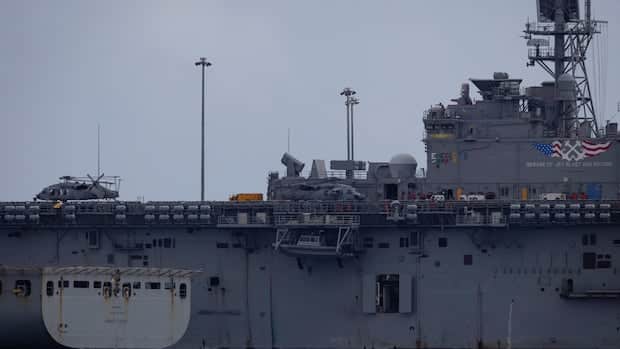
The Royal Canadian Navy is considering the development of an ice-capable amphibious landing ship to enhance its operational capabilities in the Arctic and beyond. Vice-Admiral Angus Topshee, the commander of the navy, has described this idea as a “conceptual thing,” emphasizing that it is still in the early stages of discussion. Despite his cautious approach, preliminary talks have taken place with two Canadian shipyards—Davie Shipyard in Lévis, Quebec, and Seaspan in Vancouver—both of which are currently engaged in building new icebreakers for the Canadian Coast Guard.
Topshee highlighted the potential of a Polar Class 2 amphibious ship, which could transport troops and equipment without the need for established port infrastructure. This capability is particularly relevant for operations in the Arctic, where access to ports is limited. The envisioned ship would likely carry smaller landing craft, such as hovercraft, and helicopters, positioning Canada to respond more effectively to emergencies in remote northern communities.
New Funding Fuels Ambitious Military Plans
As Canada approaches 2026, the federal Liberal government is expected to unveil a new defense policy. This policy is anticipated to align with Prime Minister Mark Carney’s commitment to meet NATO’s defense spending target of 2% of GDP by the end of the current budget year. The Canadian government plans to allocate up to 5% of its GDP—approximately $150 billion annually—toward military spending and defense infrastructure over the next decade.
This increase in funding has provided military leaders with the opportunity to explore ambitious projects that were previously deemed unfeasible. Topshee noted that the concept of an ice-capable landing ship could play a significant role in the upcoming defense policy review. He pointed out that Canada has only one year-round ice-free port, located in Nuuk, Greenland, which underscores the need for a mobile base capable of supporting operations in the Arctic.
The idea of an amphibious landing ship is not new; it has been discussed for over two decades but has yet to materialize into a concrete defense policy. Topshee’s advocacy for this capability reflects a growing recognition of the importance of maintaining sovereignty in the Arctic, especially in light of increasing geopolitical tensions.
Global Trends in Amphibious Capabilities
The discussion surrounding amphibious ships is not unique to Canada. Many allied nations are integrating such capabilities into their national security strategies. For example, Australia has recently emphasized the importance of amphibious ships for regional leadership and disaster response. The United Kingdom is also in the process of replacing its decommissioned amphibious warfare ships with Multi-Role Support Ships (MRSS).
Japan, despite its domestic sensitivities, has gradually acquired helicopter carriers, framing them as essential for defensive and humanitarian missions. These global trends highlight the strategic value of amphibious capabilities in modern military operations.
In Canada, the need for an amphibious landing ship has been underscored by past experiences, such as the military’s response to the 2010 earthquake in Haiti, where logistical challenges hindered the delivery of aid. Topshee emphasized that an amphibious ship could serve as a crucial asset for sustaining operations in the Arctic and elsewhere, allowing Canada to respond effectively to emergencies and assert its presence in the region.
