
Coal Export Market Faces Major Overhaul
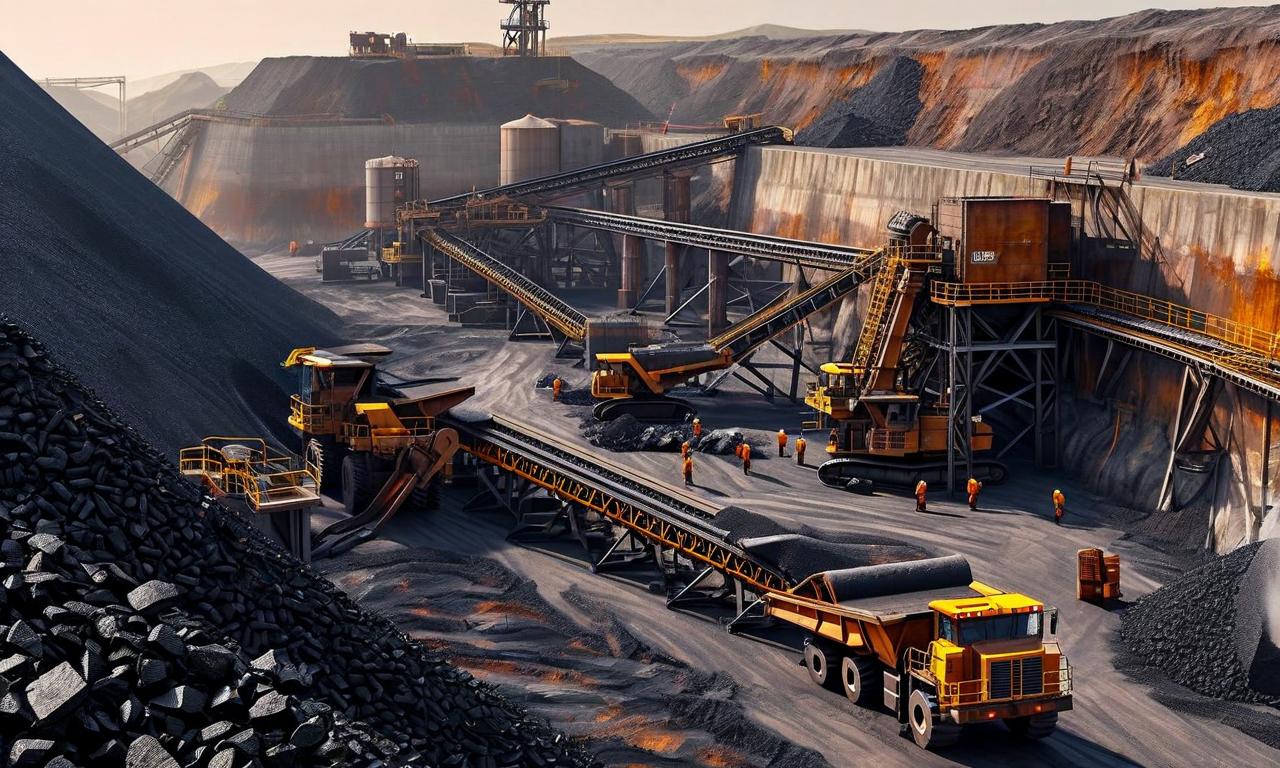
As 2026 unfolds, the U.S. coal export market is experiencing significant challenges, with Norfolk Southern reporting a 23% increase in export tonnage compared to last year. However, the surge in coal exports is met with a troubling slowdown in shipping, leading to a potential oversupply crisis. With European and Asian markets pulling back, the outlook for U.S. coal producers is becoming increasingly grim.
The European Reality Check
Once seen as a lifeline following the 2024 energy crisis, the European market is now showing signs of decline. Germany’s coal imports plummeted by 31% in the fourth quarter of 2025, as the country’s renewable energy initiatives begin to take effect. This shift indicates that the Energiewende, Germany’s transition to renewable energy, is no longer just a political promise; it is becoming a reality. While Poland and the Czech Republic continue to import coal, they are demanding prices below $100 per ton, which barely covers shipping costs to Rotterdam.
The situation worsened when Spain announced an accelerated closure of coal plants by two years, resulting in a loss of 4.8 million tons of annual demand. Although Spain will still require metallurgical coal for its steel industry, the demand for thermal coal is expected to vanish by 2028. Meanwhile, Italian buyers are becoming increasingly selective, opting for high-BTU shipments and leaving lower-quality coal to compete for dwindling demand. Enel, a major Italian utility, is now setting stringent ash content specifications that only a few West Virginia mines can meet, highlighting a growing divide between quality and volume in the market.
Asian Appetite Waning
In Asia, the demand for thermal coal is also diminishing. Japan’s thermal coal imports for January are tracking 18% lower than last year, as major utilities like Tokyo Electric and JERA shift their focus to liquefied natural gas (LNG) contracts. With current spot LNG prices, coal is losing its competitive edge. Japanese utilities are wary of being left with stranded assets as their government moves toward decarbonization.
South Korea’s situation is even more precarious. New climate commitments indicate that thermal coal demand will peak in 2027 before sharply declining. Korean buyers are now favoring shorter-term contracts and are increasingly cautious about long-term commitments, given their government’s plans to phase out coal. In India, while domestic production has reached record highs, buyers are becoming more price-sensitive and quality-focused, moving away from lower-grade thermal coal imports.
Infrastructure Chokepoints
The coal export supply chain is also facing significant infrastructure challenges. A recent Norfolk Southern derailment in Ohio has created ripple effects throughout the export network. While CSX is stepping in to fill some gaps, their pricing structure is unfavorable for smaller shipments, effectively sidelining many Appalachian producers from the export market.
In Baltimore, coal terminal capacity utilization reached 94% in December, nearing a critical point that could lead to gridlock. Any delays due to weather or equipment failures can disrupt the entire system, resulting in vessel delays that have become commonplace. Similarly, the West Coast is experiencing backlogs, with Vancouver’s Westshore terminal struggling to keep up with shipments bound for Asia. Increased grain traffic is also competing for rail space, leading Union Pacific to warn coal shippers of extended transit times through the first quarter of 2026.
Price Pressure Points
Current pricing trends reveal the underlying issues in the coal market. FOB pricing at Hampton Roads has dropped to $108 per ton for high-BTU Central Appalachian coal, down from $127 in September. This decline is indicative of a fundamental oversupply rather than mere market volatility. A 15% drop in spot prices during peak heating season signals real demand destruction.
The metallurgical coal market is similarly troubled. Australian producers are flooding the market with premium coking coal at prices that make U.S. operations appear costly. Transportation costs to tidewater are significantly impacting U.S. competitiveness compared to Australian suppliers. Major steel producers like Nucor and Steel Dynamics are pushing back against contracted met coal pricing for the second quarter, leveraging their position as global steel production remains below capacity.
The Regulatory Wildcard
Despite the Trump administration’s efforts to deregulate the coal industry, the export market remains complex. Removing environmental restrictions does not automatically create demand in countries that are actively working to decarbonize their energy sectors. New EPA ash disposal regulations, even if rolled back, may not alleviate the challenges posed by stringent quality standards set by foreign buyers.
Many European utilities are demanding low-sulfur and low-ash coal, which a significant portion of Appalachian production cannot meet. While recent enforcement pullbacks by MSHA may reduce operating costs for some producers, they do not address the fundamental mismatch between U.S. coal production and global market demands.
Forward Market Signals
The futures market is reflecting a troubling outlook for coal exports. December 2026 thermal coal futures are trading at a $12 discount to current spot prices, with December 2027 contracts down an additional $8. This trend indicates a market anticipating systematic demand destruction rather than cyclical weakness.
Credit markets are also taking note, with high-yield spreads for coal producers widening significantly in the fourth quarter of 2025. Bank of America has indicated that financing for thermal coal exports will be “challenging” through 2026, signaling a tightening of capital for coal producers. As working capital requirements increase and cash conversion cycles extend to over 90 days, many exporters are facing unsustainable financial pressures.
The Math Problem
The stark reality is that U.S. coal production capacity is still based on export demand levels that peaked in 2019 and are unlikely to return. Mines designed to ship 120 million tons annually may only find a market for 85 million tons by the end of 2026. The necessary adjustments in capacity have yet to occur, as producers cling to hopes of a demand recovery that seems increasingly improbable.
With European thermal coal demand projected to decline by another 30% by 2028 and Asian buyers becoming more selective, the current production levels are unsustainable. The industry must confront the reality that some mines will need to close, export terminals may need repurposing, and rail capacity must shift to other commodities.
As January 2026 unfolds, it is clear that the coal export market is not merely softening; it is undergoing a fundamental rebalancing toward a smaller, more selective buyer base willing to pay premium prices for high-quality products. The landscape is shifting, and the coal industry must adapt or risk being left behind.
