
Admiralty Court Rules Against Shipowner in Major Claim
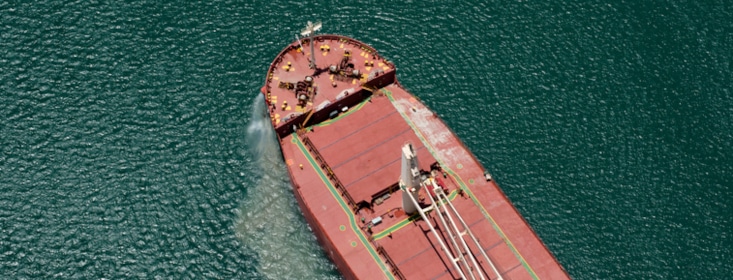
The Admiralty Court in London has ruled against Unity Ship Group, denying its claim for approximately USD 1.27 million from cargo insurers Euroins Insurance JSC. The court found that the grounding of the bulk carrier Happy Aras off Turkey in March 2023 was due to significant navigational errors and a “complete dereliction of duty” by the ship’s master. This judgment bars the shipowner from recovering general average contributions, highlighting the importance of competent navigation in maritime operations.
Understanding General Average in Maritime Law
General average is a long-standing principle in maritime law designed to distribute the financial burdens of a maritime emergency among all parties involved in a voyage. When a ship incurs expenses for the common safety of both vessel and cargo—such as hiring salvors or conducting emergency repairs—those costs are shared proportionately among the ship, cargo, and sometimes freight. However, if the emergency arises from the shipowner’s fault, including a failure to ensure the vessel’s seaworthiness, the shipowner cannot claim contributions from cargo interests or their insurers. This principle was central to the court’s decision in the case of Unity Ship Group.
Details of the Incident and Court Proceedings
The incident occurred during a voyage from Reni, Ukraine, to Mersin, Turkey, with the Happy Aras carrying a cargo of soya beans. On March 20, 2023, the vessel grounded on the Datca Peninsula, causing extensive damage and necessitating a complex salvage operation that lasted until mid-June 2023. Following the grounding, Unity declared general average and appointed professional adjusters, who later assessed the cargo’s contribution at over USD 1.27 million. However, Euroins Insurance, which had issued an average guarantee, refused to pay, arguing that the grounding resulted from the shipowner’s negligence.
During a four-day hearing in December 2023, Euroins presented evidence that the Happy Aras was unseaworthy at the start of the voyage due to the master’s incompetence. The insurer criticized the vessel’s navigational planning and highlighted that basic safety protocols were ignored. The court noted that the master had taken over the watch without adequately monitoring the ship’s position, leading to the grounding. Experts for both parties agreed that the vessel continued on an unsafe course without attempts to alter its trajectory.
In its judgment, the court found that the master’s actions constituted a pattern of serious failings rather than an isolated mistake. The court emphasized that the shipowner failed to demonstrate due diligence in ensuring the vessel’s seaworthiness, leading to the conclusion that the general average claim was not legally recoverable. The ruling underscores the critical importance of competent navigation and thorough vetting of crew qualifications in maritime operations.
Legal Representation and Implications
In the case of Unity Ship Group (claimant) v Euroins Insurance (defendant), the claimant was represented by Emile Yusupoff of 36 Group, instructed by Preston Turnbull. The defendant was represented by Lara Hicks of 33 Bedford Row, instructed by Scornik Gerstein. This ruling serves as a significant reminder for shipowners about the legal responsibilities associated with maritime navigation and the potential consequences of negligence.
