
Dry Bulk Carrier Earnings Projected to Lag in 2025
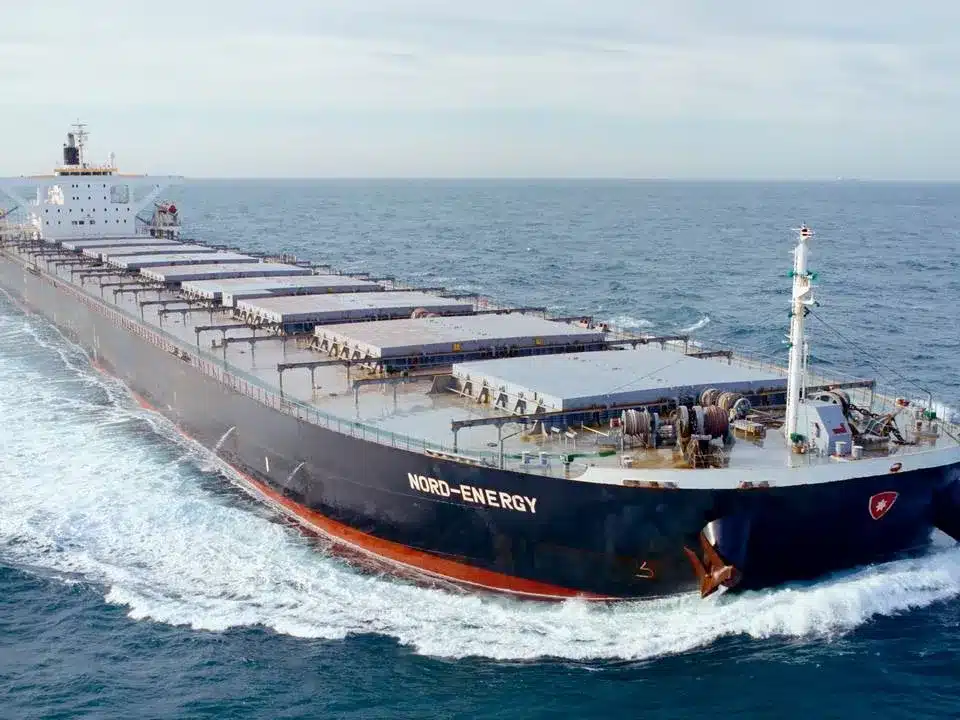
In a recent report, dry bulk carrier earnings for 2025 are expected to fall short of 2024 levels across all vessel classes, despite a strong performance in the second half of the previous year. The Baltic Exchange’s Supramax 11 TC recorded the most significant year-on-year decline at 9.2%, averaging $14,275 per day. Other classes, including Capesize, Panamax, and Handysize, also experienced declines of 5.7%, 5.2%, and 5.9%, respectively. The Capesize 5 TC earnings dropped to $21,297 per day, while Panamax 5 TC and Handysize 7 TC averaged $13,361 and $11,911 per day, respectively.
The report highlights that the Capesize market, particularly, faced challenges due to seasonal softness in Australian iron ore chartering, which reduced demand. The earnings ratio between Capesize and Panamax vessels remains higher than the long-term average, indicating ongoing competition in the market. Despite the downturn, average Panamax earnings have shown signs of stabilization, edging up to $11,536 per day as of January 2, 2026.
Market Dynamics and Future Outlook
The dry bulk market’s performance in 2025 is influenced by various factors, including global commodity demand and supply dynamics. The report notes that while the second half of 2025 showed resilience, the overall yearly performance did not meet expectations. The Baltic Exchange will transition the Capesize index vessel definition from 180,000 dwt to 182,000 dwt, which may impact future reporting and market assessments.
Additionally, the report indicates that the Pacific Panamax ballast supply has declined to a multi-week low, suggesting shifts in vessel deployment between basins. The anticipated peak in US soybean exports in January may provide alternative demand for Panamax vessels, although annual volumes are forecasted to be lower year-on-year for the September-August 2026 export season.
The report also highlights the implications of geopolitical events, such as a recent Chinese military exercise in the South China Sea, which delayed cargo discharges at Taiwanese ports. This incident led to increased congestion and a temporary drop in overall cargo liftings. As the market navigates these complexities, stakeholders are keenly awaiting the upcoming Freight Monthly Report, which will provide further insights into the outlook for 2026.
While the dry bulk carrier market showed strength in the latter half of 2025, the overall earnings for the year are set to lag behind 2024 levels. The interplay of demand, supply, and geopolitical factors will continue to shape the market landscape in the coming year.
