
Alternative-Fuelled Ship Orders Maintain Strong Momentum in 2025
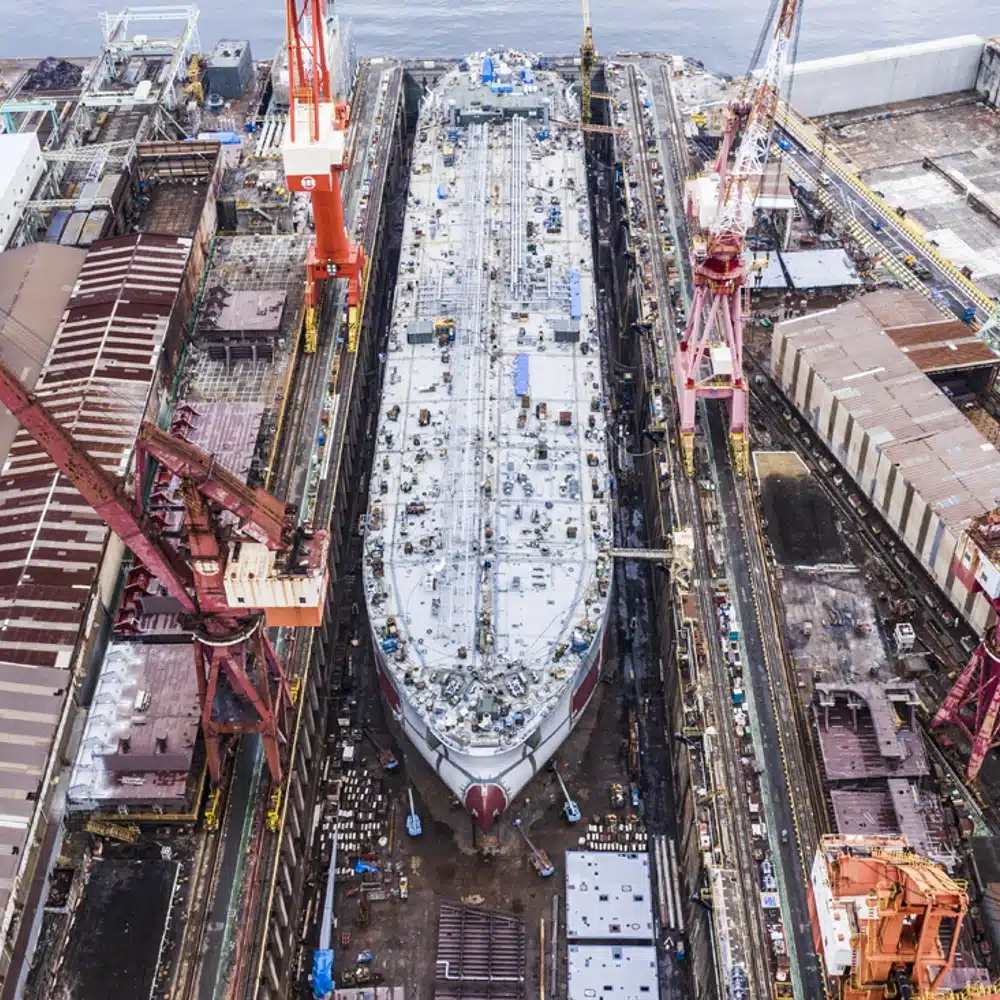
Shipowners continued investing in cleaner propulsion technologies throughout 2025, with alternative-fuel-capable vessels maintaining a significant share of new orders despite softer overall market conditions. Analysis by Lloyd’s Register of Clarksons data reveals that 590 merchant and leisure vessels capable of operating on alternative fuels were ordered during the year, totalling 45.5 million gross tonnes.
Growing Orderbook
The total alternative-fuel-capable orderbook now stands at 1,942 ships. LNG leads with 1,259 vessels on order, followed by methanol at 385, LPG at 139, ethane at 55, hydrogen at 53, ammonia at 45, biofuel at 22, and four nuclear-capable vessels. Combined with vessels already in service, the alternative-fuel-capable fleet has grown to 4,542 vessels representing 294.7 million gross tonnes, equivalent to 2.1 per cent of global fleet and orderbook tonnage.
However, with the International Maritime Organization’s 2030 target requiring 5 to 10 per cent of shipping energy consumption to come from zero and near-zero emission sources, ordering activity will need to accelerate further. In European waters, FuelEU Maritime regulations are already compelling operators to reduce emissions and transition to new fuels.
LNG Retains Dominant Position
LNG maintained its position as shipping’s most widely adopted alternative fuel in 2025, with 407 LNG-capable merchant and leisure vessels ordered. The fuel offers immediate carbon dioxide emissions reductions compared to conventional marine fuels and continues to attract sustained ordering interest, particularly within container, tanker and gas carrier segments.
Two challenges remain for LNG’s continued appeal: addressing methane slip, and accelerating the transition towards bio-LNG and synthetic LNG variants to align with longer-term decarbonisation objectives.
Methanol Continues to Attract Interest
Methanol-capable vessels attracted continued attention with 134 orders during the year, accounting for a substantial proportion of the alternative-fuelled orderbook. Lloyd’s Register strengthened the regulatory foundation for methanol as a marine fuel in July by updating its Rules and Regulations for Ships Using Gases or Other Low-flashpoint Fuels to reflect evolving safety expectations and align with the IMO IGF Code.
Emerging Fuel Options
LPG saw 24 additional LPG-capable vessels ordered in 2025, with LPG carrier vessels currently the primary users of this fuel. There remains potential for adoption by other vessel types.
Six ammonia-fuel-capable vessels were ordered during the year. Progress included further approvals in principle for ammonia-ready designs and ongoing work to address production capacity and regulatory advancement. Lloyd’s Register collaborated with EXMAR and the Belgian Federal Public Service to develop interim guidelines enabling the safe use of ammonia cargo as fuel.
Hydrogen maintained momentum with 13 hydrogen-capable orders, with solid interest in specific segments including passenger ferries and shallow-draft vessels. Fuel cells powered by hydrogen are viewed as options for achieving zero or near net-zero tank-to-wake emissions.
Biofuels strengthened their position as a practical near-term solution with 11 biofuel-capable newbuild orders, up from eight in 2024. Uptake of FAME-based biofuel blends, notably B30 RF, is increasing across ports including Singapore, Algeciras and Antwerp. John H Whitaker Tankers launched Whitchampion, the first bunker tanker certified to load, carry and blend FAME B100 biofuel on board.
Nuclear remains a longer-term prospect, though Lloyd’s Register continued exploring maritime applications. A partnership with Microsoft will see generative AI used to accelerate permitting processes for maritime nuclear applications. The classification society also published Navigating Nuclear Energy in Maritime, described as the industry’s first guidance document for nuclear-powered shipping.
Retrofit Activity Grows
Lloyd’s Register’s 2025 Engine Retrofit Report revealed a resurgence of LNG retrofits as shipowners sought immediate carbon reduction strategies to comply with regulatory requirements. However, retrofit capacity currently stands at approximately 465 vessel conversions annually across around 16 shipyards, mainly in China and the Middle East, well below the projected peak requirement of more than 1,000 conversions per year.
Energy-saving devices rose in strategic importance, with 28.5 per cent of vessels on order choosing to install at least one such device. High-efficiency propellers can deliver fuel savings of between 3 and 10 per cent, while rudder bulbs can achieve 3.5 per cent reductions.
Wind-assisted propulsion continues to grow, with bulk carriers and tankers leading adoption. Lloyd’s Register played a central role in the delivery of Brands Hatch, the world’s first newbuild Aframax tanker equipped with wind-assisted propulsion. Fuel savings of between 5 and 15 per cent are now routinely reported, with gains of up to 30 per cent achieved in some cases.
Challenges Remain
The Maritime Decarbonisation Hub, a partnership between Lloyd’s Register and the Environmental Defense Fund, published research highlighting a trillion-plus dollar financing gap that risks the sector’s transition away from fossil fuels. Large-scale investment is needed in green fuel production, bunkering infrastructure and retrofits.
Workforce capability remains a critical issue. Alternative fuels such as methanol, ammonia and hydrogen demand new operational competencies, risk management frameworks and safety protocols. The Maritime Just Transition Task Force released industry-first training frameworks covering both seafarer and shore-based roles.
Lloyd’s Register’s Global Maritime Trends Barometer indicates that global energy infrastructure and workforce readiness still lag behind both technological innovation and regulatory ambition. Benchmarking shows energy transition scores ranging from just 24 to 30 per cent alignment with 2030 decarbonisation targets.
Outlook
The alternative fuels landscape is more diverse than ever and its complexity continues to deepen. No single solution has emerged as the definitive answer, with each option presenting unique challenges and dependencies. The regulatory landscape has sharpened with the IMO’s revised GHG strategy now set out in full, FuelEU Maritime in force, and the expanded EU ETS. The Mediterranean’s new Sulphur Oxides Emission Control Area and Canadian Arctic NOx and SOx controls add further urgency.
Progress is tangible and accelerating, but not yet comprehensive enough to meet the scale and urgency of international climate goals. Success will belong to those who move swiftly, embrace a broad portfolio of strategies, and remain attuned to the evolving realities of regulation, supply chains and technological change.
Source: Lloyd’s Register – Alternative-fuelled ship orders remain significant in 2025
