
Cargill Launches First Green Methanol Bulk Vessel
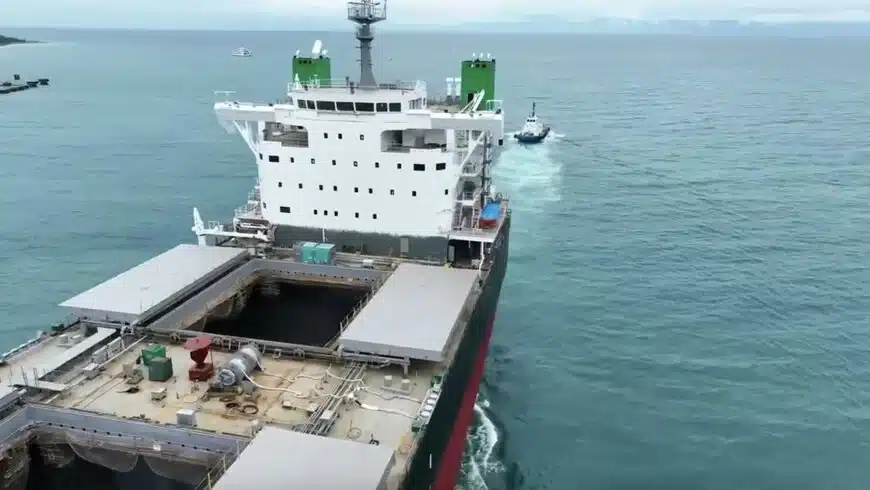
Cargill has marked a significant milestone in its sustainability efforts by taking delivery of the Brave Pioneer, its first green-methanol dual-fuel dry bulk vessel. This innovative ship, built by Japan’s Tsuneishi Shipbuilding and owned by Mitsui & Co., embarked on its maiden voyage from the Philippines this week. The vessel is set to bunker green methanol in Singapore before continuing its journey to Western Australia and Europe, as part of Cargill’s broader initiative to reduce emissions and explore alternative fuels in shipping.
Innovative Approach to Emission Reduction
The Brave Pioneer is designed to operate on both conventional marine fuels and green methanol, potentially achieving up to a 70 percent reduction in carbon dioxide emissions when using the alternative fuel. Cargill emphasizes that this project is not solely focused on immediate emissions reductions; it also aims to gather valuable insights on the performance of green methanol at sea. Jan Dieleman, president of Cargill’s Ocean Transportation business, highlighted the importance of testing new technologies in the shipping industry. “Decarbonising global shipping requires a mix of technologies and the willingness to take bold steps before the entire ecosystem is ready,” he stated.
During its inaugural journey, Cargill plans to conduct operational trials to assess methanol bunkering procedures, verify environmental benefits through carbon-accounting systems, and evaluate customer interest in low-carbon freight services. The findings from this voyage will inform the introduction of four additional methanol-capable vessels that are scheduled to join Cargill’s fleet in the coming years.
Setting Industry Standards for Sustainable Shipping
Cargill Ocean Transportation manages approximately 640 chartered vessels daily, with around 70 percent serving third-party customers from its ten global offices, headquartered in Geneva. The green methanol initiative complements other sustainability efforts, including wind-assisted propulsion, voyage optimization, energy-efficiency retrofits, and the use of biofuels and ethanol. Dieleman reiterated the company’s commitment to a diverse approach to low-carbon shipping, stating, “We know the road to low-carbon shipping will require a mix of solutions, and green methanol is one part of that portfolio.”
As one of the largest dry-bulk charterers worldwide, Cargill’s move is being closely monitored by shipyards, fuel suppliers, and ports, signaling a growing demand for alternative fuels in the shipping industry. This deployment comes at a time when the sector faces increasing pressure to reduce emissions, despite challenges such as limited renewable fuel supplies and inconsistent bunkering infrastructure. The outcomes of Cargill’s green methanol program could significantly influence the pace at which methanol and other sustainable options are adopted over the next decade.
