
Historic Shipwreck Discovered in Danish Waters
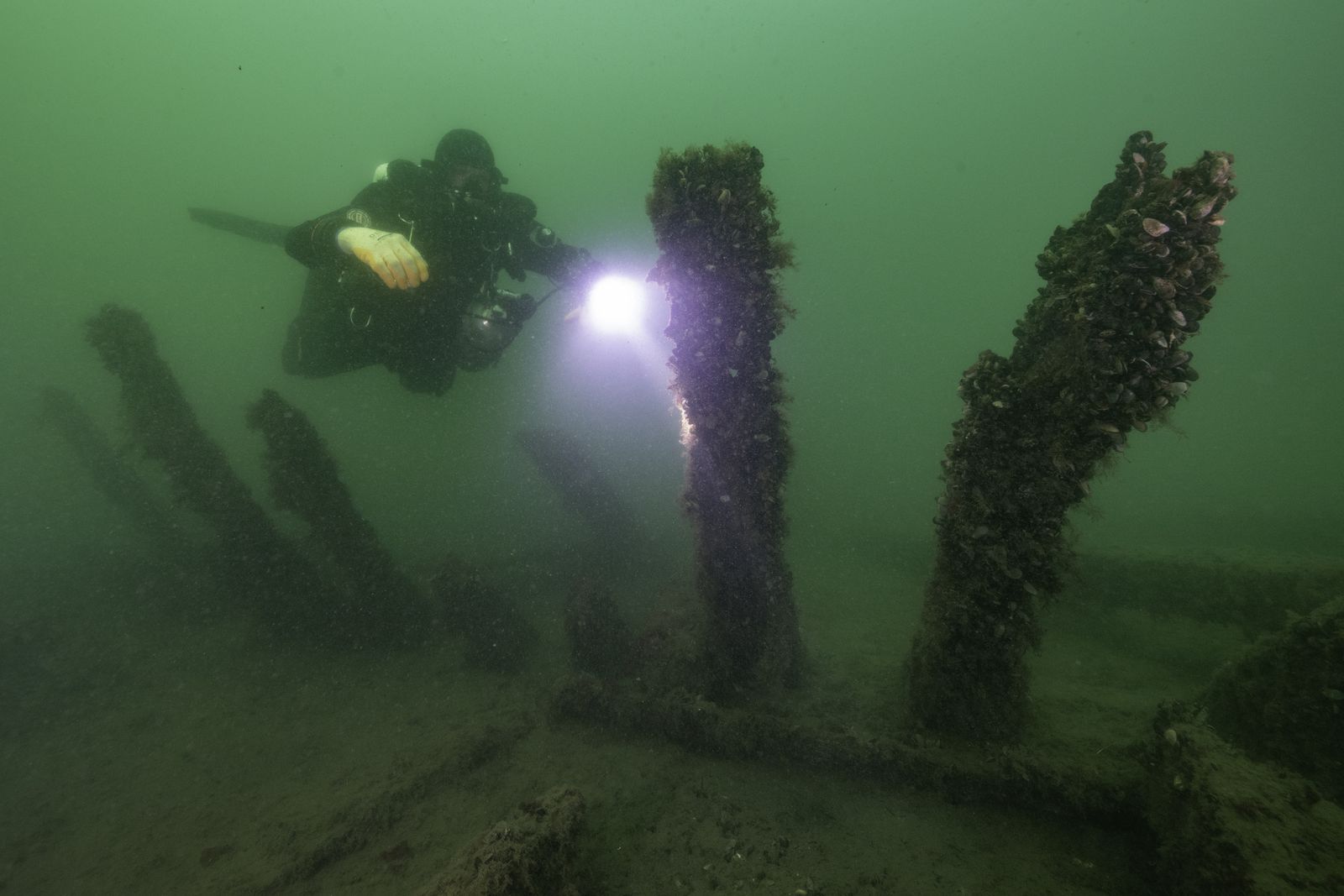
Marine archaeologists have made a groundbreaking discovery in Danish waters, unearthing what could be the largest medieval cargo ship ever documented. This remarkable find, named Svælget 2, has the potential to transform historians’ understanding of seaborne trade during the Middle Ages. The ship was located in the Øresund Strait, a vital maritime route connecting the Baltic Sea and the North Sea.
Medieval Ship Found During Construction Surveys
The shipwreck was uncovered approximately 43 feet below the surface during seabed surveys related to the construction of Copenhagen’s new Lynetteholm district. Researchers from the Viking Ship Museum in Roskilde, which is spearheading the investigation, estimate that the ship was built around 1410. Measuring about 92 feet long, 30 feet wide, and nearly 20 feet high, it boasts an estimated carrying capacity of around 300 tons.
These dimensions classify it as the largest known example of a “cog,” a type of merchant vessel that played a crucial role in medieval trade across northern Europe. The discovery not only highlights the ship’s size but also its significance in understanding the scale of maritime commerce during that era.
Remarkable Preservation Offers Unique Insights
In addition to its impressive size, the wreck of Svælget 2 is notable for its exceptional state of preservation. The sediments surrounding the ship have protected not only the lower hull, which is common in shipwrecks, but also parts of the rigging and upper structures that are rarely found intact. Archaeologists have also retrieved various everyday objects from the site, including cooking utensils, pottery, shoes, and wooden combs.
World’s Largest Medieval Trading Cog Unearthed After Six Centuries
While the original cargo remains elusive, researchers speculate that items such as barrels of salt or textiles may have been lost when the ship sank. This discovery provides invaluable evidence about 15th-century trade routes, the scale of commercial transport, and the organization of maritime logistics during the late Middle Ages.
Experts believe that the preservation of Svælget 2 will enhance scholarly understanding of how large cargo vessels operated and how goods were transported across medieval Europe. This ship is not merely a technological marvel; it serves as a vital window into the economic structures and infrastructure that supported long-distance trade over 600 years ago.
