
Qatar’s LNG Fleet Expansion Sparks Shipbuilding Rivalry
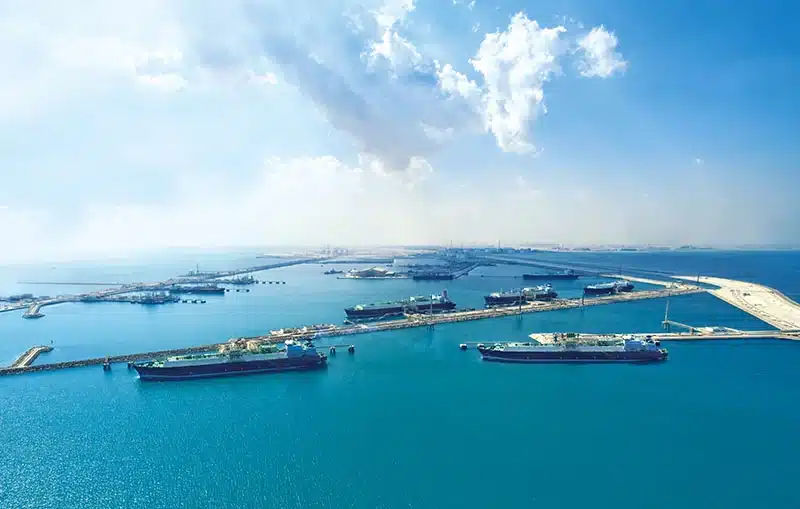
Anticipation is building in the global shipbuilding sector as Qatar gears up for a significant expansion of its liquefied natural gas (LNG) carrier fleet. Following the development of the North Field, the world’s largest single gas field, Qatar plans to order approximately 70 new LNG carriers to support its increased production capacity. This move is expected to intensify competition between South Korean and Chinese shipbuilders, marking a pivotal moment in the industry.
Qatar’s Ambitious LNG Production Goals
At the recent LNG 2026 exhibition in Doha, Saad Sherida Al-Kaabi, CEO of QatarEnergy, announced plans to bolster the nation’s LNG carrier fleet. This initiative aligns with Qatar’s goal to ramp up its annual LNG production capacity from 77 million tons to 142 million tons by 2030. Al-Kaabi emphasized the need for stable transportation to accommodate the anticipated rise in LNG volumes, highlighting Qatar’s commitment to enhancing its maritime transport capabilities.
The global shipbuilding industry is closely monitoring these developments, as Qatar has historically played a crucial role in shaping the LNG carrier market. From 2020 to 2024, Qatar ordered 128 LNG carriers, with South Korea securing 98 orders and China obtaining 30. These substantial contracts revitalized the shipbuilding sectors in both countries, which had been experiencing prolonged downturns. The upcoming orders are expected to further transform the competitive landscape, as industry insiders predict a shift from merely securing orders to a race for innovation and efficiency in LNG carrier design and construction.
Shifting Dynamics in Shipbuilding Competition
The anticipated second boom in LNG carrier orders is expected to differ significantly from the previous one. While the first boom was primarily about overcoming market slumps, the current phase is likely to focus on establishing new standards in the LNG carrier market. Key factors such as vessel types, construction efficiency, and long-term partnerships are becoming increasingly important for success.
China’s shipbuilding industry has notably evolved since the last boom. Previously, Chinese firms secured LNG carrier contracts by investing in local LNG projects and forming long-term purchase agreements. Notably, Hudong–Zhonghua Shipbuilding, a subsidiary of the China State Shipbuilding Corporation (CSSC), has expanded its LNG carrier construction capacity significantly, reducing construction times to match those of South Korean shipyards. This shift has narrowed the competitive gap, prompting South Korean firms to reassess their strategies.
Despite South Korea’s continued advantage in core LNG carrier technology and reliability, the growing competition from China is prompting strategic adjustments. For instance, HD Hyundai is exploring the possibility of constructing Q-Max class LNG carriers, a departure from its previous focus. Additionally, Samsung Heavy Industries has signed a memorandum of understanding with Qatar’s state-owned shipyard to collaborate in the LNG and offshore plant sectors.
As both South Korean and Chinese shipbuilders prepare for the influx of Qatar’s LNG carrier orders, the competition is expected to intensify. CSSC has recently opened its first overseas office in Doha, while Hudong Zhonghua showcased innovative technologies at the LNG 2026 exhibition. Meanwhile, HD Hyundai is partnering with international classification societies to develop new LNG carriers of various sizes, signaling a dynamic shift in the global shipbuilding landscape.
