
Iran’s Threats to Close the Strait of Hormuz Raise Economic Concerns for Iraq
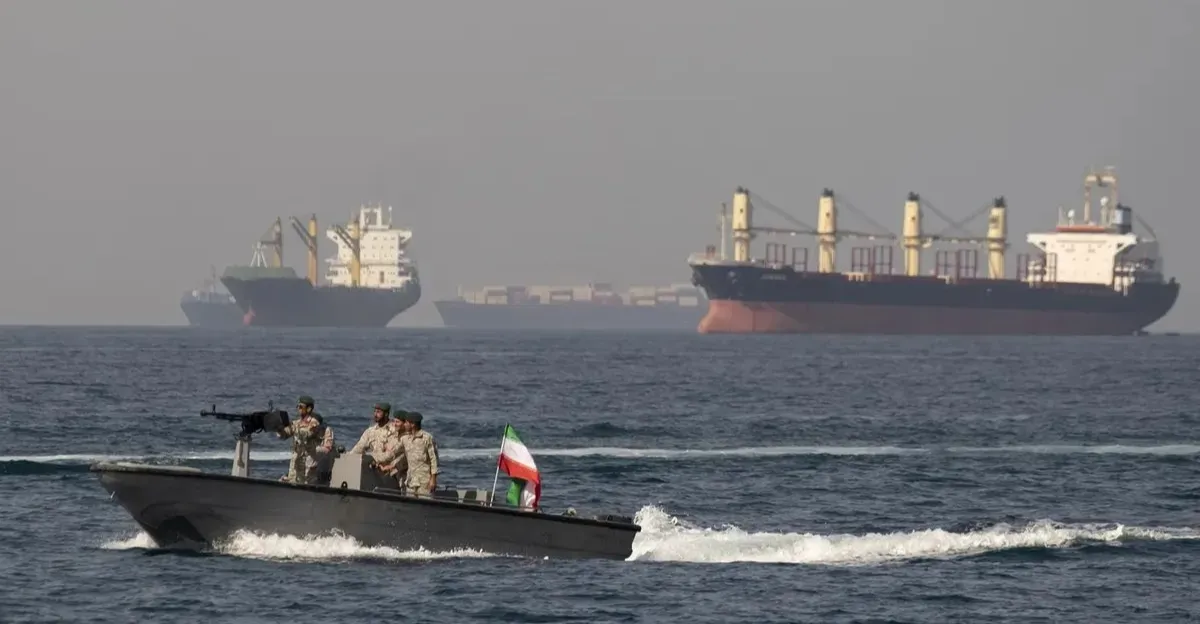
Iran’s repeated threats to close the Strait of Hormuz in the event of military conflict with the United States have sparked significant concern across the region, particularly in Iraq. The strait serves as a crucial corridor for global trade, especially for oil and gas shipments. If Iran were to follow through on its threats, the implications for Iraq’s economy could be severe. As tensions escalate between Washington and Tehran, Iraq finds itself in a precarious position, vulnerable to fluctuations in oil prices, currency exchange rates, and the availability of essential commodities.
Recent market reactions illustrate the gravity of the situation. Brent crude oil prices surged by over 7%, exceeding $70 per barrel, as fears regarding the security of navigation in the Strait of Hormuz intensified. Historically, oil prices have spiked whenever threats to this vital waterway resurface. While higher oil prices might seem advantageous for Iraq, the reality is more complex. The country could face significant revenue losses if the strait were to be closed, impacting its already fragile economy.
The Strategic Importance of the Strait of Hormuz
The Strait of Hormuz is located in the eastern Arabian Gulf and connects to the Gulf of Oman, leading to the Indian Ocean. It is bordered by Iran to the north and east, while Oman controls the southern maritime traffic. The strait is approximately 167 kilometers long and varies in width from 33 to 95 kilometers, with depths ranging from 60 to 100 meters. Four islands—Greater Tunb, Lesser Tunb, Abu Mussa, and Farur—control the northern entrance, with Iran maintaining control over three of these islands since 1971.
According to a study by the Center for Strategic and International Studies, around 86% of Middle Eastern oil exports pass near these islands, which are critical for global energy supplies. The strait is the only maritime route connecting several Gulf countries, including Qatar, Bahrain, Iraq, and Kuwait, to international trade. It is also a primary gateway for the United Arab Emirates, Saudi Arabia, Oman, and Iran. The United Nations Conference on Trade and Development reported that approximately 11% of global trade transits through the strait, including 34% of seaborne oil exports and 30% of liquefied natural gas exports.
Turkey A Major Crude Oil Exporter and Major Oil Player in the Mediterranean
Potential Economic Fallout and Mitigation Strategies
Experts warn that any attempt by Iran to close the Strait of Hormuz would have dire consequences for global trade, particularly oil supplies. Oil and energy expert Kovand Sherwani stated that Iraq could lose revenues from 3.5 million barrels per day (bpd) if the strait were closed, with potential losses exceeding $6 billion in just one month. The only relatively secure export route for Iraq is the pipeline to Turkey’s Ceyhan port, which currently handles about 200,000 bpd—less than 10% of Iraq’s total exports.
The economic repercussions extend beyond oil. Iraqi markets are highly sensitive to fluctuations in the dollar exchange rate, with traders likely to increase demand for dollars as a precautionary measure during times of uncertainty. This could lead to a rise in the dollar’s value in the parallel market, further straining the economy. Economic researcher Ahmed Eid emphasized that maintaining political stability and exercising restraint in political discourse are essential to shielding Iraq from external shocks.
To mitigate these risks, experts recommend implementing tighter regulations on the dollar market to curb speculation, building strategic reserves of essential goods, and diversifying trade channels. By taking proactive measures, Iraq can better prepare for potential economic disruptions stemming from geopolitical tensions in the region.
