
Oil Prices Surge Amid Middle East Tensions
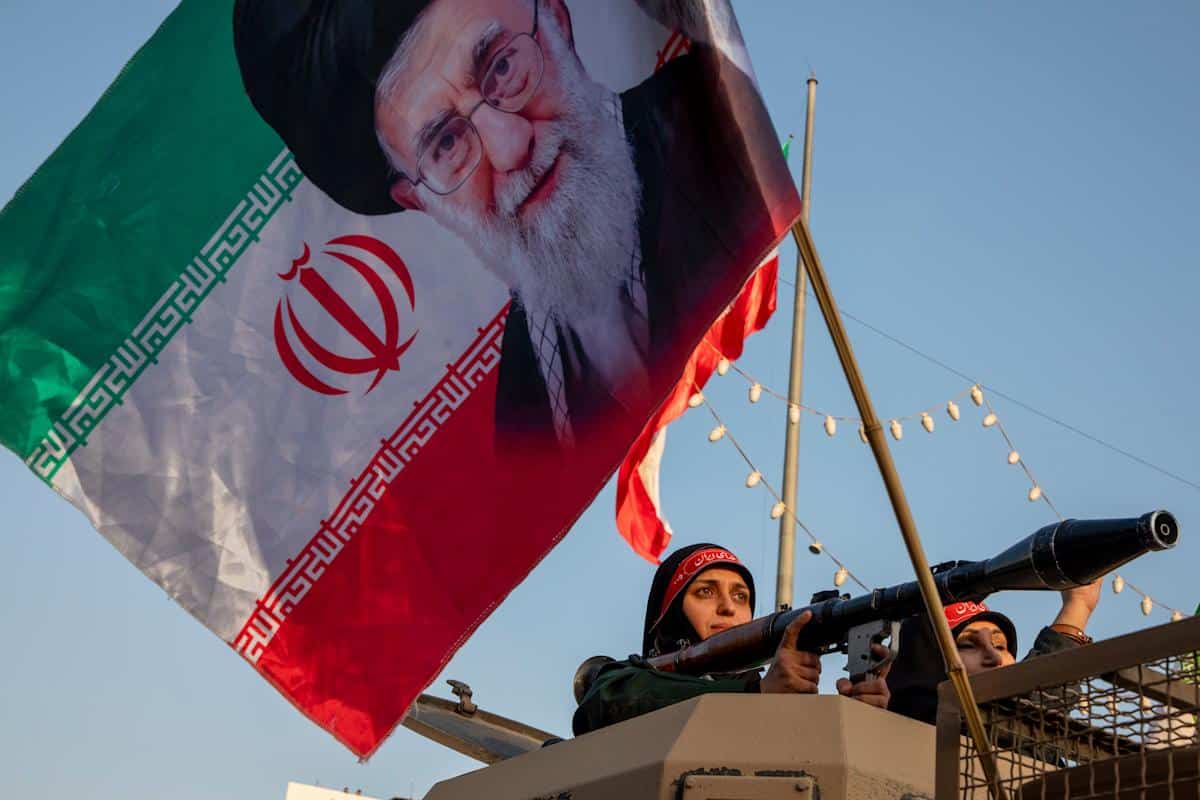
Oil prices experienced a significant increase on Monday, driven by escalating tensions in the Middle East, particularly following the U.S. Navy’s recent capture of an Iranian-flagged cargo ship. Brent crude futures, the international benchmark, rose approximately 5.9%, trading above $95.60 per barrel. Meanwhile, U.S. benchmark West Texas Intermediate (WTI) crude saw an even sharper increase of 6.5%, reaching $88 per barrel. These fluctuations in oil prices reflect market reactions to the complex geopolitical landscape surrounding the Strait of Hormuz, a crucial chokepoint for global energy supplies.
The situation intensified over the weekend when Iranian Foreign Minister Abbas Aragchi declared that the Strait of Hormuz was “completely open” to commercial traffic. However, this assertion was quickly contradicted by Iran’s Revolutionary Guard Corps, which claimed control over the waterway following the U.S. Navy’s blockade. The U.S. military’s actions, including firing upon and seizing an Iranian vessel, have heightened tensions and contributed to uncertainty in the region. Analysts suggest that the recent developments may signal a new normal for the Strait, characterized by intermittent closures and ongoing risks to maritime traffic.
Ceasefire Agreement and Diplomatic Efforts
As the U.S. and Iran approach the end of their 10-day ceasefire agreement on Tuesday at 8 p.m. ET, both sides have accused each other of violations. President Trump announced that special envoy Steve Witkoff, along with his son-in-law Jared Kushner, would lead negotiations in Islamabad, Pakistan, for second-round talks. Vice President JD Vance is also expected to attend, although his arrival may coincide with the ceasefire’s expiration.
Despite initial indications that Iran would not send representatives to the talks, Iranian state media reported on Monday that a delegation would attend. The outcome of these discussions is critical, especially given the heightened tensions in the Strait of Hormuz, where maritime traffic has significantly decreased since Iran’s announcement of renewed control over the waterway. Recent data shows that only a handful of vessels have successfully navigated the strait, with traffic levels plummeting to approximately 90% below pre-war figures.
The geopolitical stakes are high, as the Strait of Hormuz remains a vital artery for global oil transportation. Any credible signals regarding the reopening of this chokepoint could have substantial implications for oil markets. Analysts emphasize that the situation in the Strait has become a pivotal factor influencing global oil prices and market stability.
Implications for Global Oil Markets
The recent developments in the Strait of Hormuz have drawn attention from energy analysts and market observers. Artem Abramov, deputy head of analysis at Rystad Energy, noted that the strait has been a critical variable in global oil markets since the conflict escalated. He emphasized that any indication of a potential reopening of the chokepoint, even temporarily, could significantly impact market dynamics.
In light of the ongoing tensions, President Trump has reiterated the U.S. stance on Iran, stating that the naval blockade will remain in place. He has also threatened military action against Iranian infrastructure if the regime fails to meet U.S. demands for a peace deal. The Iranian state-controlled news agency has reported that various strategic locations, including the Bab-el-Mandeb strait and Saudi Aramco’s infrastructure, have entered the conflict zone, raising concerns about potential military escalation.
As the situation continues to evolve, the global oil market remains on edge, closely monitoring developments in the Strait of Hormuz and the outcomes of diplomatic efforts between the U.S. and Iran. The interplay of military actions, negotiations, and market responses will shape the future of oil prices and regional stability in the coming days.
