
New DNV RP establishes measurement framework for onboard carbon capture and storage systems
DNV Releases Recommended Practice for Onboard Carbon Capture Systems
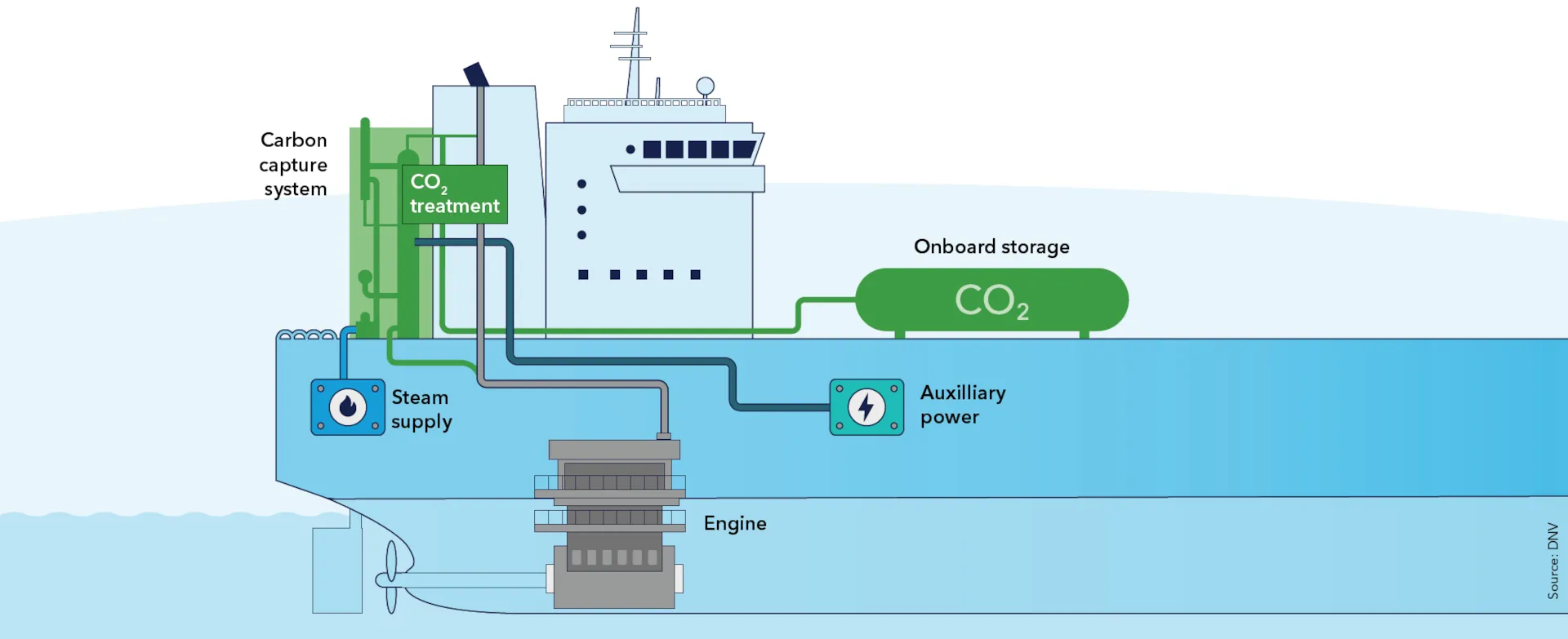
In a significant move towards reducing emissions in the maritime industry, DNV has recently published a recommended practice (RP) that establishes a standardized framework for measuring and verifying the performance of onboard carbon capture and storage (OCCS) systems on ships. This development sets the stage for further advancements in onboard captured carbon solutions and technologies.
Addressing the Need for Reduced Emissions
With approximately 90% of the operational fleet still reliant on fossil fuels, the adoption of onboard carbon capture technology is seen as a promising solution for vessels that face challenges transitioning to low-greenhouse gas (GHG) fuels. The International Maritime Organization (IMO) has also taken steps towards addressing this issue by initiating work on guidelines for OCCS, with the development expected to be finalized by 2028.
DNV’s Initiative and Industry Impact
Cristina Saenz de Santa Maria, CEO Maritime at DNV, emphasized the potential of OCCS as a viable pathway for a significant portion of the existing fleet. The Maritime Forecast to 2050 estimates that establishing CO2 offloading infrastructure at just 20 of the world’s largest ports could lead to a 9% reduction in total world fleet CO2 emissions. The release of the recommended practice aims to provide the industry with a common technical language to support the further development of onboard carbon capture solutions.
The DNV-RP-0698 “Performance of onboard carbon capture and storage systems” is structured around mass balance principles and defines a standardized set of performance metrics. These metrics include capture rate, captured CO2 quantity, emissions to the atmosphere, and gross capture efficiency. The framework remains technology-neutral, encompassing various approaches such as pre-combustion, post-combustion, and oxy-fuel methods. Additionally, a structured third-party verification process is in place to ensure system documentation, measurement setup, performance calculations, and uncertainty evaluation.
Chara Georgopoulou, Head of Maritime R&D and Advisory Greece, highlighted that the recommended practice offers a structured approach to assessing the full performance of OCCS systems, going beyond just capture volume. This structured framework enables stakeholders such as designers, shipyards, OCCS manufacturers, and ship owners to define and verify performance in both newbuild and retrofit projects. It also facilitates alignment between stakeholders early in the system design phase, leading to more informed investment and deployment decisions.
For more information on DNV’s new RP, interested parties can visit www.dnv.com/rules-standards/.
This initiative by DNV marks a significant step towards promoting sustainable practices in the maritime industry and underscores the importance of collaboration and innovation in addressing emissions reduction challenges.
