
Since May this year, UNIST (Ulsan Institute of Science and Technology) and HD
In a groundbreaking collaboration between UNIST (Ulsan Institute of Science and Technology) and HD Hyundai Heavy Industries, a project has been initiated to develop an artificial intelligence (AI) model for ship design. This venture, with a total cost of 40.3 billion won by 2030, aims to create an AI-based ship design model that can be operated by a team of 190 individuals, including 26 UNIST professors and researchers from HD Hyundai Heavy Industries. The anticipated release of a beta version of the AI model is expected by late 2027 or early 2028.
Transforming Ulsan into an Industrial AI Nexus
Kim Sung-yeop, head of UNIST’s Industrial AI Promotion Team, highlighted the significance of this project, stating that ship design has historically been a task beyond the capabilities of AI. However, with Ulsan’s extensive shipbuilding heritage and decades-worth of accumulated ship-related data, the research project aims to bridge this gap and revolutionize the industry.
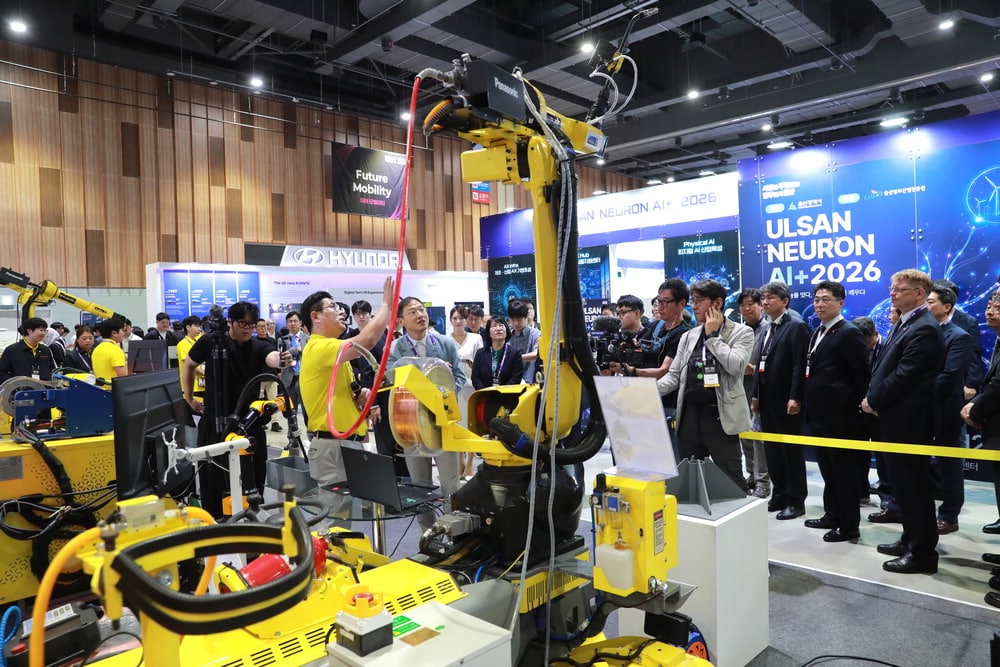
Moreover, Ulsan, known traditionally as a hub for heavy industry, is undergoing a transformation into a leading industrial AI city. While the city’s AI technology may have lagged behind others initially, Ulsan is actively applying AI solutions to real industrial settings, positioning itself as a key player in the future of manufacturing. The city is currently pursuing over 100 AI-related projects, with a substantial budget allocated specifically for AI conversion projects.
Advancements in Various Industries through AI
The use of AI is not limited to shipbuilding in Ulsan. The automotive industry, for instance, is developing a cell assembly autonomous production system utilizing mobile robot arms to streamline vehicle production. In the petrochemical sector, AI models are being employed for process optimization and facility prediction based on extensive industrial data.
Looking ahead, Ulsan City plans to further advance its industrial AI capabilities through various projects, including the establishment of a national industrial AI demonstration center and the development of AI solutions tailored to manufacturing processes. By leveraging its unique manufacturing base, Ulsan aims to become a pioneering laboratory for industrial AI innovation, integrating cutting-edge technology into traditional manufacturing practices.
In a bid to foster collaboration in the wider AI industry, Ulsan City has formed partnerships with neighboring regions, such as the Future Shared Growth Friendship Agreement with Gwangju Integration Special City. This agreement signals a new era of cooperation in the industrial AI sector, with a specific focus on joint projects within the automotive industry, a key sector for both cities. Ulsan and Jeonnam Gwangju Join Hands to Build Industrial AX Nexus
In a groundbreaking move towards technological advancement, the cities of Ulsan and Jeonnam Gwangju have come together to collaborate on a transformative project. The two cities have agreed to jointly plan and promote an artificial intelligence dark factory project with an estimated cost of 300 billion won.
This project aims to convert the entire factory into artificial intelligence, paving the way for cutting-edge innovation and efficiency in industrial processes. Through this initiative, Ulsan City envisions establishing itself as an “industrial AX Nexus” in the long run, positioning itself as a key player in the development and demonstration of advanced artificial intelligence technology.
Experts in the field of Korean artificial intelligence have emphasized the importance of securing professional manpower to ensure the success of Ulsan’s ambitious plan. They have also suggested the establishment of a government-funded research organization to oversee and coordinate the industrial transformation process effectively.
Ulsan Mayor Kim Sang-wook expressed his enthusiasm for the collaboration with Jeonnam Gwangju, highlighting it as a significant step towards realizing Ulsan’s vision of becoming a hub for artificial intelligence in Korea’s industry. He described the agreement as a symbolic event that would enhance Ulsan’s openness across various sectors, including industry, culture, and talent.
In addition to the focus on artificial intelligence, Ulsan City aims to expand its cooperation with other regions in areas such as hydrogen, LNG, and energy to strengthen its position as the energy capital of Korea. This strategic partnership with Jeonnam Gwangju is expected to bring about significant advancements in technology and innovation, driving economic growth and competitiveness.
This collaboration marks a significant milestone in the journey towards technological excellence and industrial transformation, setting the stage for a new era of innovation and progress in Ulsan and beyond.
