
AC Generator: The Workhorse Behind Every Ship’s Power Grid
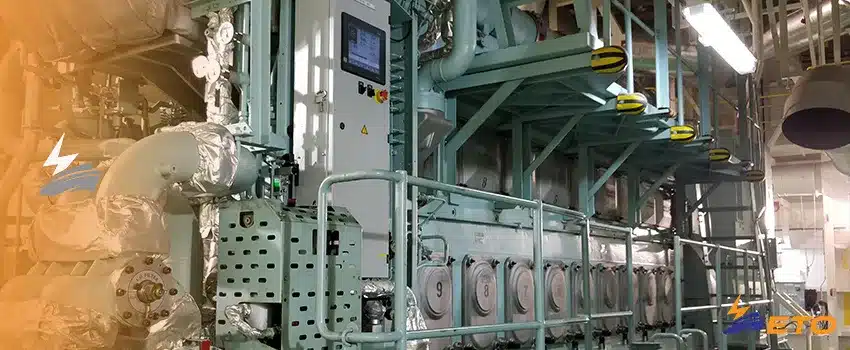
Cut the power on a modern vessel and everything stops working within seconds — navigation systems go dark, pumps seize, refrigeration fails, and the crew is left drifting in the truest sense of the word. The machine standing between a ship and that scenario is the AC generator, a piece of equipment so fundamental to marine operations that engineers rarely think about it until something goes wrong. Understanding what an AC generator does, and how it does it, explains why marine engineering courses spend so much time on electrical fundamentals rather than just diesel mechanics.
How an AC Generator Actually Works
An AC generator, sometimes called an alternator in smaller applications, converts mechanical energy into alternating current electrical energy through electromagnetic induction. The principle dates back to Faraday’s experiments in the 1830s, but the marine application refines it into something rugged enough to survive decades of vibration, salt air, and thermal cycling.
At its core, the machine consists of a rotor and a stator. The rotor, driven by a prime mover such as a diesel engine, gas turbine, or steam turbine, spins inside the stator windings. A direct current is fed into the rotor’s field windings, creating a rotating magnetic field. As that field sweeps past the stationary copper windings embedded in the stator, it induces an alternating voltage in those windings — the fundamental output of the machine.
Most marine AC generators produce three-phase power, which offers smoother torque delivery and more efficient power transmission than single-phase systems. The frequency of the output, typically 50 or 60 Hertz depending on regional standards and vessel design, is directly tied to the rotational speed of the prime mover and the number of magnetic poles in the rotor. This relationship is why generator speed control is so tightly regulated on board — drift too far from the design speed and frequency stability collapses, which can trip protective relays or damage sensitive electronics.
Voltage regulation comes from an automatic voltage regulator, a component that continuously adjusts the field current to keep output voltage steady despite fluctuating loads. Without it, switching on a large compressor or bow thruster would cause a voltage dip severe enough to disrupt other equipment running on the same bus.
Why AC Generators Dominate Shipboard Power
Walk into any engine room and you’ll find the AC generator, not its DC cousin, running the show. That wasn’t always inevitable — early electrified ships relied on DC systems — but AC won out for reasons that remain valid today. Alternating current can be transformed to different voltage levels with relative ease, letting engineers step voltage up for long cable runs and step it down for lighting circuits or navigation electronics without excessive losses.
Container ships, tankers, cruise vessels, and offshore support vessels all depend on multiple AC generators arranged in parallel, typically two to four units feeding a common switchboard. This redundancy matters enormously. If one generator trips due to a fault or scheduled maintenance, the others pick up the load automatically through load-sharing controls, and the ship keeps functioning without a blackout. On vessels using diesel-electric propulsion, including many cruise ships and increasingly LNG carriers, AC generators don’t just power hotel loads and auxiliary systems — they generate the electricity that drives the propulsion motors themselves, eliminating the traditional mechanical shaft-to-engine connection entirely.
Offshore platforms and drilling rigs lean just as heavily on AC generation, often pairing gas turbines with generators to produce both electrical power and, through waste heat recovery, additional efficiency gains. The reliability demands here are unforgiving. A generator failure on a drilling rig mid-operation isn’t just inconvenient, it can halt a multimillion-dollar drilling program.
Maintenance, Efficiency, and What’s Changing
Marine engineers know that an AC generator’s reliability depends heavily on insulation integrity, bearing condition, and cooling system performance. Saltwater environments are brutal on windings, and moisture ingress remains one of the leading causes of insulation breakdown. Routine insulation resistance testing, vibration monitoring, and thermographic inspection have become standard practice on well-run vessels, catching degradation before it becomes a failure at sea.
The push toward decarbonization is reshaping how these machines get used rather than replacing them outright. Hybrid power systems now pair AC generators with battery energy storage, letting vessels run generators closer to their optimal load point rather than idling inefficiently during low-demand periods. This alone can cut fuel consumption noticeably on vessels with variable load profiles, such as offshore supply ships or ferries with frequent port calls.
Shore power connections, increasingly mandated in port regulations around the world, also interact directly with onboard AC generation, requiring synchronization equipment that matches shore frequency and phase before a vessel can switch sources without interruption.
As shipping moves toward alternative fuels and tighter emissions standards, the AC generator isn’t going anywhere — it’s becoming smarter. Digital monitoring, predictive maintenance algorithms, and tighter integration with energy storage are turning a century-old technology into the backbone of increasingly electrified, efficient vessels navigating an industry under real pressure to change.
