
Ammonia Identified as a Promising Marine Fuel Solution
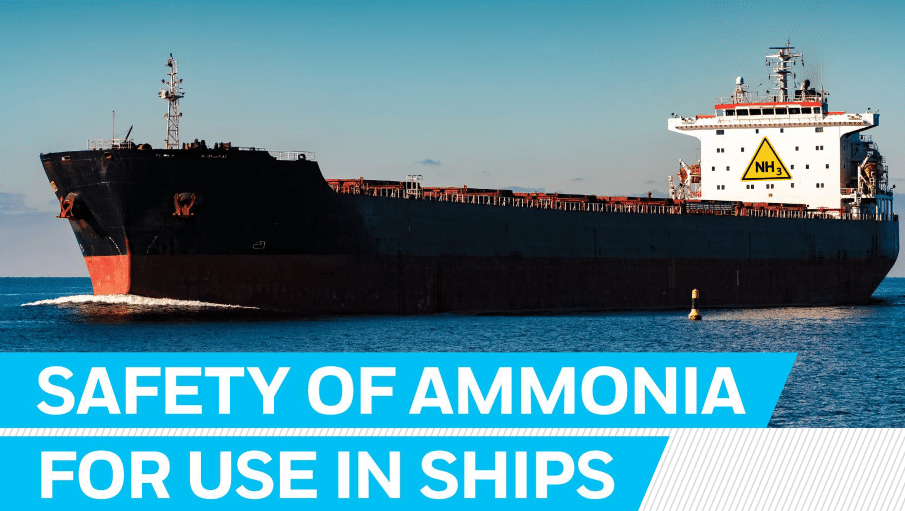
The European Maritime Safety Agency (EMSA) has released a comprehensive report highlighting anhydrous ammonia (NH₃) as a viable long-term marine fuel. This fuel option could significantly contribute to reducing carbon emissions in the shipping industry. The report emphasizes ammonia’s potential to provide a zero or near-zero carbon solution, making it an attractive alternative for ship designers, builders, owners, and operators.
Ammonia’s Viability and Challenges
Despite limited recent experience with ammonia as a marine fuel, the report draws on extensive land-based applications in the petrochemical and fertilizer industries. This existing knowledge base supports the feasibility of ammonia as a marine fuel. The report also notes that while key machinery technologies, such as engines, are still under development, the maritime industry can leverage existing experience with ammonia transport in liquefied-gas carriers. The International Code of the Construction and Equipment of Ships Carrying Liquefied Gases in Bulk (IGC Code) provides essential guidelines for the safe storage and distribution of ammonia on ships.
However, the report acknowledges significant challenges associated with ammonia’s toxicity. These risks, while manageable, will complicate ship designs compared to those using conventional fuels. The complexity may limit ammonia’s suitability primarily to deep-sea cargo vessels rather than short-sea, passenger, or inland waterway crafts. The report aims to assist national administrations, industry stakeholders, and maritime organizations in navigating these challenges as they transition to more sustainable fuel solutions.
Key Findings and Recommendations
The EMSA report is the culmination of a multi-part study that includes an extensive analysis of ammonia’s properties as a marine fuel. It identifies critical equipment and potential failure modes, providing a quantitative evaluation of the reliability of ammonia systems. Additionally, the study features a hazard and operability analysis of a generic ammonia fuel supply system, assessing risks from the fuel tank to the internal combustion engine.
ITOCHU, Nihon Shipyard, ClassNK, and MPA Sign MoU for Ammonia-Fueled Bulk Carriers Joint Study
Specific hazard identification exercises were conducted on the use of ammonia as fuel in a Newcastlemax dry bulk carrier and a mega roll-on/roll-off (ro-ro) vessel. These assessments included risk evaluations for scenarios involving simultaneous operations in ports. The findings and recommendations outlined in the report are intended to inform future regulatory developments, ensuring that the maritime industry can safely and effectively integrate ammonia as a fuel option.
For those interested in a deeper understanding of the study’s findings, the full report is available for download.
Download the Full Report
Source: EMSA
