
Ancient Shipwreck Unveils Secrets of the Past
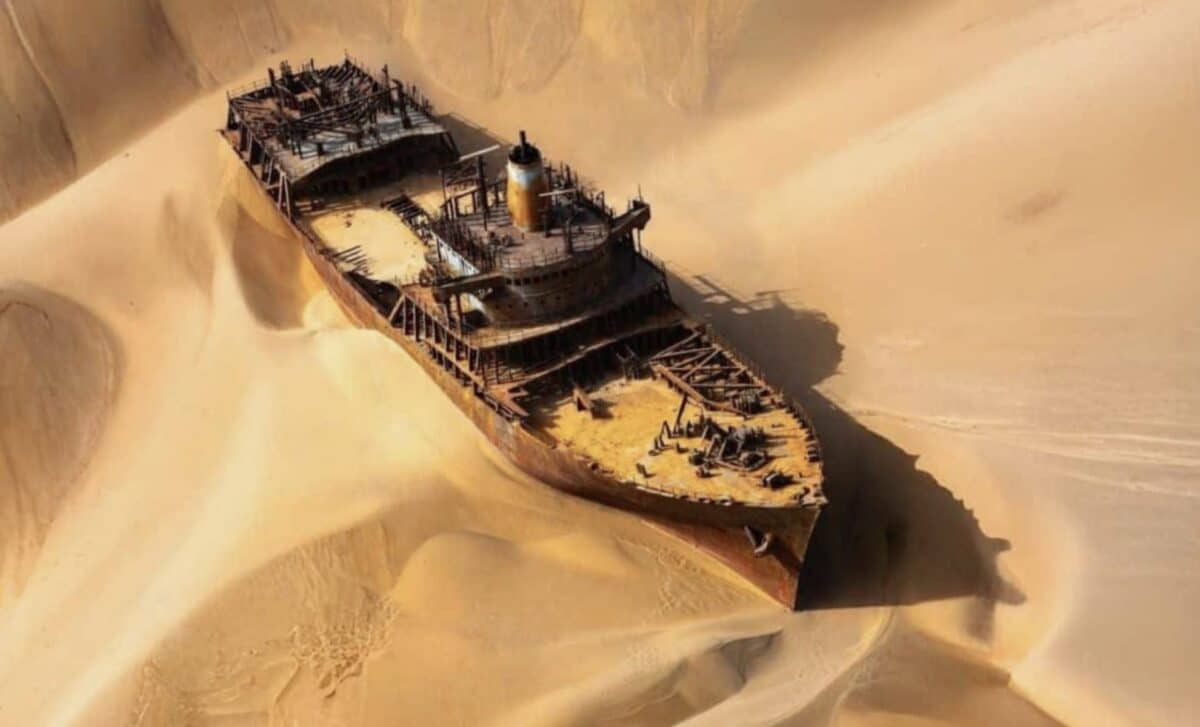
A remarkable archaeological discovery has emerged from a Namibian diamond mine, where a geologist stumbled upon a 500-year-old copper ingot in April 2008. This find led to the unearthing of the Bom Jesus, a Portuguese cargo ship that mysteriously vanished in 1533. Buried beneath desert sands, the ship was laden with 22 tons of copper, 2,000 gold coins, and ivory, prompting a significant excavation that has since revealed a wealth of historical insights.
The Forbidden Zone Delivered a 500-Year-Old Time Capsule
The Bom Jesus wreck lies within the Sperrgebiet, or “forbidden zone,” a term that dates back to 1908 when German colonial authorities restricted access to protect diamond resources. This century-long ban kept treasure hunters at bay, allowing the ship’s secrets to remain hidden until now. Excavation efforts required constructing a massive earthen barrier to keep the Atlantic Ocean at bay, while pumps ensured the site remained dry. Dr. Dieter Noli, the lead archaeologist, noted that working in an active diamond mine presented unique challenges compared to typical archaeological digs.
Climate scientists have analyzed sediment samples, confirming that severe winter storms off Namibia can wreak havoc on ships attempting to navigate the Cape of Good Hope. This aligns with historical accounts indicating that the 1533 fleet was scattered by harsh weather shortly after departing from Lisbon. Dr. Bruno Werz, director of the African Institute for Marine and Underwater Research, emphasized the significance of the wreck, describing it as a “sealed economic time capsule” from the Age of Discovery. The artifacts found, including copper ingots stamped with the mark of Anton Fugger, provide tangible evidence of early globalization and trade routes that connected Europe, Africa, and Asia.
Spanish Cash Financed a Portuguese Disaster
The discovery of gold coins at the site raised intriguing questions, as approximately 70 percent were Spanish excelentes, typically associated with Ferdinand and Isabella. This finding is unusual for a Portuguese ship, which would normally carry its own currency. Maritime historian Alexandre Monteiro uncovered a letter from King John III, dated February 13, 1533, revealing that Spanish investors had a significant financial stake in the Bom Jesus’s voyage. This letter sheds light on the complex financial networks of the time, suggesting that Spanish capital played a crucial role in the expedition.
Identifying the Bom Jesus has proven challenging, particularly due to the loss of many maritime records in the 1755 Lisbon earthquake and tsunami. The Casa da India, which housed vital navigation charts and ship registries, was destroyed, leaving historians with limited resources. Researchers have turned to surviving documents, such as the Relações das Armadas, which detail fleet movements. These records indicate that the Bom Jesus was the only ship lost near Namibia during its journey to India, marked as “perdido,” or lost.
No Fight Over the Loot and a Museum in the Works
According to the 2001 UNESCO Convention on the Protection of the Underwater Cultural Heritage, the wreck legally belongs to Namibia. Portugal, recognizing this, has chosen not to contest ownership. Monteiro praised Namibia’s professionalism in managing the site, highlighting the importance of international cooperation in archaeological endeavors. Namdeb, a partnership between the Namibian government and De Beers, has suspended mining operations around the wreck and is funding ongoing archaeological work.
Plans are underway to establish a maritime museum in Oranjemund, scheduled to open by late 2027, where the artifacts will be displayed. Currently, the 40,000 items recovered from the Bom Jesus are stored securely while researchers continue their studies. The ship carried around 300 individuals, including crew members, soldiers, and merchants, but only one human bone—a toe found inside a shoe—has been discovered, suggesting that many may have survived the ship’s demise. Speculation exists that survivors could have encountered local San communities for assistance, although no evidence of such camps has yet been found.
