
Arctic Shipping Traffic Hits Record High in 2025
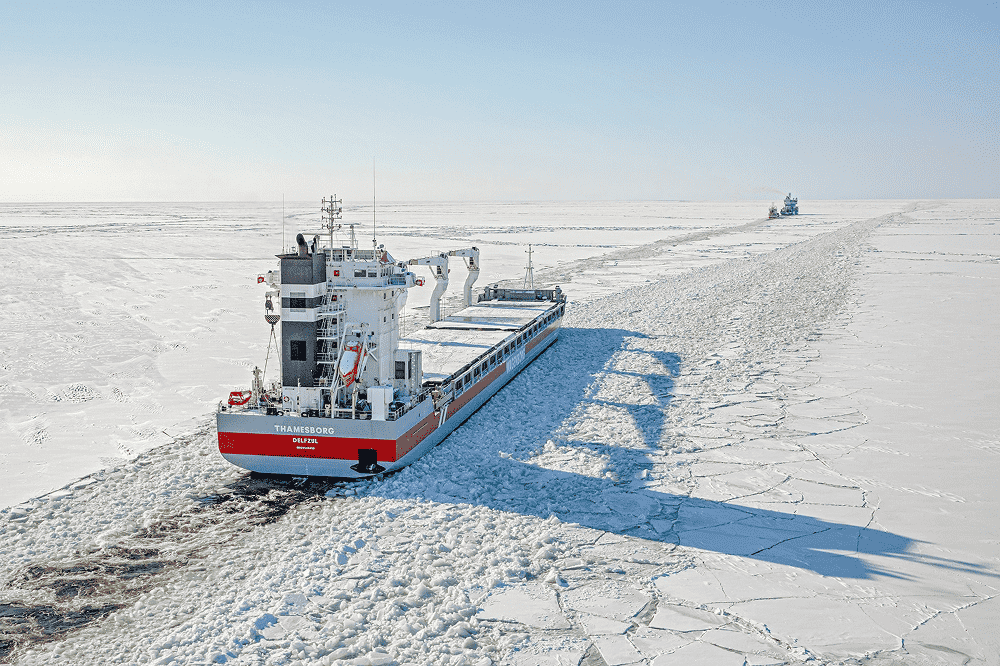
In a significant development, Arctic shipping traffic reached an unprecedented level in 2025, with 1,812 unique vessels navigating the Polar Code area. This marks a remarkable 40% increase since 2013, when the Arctic Council Working Group on the Protection of the Arctic Marine Environment (PAME) began monitoring vessel activity. The surge in maritime operations highlights the Arctic’s rapid transformation into a bustling commercial zone, driven by expanding resource extraction and industrial activities.
Surge in Vessel Activity and Shipping Distances
PAME’s latest data reveals not only an increase in the number of vessels but also a substantial rise in their operational activity. The total sailing distance in the Arctic soared by 95%, climbing from 6.1 million nautical miles in 2013 to an impressive 11.9 million in 2025. This uptick indicates that vessels are making more frequent trips, particularly along Russia’s Arctic coast and within mining supply chains. The shipping season remains highly seasonal, peaking from August to October when sea ice is at its lowest. Notably, September 2025 saw 1,060 vessels enter the Arctic, accounting for 58% of the annual traffic.
Fishing vessels continue to dominate Arctic maritime activity, primarily entering from the Bering Sea and Barents Sea. General cargo ships rank second, delivering supplies to remote communities and transporting materials for significant industrial projects like Vostok Oil and Arctic LNG 2. These projects have required millions of tons of construction materials since their inception in 2022. The most rapidly growing segment is crude oil tankers, which have quadrupled in number over the past 12 years, raising environmental concerns due to the inclusion of vessels lacking ice-class protection.
Estrella Resources Launches Manganese Extraction in Timor-Leste
Impact of Resource Extraction and Geopolitical Challenges
The expansion of liquefied natural gas (LNG) shipping has also been notable. Prior to late 2017, there was no recorded LNG traffic in Russia’s Arctic waters. By 2025, 40 distinct LNG carriers were operating in the Polar Code area, supporting projects like Yamal LNG. These specialized icebreaking tankers now deliver gas year-round to markets in Europe and Asia. Hjalti Hreinsson, Deputy Secretary at PAME, emphasized that natural resource extraction is the primary driver of this growth. He noted that the Arctic still has relatively few ships compared to other marine regions, meaning that even a small number of large industrial projects can significantly impact traffic statistics.
One such example is Canada’s Mary River Mine, which began operations in 2015 at one of the world’s richest iron ore deposits. Since then, bulk carrier traffic into Baffin Bay has surged, with ships logging over 130,000 nautical miles in 2025 alone to transport ore and supplies. However, despite the overall increase in Arctic shipping, traffic along Russia’s Northern Sea Route has plateaued recently. Western sanctions have complicated financing, shipbuilding, and insurance for Russian energy projects, leading to construction delays and restricted access to specialized vessels. This has hindered planned expansions, limiting growth in Russia’s Arctic basin even as global activity continues to rise.
