
Bladen County’s Role in USS North Carolina’s Legacy
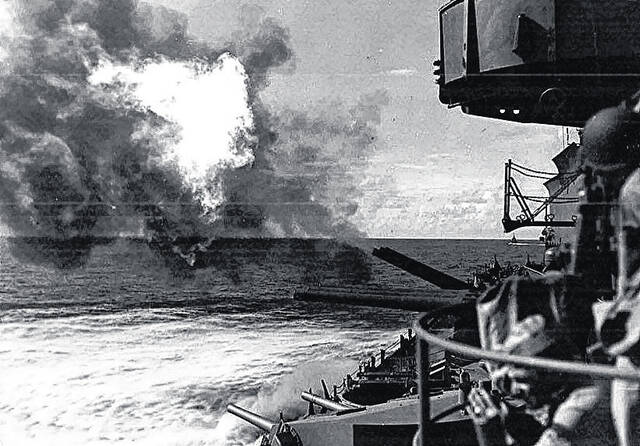
ELIZABETHTOWN – The citizens of Bladen County played a pivotal role in the campaign to preserve the USS North Carolina, a historic battleship that now serves as a museum in Wilmington. In the early 1960s, a statewide fundraising effort was launched to secure the ship’s future, with local Mayor Wallace Leinwand leading the charge. His efforts, along with those of many dedicated residents, helped raise significant funds to bring the battleship back to North Carolina, where it now stands as a testament to the state’s wartime history.
Wallace Leinwand: A Local Hero
Wallace Leinwand, a prominent figure in Bladen County, was instrumental in the campaign to save the USS North Carolina. His leadership as mayor and involvement in the Rotary Club showcased his commitment to the community and its history. According to his son, Ricky Leinwand, Wallace was not only a charismatic leader but also a skilled fundraiser. Appointed by Governor Terry Sanford as one of the honorary ambassadors for the fundraising campaign, he raised more money per capita than anyone else in the state. This achievement underscored the strong community spirit in Bladen County and its dedication to preserving a vital piece of American history.
The USS North Carolina, commissioned in 1941, played a significant role during World War II, participating in numerous battles and earning a reputation for resilience. Despite being hit by a torpedo, the battleship returned to service and continued to support military operations in the Pacific. The ship’s storied past includes escorting supply transports to Guadalcanal and engaging in critical battles such as the Battle of Kwajalein. The ship’s legacy is not only a reflection of its military prowess but also of the sacrifices made by over 7,000 North Carolinians who served aboard her during the war.
Preserving History: The Fundraising Campaign
The campaign to save the USS North Carolina began in earnest in 1958 when the Navy announced plans to scrap the battleship. Recognizing the importance of the ship as a memorial to the 11,000 North Carolinians who died in service during World War II, citizens rallied together to raise the necessary funds. Governor Terry Sanford appointed a Battleship Commission to oversee the fundraising efforts, which included a unique initiative encouraging schoolchildren across the state to contribute ten cents each. This grassroots effort resulted in an impressive turnout, with 700,000 students participating and raising $330,000 in total.
On September 6, 1961, the USS North Carolina was officially transferred to the state of North Carolina during a ceremony in Bayonne, New Jersey. The battleship opened to the public on October 14, 1961, and has since become a cherished landmark and a symbol of the state’s naval history. Today, the USS North Carolina stands as a memorial to the sacrifices made during World War II, preserving the legacy of those who served and honoring the community’s commitment to remembrance.
For more information about the USS North Carolina and its history, visit the official Battleship North Carolina website at battleshipnc.com.
