
Fire and Legal Consequences Surrounding the ‘Caesarea Trader’ Ferry Incident
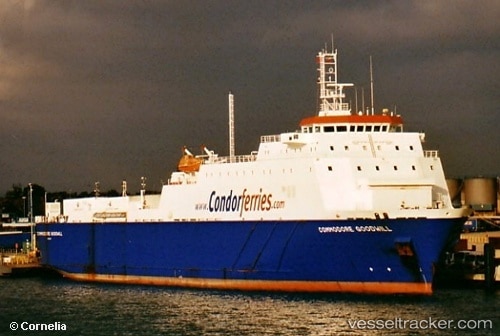
On February 9, 2026, a fire erupted on the ferry ‘Caesarea Trader’ while it was navigating near the Isle of Wight. The vessel was traveling from St Helier, Jersey, to Portsmouth when it dropped anchor at coordinates 50° 3′ N, 001° 06′ W. The Royal National Lifeboat Institution (RNLI) and other nearby vessels responded promptly to provide assistance. Fortunately, there were no reported injuries as a result of the fire. The cause of the blaze is currently under investigation.
Legal Ramifications for the Collision
In a related matter, Lewis Carr, a 31-year-old officer on the ‘Caesarea Trader’, was sentenced to 20 months in prison for his role in a tragic maritime collision that claimed the lives of three fishermen aboard the trawler ‘L’Ecume II’ on December 8, 2022. Carr was found guilty of conduct endangering ships, structures, and people at sea, following a four-week trial. The jury, however, could not reach a consensus on a more severe manslaughter charge.
During the trial, Crown Advocate Matthew Maletroit emphasized that Carr had failed to maintain a proper lookout and did not utilize the available navigational equipment effectively. He presented evidence, including a reconstruction of the incident, to illustrate how Carr’s oversight contributed to the collision. The court was informed that Carr had violated several maritime safety regulations. In his defense, Carr expressed remorse, stating, “I recognize the pain and anger felt by the families and I can only say that I am truly sorry for their loss.” Despite acknowledging his mistakes, Carr’s defense attorney argued that his actions were not grossly negligent.
Carr had been the second officer on the ‘Commodore Goodwill’, the ferry’s previous name, and was primarily responsible for navigation at the time of the incident. The jury’s decision to convict him of a lesser charge highlights the complexities in determining accountability in maritime accidents.
Acquittal of Fellow Crew Member
In a separate but related trial, jury members acquitted fellow crew member Artur Sevash-Zade of manslaughter charges. The jury could not reach a verdict regarding his role in the incident. However, Lewis Carr was found guilty of breaching Jersey’s shipping law for failing to fulfill his duties adequately during the lead-up to the collision. Sevash-Zade’s defense asserted that he acted appropriately and followed instructions from Carr, who was responsible for the navigation.
Prosecutors argued that both defendants neglected to prioritize safety, ignoring collision warnings from their radar systems just minutes before the crash. They were preoccupied with other tasks instead of taking necessary precautions. The trial raised critical questions about maritime safety practices and the responsibilities of crew members.