
Cargill Launches First Green Methanol Vessel
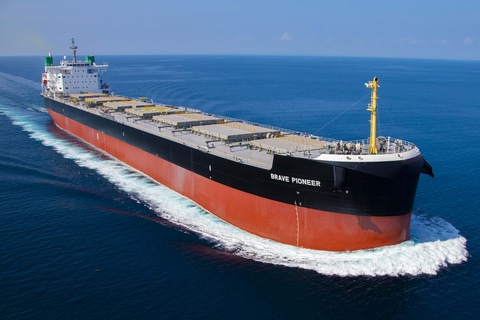
Cargill has embarked on a significant journey towards sustainability with the maiden voyage of the Brave Pioneer, its first green methanol dual-fuel dry bulk vessel. This initiative is part of Cargill’s broader decarbonization strategy, which emphasizes innovation and collaboration with partners to develop future-ready solutions for the shipping industry. The Brave Pioneer is set to demonstrate the potential of green methanol as a lower-carbon alternative to traditional marine fuels.
Brave Pioneer Sets Sail for Sustainability
The Brave Pioneer, constructed by Tsuneishi Shipbuilding Co., Ltd. and owned by Mitsui & Co. Ltd., is designed to operate on both conventional marine fuels and green methanol. This innovative vessel is expected to reduce CO2 emissions by up to 70% compared to traditional fuel sources. The ship departed from the Philippines and will make a stop in Singapore to bunker green methanol before continuing its journey to Western Australia and eventually Europe.
During this inaugural voyage, Cargill plans to conduct a series of operational trials. These trials aim to evaluate the readiness for methanol bunkering, trace and verify environmental attributes through carbon accounting systems, and assess the market’s appetite for low-carbon freight services. Jan Dieleman, President of Cargill’s Ocean Transportation business, emphasized the importance of testing new technologies in the shipping industry. He stated, “Decarbonizing global shipping requires a mix of technologies and the willingness to take bold steps before the entire ecosystem is ready.”
Building a Low-Carbon Fleet for the Future
The launch of the Brave Pioneer is just the beginning, as Cargill plans to add four more green methanol vessels to its fleet in the coming years. This expansion is part of Cargill’s multi-solution approach to decarbonization, which includes wind-assisted propulsion, voyage optimization technologies, energy-efficiency retrofits, and the exploration of alternative fuels like biofuels and ethanol.
Cargill’s commitment to sustainability aims to embed eco-friendly practices into global ocean supply chains while providing customers with practical, lower-carbon freight options. Dieleman noted that the new fleet is designed for adaptability, performing efficiently on conventional fuels while allowing for a transition to greener alternatives as they become more widely available. This strategy not only future-proofs ocean transport but also sends a strong demand signal to the market, encouraging others in the maritime sector to join the movement towards sustainable shipping.
As one of the largest charterers of dry bulk freight globally, Cargill’s initiatives are expected to play a crucial role in reducing maritime emissions over the next decade, supporting the company’s broader efforts to lower supply chain emissions and foster a more sustainable global food system.
