
Chinese Cargo Ship Transforms into Drone Carrier with Advanced Launch System
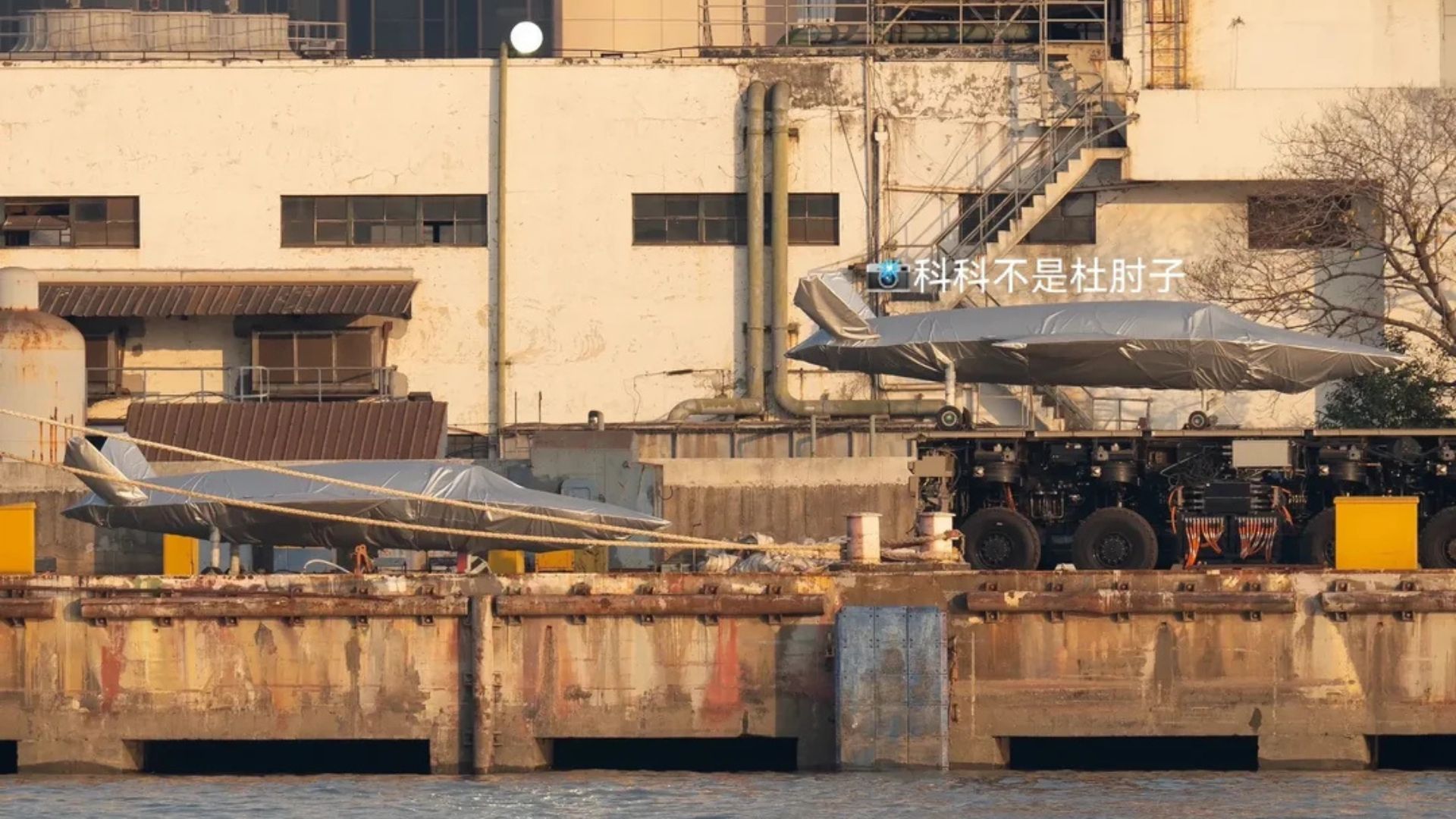
A Chinese cargo ship has undergone a remarkable transformation, now appearing as a missile-carrying warship equipped with a ship-mounted electromagnetic aircraft launch system (EMALS). This development, reported by *The War Zone*, showcases the vessel’s capability to launch large, fixed-wing combat drones. Recent imagery from Shanghai’s Hudong-Zhonghua shipyard reveals that the previously seen modular, road-mobile EMALS has been installed on the cargo ship, which had recently attracted attention for carrying approximately 60 containerized missile launch cells, sensors, and close-in defense systems.
The rapid reconfiguration of the ship indicates a shift from an arsenal-style surface combatant to a multi-role drone carrier within just a few days. This evolution aligns with the People’s Liberation Army Navy’s ongoing experimentation with unconventional platforms and modular combat systems. The converted cargo ship is currently docked near the PLAN’s new Type 076 amphibious assault ship, *Sichuan*, which is under construction and also features an EMALS catapult for launching various crewed and uncrewed aircraft.
Significant Changes and Technical Challenges
Following the initial sighting of the cargo ship with missile systems, large stealthy drones resembling collaborative combat aircraft were observed nearby. Shortly thereafter, a vehicle-based electromagnetic catapult system appeared alongside the vessel. This system consists of multiple truck-mounted segments that connect to form a scalable launch track. Analysts have raised concerns regarding the safety and reliability of such a segmented catapult operating at sea, especially after new images confirmed its installation on the ship’s deck.
The ship’s layout has been significantly altered to accommodate the catapult, reducing the number of vertical missile launch cells from 60 to 24. The remaining space is now utilized for the catapult system and additional drones. The vessel retains a Type 1130 30mm close-in weapon system, a large phased-array radar, and various containerized sensors and communications equipment. The catapult appears to consist of four connected vehicles arranged in a straight line along the deck, with drones positioned in a launch-ready configuration.
Despite these advancements, significant technical questions remain. The limited deck space poses challenges, particularly concerning the large wingspan of the drones. Analysts are uncertain about the system’s performance on a rolling, pitching ship, as well as its durability against harsh maritime conditions. Additionally, the power requirements for electromagnetic catapults are substantial, particularly when launching heavier aircraft over short distances. The absence of a visible recovery system for the drones raises further concerns about their operational viability.
Strategic Implications of Rapid Reconfiguration
The swift transformation of a commercial cargo ship into both a missile platform and a potential drone carrier sends a broader message about China’s military capabilities. It suggests that China may be signaling its ability to quickly adapt elements of its extensive commercial fleet into combat-ready platforms. This development is likely to be closely monitored by the United States and its allies, who are already grappling with the scale and pace of China’s naval expansion.
Clarksons joins CCSA to help drive CO2 shipping solutions and evolution of the sector
The modular nature of the EMALS system allows for adjustments based on the size and weight of the aircraft being launched, making it potentially attractive for both land-based and maritime applications. However, the lack of a recovery system for the drones raises questions about their reuse, limiting their operational scope unless designed for one-way missions.
As China continues to unveil new military technologies, the implications of this rapid reconfiguration will be significant for global naval dynamics. The ability to convert commercial vessels into military assets could alter the balance of power at sea, prompting further scrutiny from international observers.
