
Congressman’s Blunder Linked to Submarine Losses
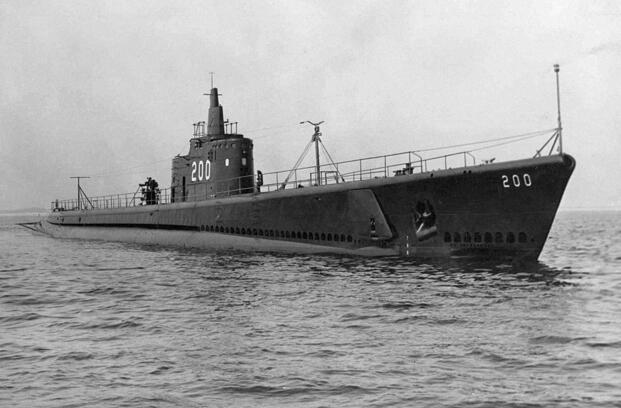
In a startling revelation from World War II, a careless statement by Congressman Andrew J. May may have inadvertently led to increased American submarine losses in the Pacific. May disclosed sensitive information regarding Japanese anti-submarine tactics during a press conference in 1943, which coincided with a spike in casualties among U.S. submarines. This incident, known as the May Incident, highlights the critical importance of operational security during wartime.
A Critical Flaw in Japanese Tactics
During the early years of the Pacific War, American submarines enjoyed a significant advantage over Japanese anti-submarine warfare (ASW) tactics. U.S. submariners, like Robert Hunt of the USS Tambor, completed multiple war patrols while exploiting a critical flaw in Japanese depth charge deployment. Japanese forces typically set their depth charges for older American submarines, which had a maximum operating depth of around 200 feet. However, the newer Balao-class submarines could dive to depths of 400 feet, allowing them to evade these attacks effectively.
For a time, American submarines thrived under this tactical oversight. Japanese escort ships often dropped depth charges too shallow, allowing U.S. submarines to escape unharmed. This advantage persisted until May’s ill-fated press conference in June 1943, where he revealed that American submariners were surviving due to the Japanese setting their depth charges too shallow. This information quickly spread through the media, reaching Japanese intelligence and prompting a change in their tactics.
Following May’s disclosure, Japanese forces recalibrated their depth charges to detonate at deeper levels, significantly increasing the risk to American submarines. Vice Admiral Charles A. Lockwood, who commanded the Pacific submarine fleet, later noted that this change in tactics resulted in the loss of numerous submarines and the lives of hundreds of sailors.
The Fallout from the May Incident
The aftermath of May’s press conference was immediate and devastating. In the months that followed, American submarines faced some of their heaviest losses. One notable incident involved the USS Wahoo, commanded by Lieutenant Commander Dudley W. “Mush” Morton. The Wahoo was lost in October 1943 after being targeted by Japanese anti-submarine aircraft, which had adapted their tactics following May’s revelations. Although no direct evidence links May’s statement to the loss of specific submarines, the timing raised serious concerns among naval leaders.
Lockwood expressed his belief that May’s indiscretion cost the Navy ten submarines and 800 officers and men. The U.S. Navy ultimately lost 52 submarines during the war, with a casualty rate of nearly 22 percent, the highest of any military branch. The May Incident serves as a cautionary tale about the consequences of leaking sensitive military information, even unintentionally.
Andrew May’s Legacy
Despite the gravity of his mistake, May faced no immediate repercussions from the Navy and continued to serve in Congress. However, his political career later unraveled due to a separate scandal involving bribery related to defense contracts. In 1947, he was convicted and served time in federal prison. He was pardoned by President Harry Truman in 1952 and returned to his law practice until his death in 1959.
The May Incident remains a significant example of how operational security can be compromised by careless talk. While the exact impact of May’s statement on American submarine losses may never be fully understood, it underscores the critical need for vigilance in safeguarding military secrets during times of conflict.
