
Danish Archaeologists Discover Largest Medieval Cargo Ship in Europe
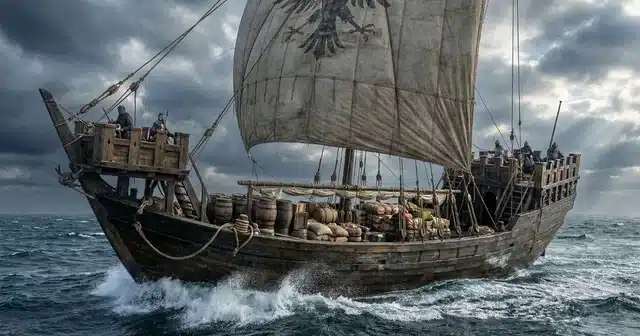
A team of Danish archaeologists has made a groundbreaking discovery in the Øresund Strait, unearthing what experts believe to be the largest medieval cargo ship ever found in Europe. This significant find was made during surveys related to the Lynetteholm land-reclamation project near Copenhagen. The Viking Ship Museum has confirmed the details of this remarkable vessel, which measures approximately 100 feet in length and 33 feet in width, dating back to the early 15th century.
The ship, named Svælget 2 after the channel where it was located, is estimated to have a deadweight capacity of about 300 tons. This substantial cargo capacity suggests that the ship was likely used for long-distance trade, reflecting the rapid expansion of maritime commerce in Europe during that period. Excavation leader Otto Uldum emphasized the importance of this discovery, stating, “This is clear evidence that everyday goods were being traded on a huge scale.” He noted that shipbuilders of the time were pushing the limits of design to create larger vessels capable of transporting bulky goods such as salt, timber, bricks, and staple foods.
Insights into Construction and Use
Initial analyses indicate that the ship’s planks originated from Poland, while its ribs were crafted in what is now the Netherlands, regions renowned for their advanced shipbuilding techniques during the medieval era. Tree-ring dating has placed the construction of the Svælget 2 around the year 1410. Researchers believe that the ship was designed to facilitate trade between modern-day Holland and various ports along the Baltic Sea, a notoriously challenging route for wooden sailing vessels of this size.
The remarkable state of preservation of the shipwreck has surprised researchers. Among the notable findings is an unusually sophisticated onboard kitchen for its time, which includes a brick stove specifically designed for cooking during extended voyages. This discovery provides valuable insights into the daily lives of the crew and the operational capabilities of medieval cargo ships.
The excavation of Svælget 2 not only sheds light on the maritime practices of the past but also enhances our understanding of trade networks in medieval Europe. As researchers continue to study the ship and its artifacts, they hope to uncover more details about the economic and cultural exchanges that took place during this pivotal period in history.
