
Defence Minister Aims to Revitalize Mangalia Shipyard with Military Contracts
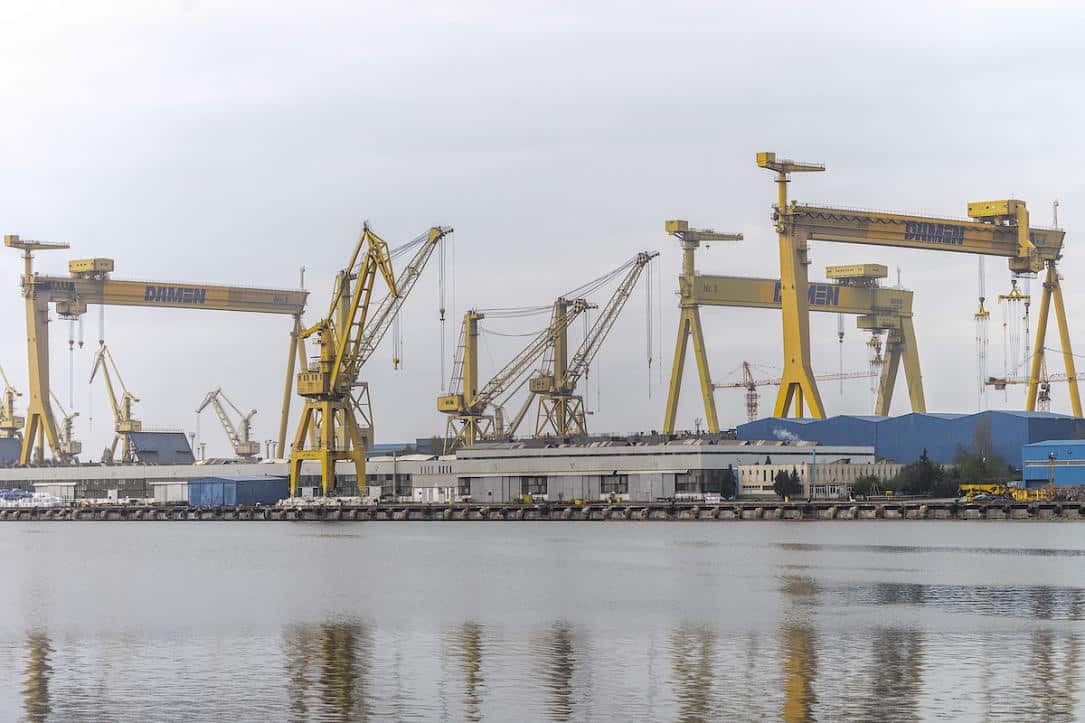
Defence Minister Radu Miruță has announced plans to rescue the struggling Mangalia Shipyard by involving it in military ship construction projects funded through the Security Action for Europe (SAFE) mechanism. The proposed initiative includes a substantial EUR 700 million contract for the construction of two Offshore Patrol Vessels (OPVs). However, experts express skepticism regarding the shipyard’s capability to meet the project deadlines.
Miruță emphasized the urgency of the situation, stating, “The Mangalia Shipyard can only be saved if it produces such ships in the immediate future.” This statement highlights the critical need for the shipyard to secure contracts that can ensure its operational viability. The proposed contract is seen as a lifeline for the facility, which has faced challenges in recent years.
Despite the optimism from the minister, sources within the defense industry have raised concerns about the feasibility of the project. Experts suggest that awarding the construction contract to Mangalia may hinder the timely delivery of the vessels, with a looming deadline of 2030. This timeline poses significant challenges, as industry insiders believe that no shipyard in Romania, except for the Galați facility, can meet such stringent requirements.
Ownership and Efficiency Concerns at Mangalia Shipyard
The Mangalia Shipyard is primarily owned by the Romanian state, which holds a 51% stake, while the remaining 49% is owned by the Dutch company Damen. Damen also operates a shipyard in Galați, where it has successfully produced over 30 military vessels for various NATO and EU countries, including the Netherlands, Belgium, Pakistan, and Canada. Notably, however, none of these ships have been constructed for the Romanian Army.
Industry experts have pointed out that Mangalia’s efficiency is a significant concern. According to a source with extensive naval expertise, “On the OPV side, no shipyard in the country is capable of delivering the ships by 2030, apart from the one in Galați.” This statement underscores the competitive advantage that the Galați shipyard holds over Mangalia, which has struggled to maintain operational efficiency.
Furthermore, experts have indicated that smaller shipyards, such as those in Tulcea and Galați, demonstrate greater efficiency compared to Mangalia. This raises questions about the viability of relying on Mangalia for critical military projects, especially given the pressing deadlines and the need for timely delivery of naval assets.
As the situation unfolds, the future of the Mangalia Shipyard remains uncertain, with the potential for military contracts serving as a pivotal factor in its survival. The coming months will be crucial in determining whether the shipyard can overcome its challenges and fulfill the expectations set by the Romanian government.
