
Europe’s E-Fuels Projects Fall Short for Shipping
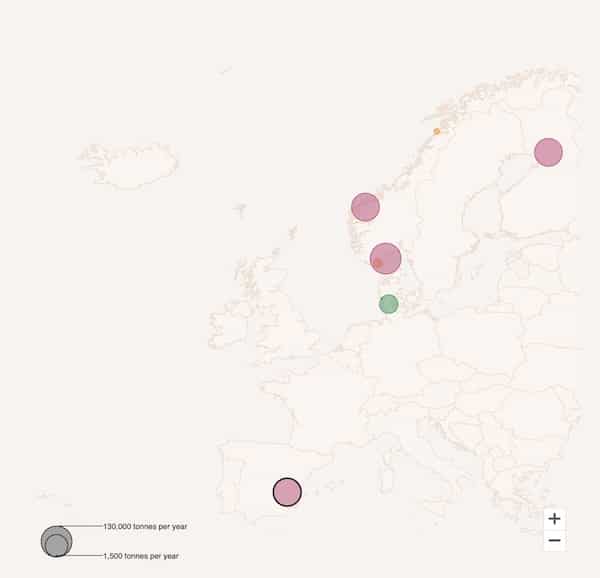
Recent findings from Transport & Environment (T&E) reveal that Europe’s green hydrogen and e-fuels initiatives are not on track to meet the maritime sector’s needs. An analysis of 80 projects indicates that while potential production could reach 3.6 million tonnes of oil equivalent by 2032, only a fraction is earmarked for shipping. Without new policy incentives, the maritime industry may rely on imported fuels, undermining Europe’s climate goals.
Current Landscape of E-Fuels Projects
T&E’s comprehensive review highlights the status of various green hydrogen and e-fuels projects across Europe, specifically targeting the maritime sector. Although the total projected output is significant, with 3.6 million tonnes of oil equivalent anticipated by 2032, less than 5% of this volume is dedicated to shipping. The report emphasizes that many of these projects are still in the early stages of development, and without robust policy support, the maritime sector may not achieve its e-fuel targets.
Currently, the production levels fall short of the FuelEU Maritime initiative’s 2031 goal of a 1% e-fuel uptake. The findings suggest that without clear EU and national policies, the shipping industry may miss out on the opportunity to lead in climate initiatives. Instead, it may have to rely on imported fuels, which could hinder both environmental progress and energy security within Europe.
Leading Countries and Operational Projects
Spain, Denmark, Norway, and France are at the forefront of green hydrogen and e-fuel production, with a significant portion of their output aimed at the maritime sector. In France, 100% of the production is intended for shipping, while Spain, Norway, and Denmark allocate 63%, 53%, and 42% respectively. However, when focusing solely on volumes dedicated to shipping, the numbers are less promising. For instance, Denmark and Spain contribute minimal amounts—0.02 and 0.05 million tonnes of oil equivalent, respectively—indicating that shipping is often just one of many industrial applications for these fuels.
Among the operational projects, the Kassø project in Denmark has become a notable example, supplying e-methanol to a Maersk containership since its launch in 2025. Additionally, Spain’s Iberdrola-Fertiberia green ammonia project has been producing 3,000 tonnes of e-ammonia annually since 2022, while Norway’s Herøya project has been operational since 2024. Despite these advancements, the overall production remains insufficient to meet the maritime sector’s needs, accounting for only a quarter of the required volumes to meet the FuelEU Maritime’s 1% threshold by 2031.
As Europe continues to navigate its energy transition, the success of these e-fuel projects will be crucial for achieving climate targets and enhancing the region’s industrial capabilities.
