
Global Shipbreaking Report Highlights Safety Concerns in South Asia
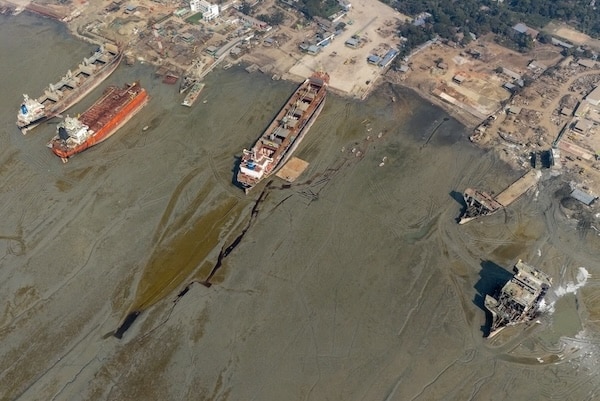
The NGO Shipbreaking Platform has released its annual report for 2025, revealing that a staggering 85% of the global tonnage dismantled last year was processed on three beaches in Bangladesh, India, and Pakistan. A total of 321 vessels were dismantled worldwide, with 214 of these ending up in South Asia. Despite the known dangers associated with beaching ships, these countries remain the preferred choices for shipbreaking. The report underscores the severe risks faced by workers and local communities, as well as the detrimental impact on fragile coastal ecosystems.
Tragically, eleven workers lost their lives in South Asia during 2025, with at least sixty-two others suffering injuries due to unsafe working conditions. One notable incident occurred at the Ziri Subedar yard in Chattogram, Bangladesh, where an oil tank explosion injured eight workers during the dismantling of the BANGLAR JYOTI, a vessel owned by the Government of Bangladesh. These incidents highlight the urgent need for improved safety measures in shipbreaking yards.
Regulatory Challenges and Environmental Concerns
Bangladesh has approved seventeen yards under the International Maritime Organisation’s Hong Kong Convention (HKC), which came into force in June 2025. However, serious accidents continue to occur even at these certified yards, and the reporting of such incidents remains inconsistent or entirely lacking. In India, no shipbreaking yards have yet been authorized under the HKC, although over 100 yards in Alang-Sosiya possess private Statements of Compliance with the Convention’s requirements.
Ingvild Jenssen, Executive Director and Founder of the NGO Shipbreaking Platform, emphasized that the current standards set by the HKC do not guarantee safe and environmentally sound practices. She called for a review of the Convention to strengthen its requirements and phase out the hazardous beaching method. Jenssen also stressed the importance of enforcing the Basel Convention’s restrictions on hazardous waste trade, advocating for accountability within the shipping industry.
The report warns that the low number of ships scrapped in recent years, due to favorable operating rates, conceals a growing backlog of aging vessels. This backlog includes numerous tankers from the so-called dark fleet, which may be illicitly traded to Indian beaching yards using cash, cryptocurrency, and foreign currencies to evade sanctions. Such developments risk creating a parallel shipbreaking economy where safety standards and environmental protections are easily bypassed.
Call for Safer Ship Recycling Practices
The NGO Shipbreaking Platform advocates for the recycling of vessels at safe, transparent, and fully regulated facilities, moving away from harmful beaching practices. Existing facilities that meet these standards, particularly in the European Union, continue to operate below capacity, highlighting the availability of safer alternatives that are often overlooked by the shipping sector.
Nicola Mulinaris, Senior Communication and Policy Advisor of the NGO Shipbreaking Platform, reiterated the need for the shipping industry to prioritize safe recycling practices. As the number of vessels heading for scrap increases, including those from the dark fleet, it is crucial to ensure that these ships are dismantled in a manner that protects workers and the environment.
The findings of the NGO Shipbreaking Platform’s report serve as a stark reminder of the ongoing challenges in the shipbreaking industry, emphasizing the need for urgent reforms to enhance safety and environmental standards.
