
Hubei’s Shipbuilding Industry Embraces Green Innovation
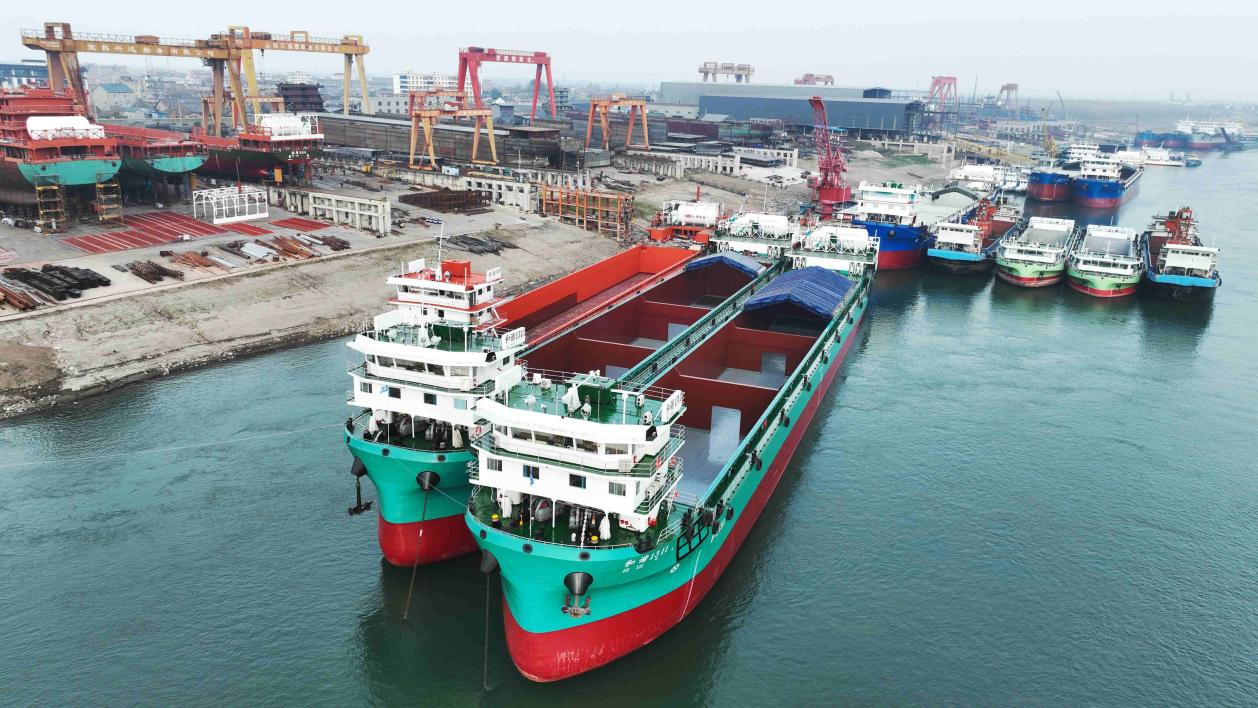
In a significant leap towards sustainable shipping, Hubei province is making waves in the shipbuilding sector with the introduction of advanced vessels like the all-electric bulk carrier Gezhouba. This innovative ship, measuring nearly 130 meters and capable of carrying 13,740 tons, is set for delivery in March 2026. Equipped with cutting-edge intelligent navigation systems, Gezhouba represents a pivotal shift in inland shipping towards greener and smarter solutions.
Innovative Developments in Shipbuilding
At the China Star Shipping dock in Yichang, the Gezhouba is undergoing outfitting, showcasing the province’s commitment to integrating new energy propulsion with intelligent navigation. Yan Xinping, an academician at the Chinese Academy of Engineering, highlighted that this vessel is the first large inland ship to feature an intelligent navigation and control system, allowing for remote operation, autonomous obstacle avoidance, and automatic berthing and unberthing.
Hubei’s strategic location, with its extensive waterways and transportation networks, positions it as a leader in the transition to green shipping. The province is home to 29 major shipbuilding enterprises, boasting an annual shipbuilding capacity of 5.31 million deadweight tons. The China State Shipbuilding Corporation (CSSC) 712 Institute in Wuhan is at the forefront of this innovation, conducting integrated testing of battery, motor, and control systems that power over half of China’s new energy marine propulsion systems. Deputy Director Li Mingyong noted the release of second-generation green equipment, including advanced battery packs and smart ship bridge systems.
To further enhance its inland shipping industry, Hubei is focusing on five key areas: green development, intelligence, standardization, high-end development, and internationalization. The province has already launched several demonstration vessels, including the world’s largest all-electric cruise ship and China’s first hydrogen fuel-powered vessel, underscoring its commitment to sustainable maritime solutions.
Strengthening the Innovation Ecosystem
Hubei’s success in shipbuilding is attributed to a robust collaborative innovation system that unites enterprises, research institutions, and universities. The province has established a high-level innovation ecosystem supported by national key laboratories and partnerships with leading educational institutions. This collaborative approach has fostered advancements in shipbuilding technology and innovation.
In late November, a 130-type LNG single-fuel river-sea multipurpose vessel was delivered ahead of schedule, thanks to the Yangtze River shipbuilding supply chain platform, which streamlines research, design, construction, and financing. This efficiency resulted in a 4% reduction in overall costs, demonstrating the effectiveness of Hubei’s integrated approach.
Financial institutions in the province are also stepping up, developing innovative green credit and leasing products to support the shipbuilding sector. Hubei has introduced an administrative filing system for the industry, easing market access and focusing on key sectors like freight transport and cultural tourism to create representative application scenarios.
As of the first three quarters of 2025, Hubei’s shipbuilding industry reported an output value of 72.71 billion yuan, marking a 17.3% increase year-on-year. Notably, green and intelligent ships accounted for 75.8% of newly secured ship repair and construction orders, reflecting the province’s commitment to sustainable maritime practices.
