
IAEA negotiates ceasefire at nuclear plant in Ukraine
IAEA Initiates Ceasefire Talks to Protect Zaporizhzhoa Nuclear Plant
The International Atomic Energy Agency (IAEA) has commenced discussions with Russia regarding a limited ceasefire around Ukraine’s Zaporizhzhoa nuclear power plant. This initiative aims to facilitate repairs to a damaged power line, as confirmed by IAEA Director General Rafael Grossi. The talks come in response to recent fighting that compromised the last operational 330-kilovolt emergency power line supplying the facility, which is currently under Russian occupation.
On January 2, hostilities resulted in damage to this critical power line, leaving the plant reliant solely on its main 750-kilovolt power line. Grossi emphasized that a ceasefire within a 10-kilometer radius of the plant is essential for Ukrainian technicians to conduct necessary repairs. The IAEA has previously negotiated three similar ceasefires in recent months to ensure the safety and operational integrity of the facility, which houses six reactors and is the largest nuclear power plant in Europe. Although the reactors are currently shut down, they require continuous cooling to prevent any potential safety hazards.
In recent weeks, IAEA observers have reported an uptick in military activity near the plant, raising concerns about the safety of the facility and the surrounding area. The ongoing conflict poses significant risks not only to the nuclear site but also to the broader region, highlighting the urgent need for diplomatic efforts to establish a secure environment for repair operations.
Escalating Attacks on Maritime and Civilian Targets in Ukraine
In a separate development, Ukrainian officials reported that Russian forces attacked two foreign-flagged civilian vessels in the southern Odesa region on January 2, resulting in the death of a Syrian citizen and injuries to another individual. This incident underscores the intensifying Russian military operations against Ukraine’s maritime export routes, which have seen a marked increase over the past two months. These attacks are perceived as retaliation for previous strikes on Russian “shadow fleet” tankers involved in oil exports.
Ukrainian Deputy Prime Minister Oleksiy Kuleba stated that one of the targeted vessels was en route to the port of Chornomorsk to collect a grain cargo, while the other was near Odesa, carrying soybeans. The vessels were registered under the flags of Saint Kitts and Nevis and the Comoros Islands, respectively. Kuleba condemned the attacks, asserting that they demonstrate Russia’s deliberate targeting of civilian infrastructure and international shipping.
The deep-water seaports in the Odesa region are vital for Ukraine’s economy, particularly for the export of agricultural products. According to reports, the number of Russian attacks on ports in this region has nearly tripled compared to the previous year, reaching 96 incidents in 2025 alone. This escalation poses a significant threat to Ukraine’s ability to maintain its export capabilities and stabilize its economy amid ongoing conflict.
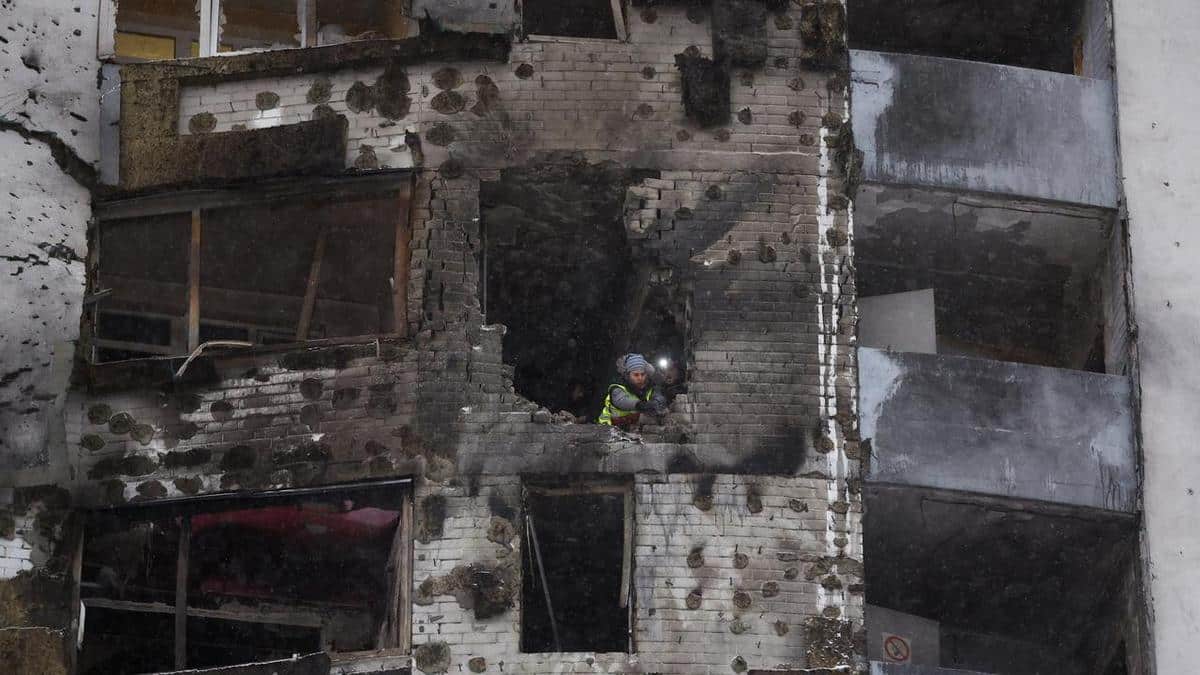
In Kyiv, Mayor Vitali Klitschko has urged residents to temporarily evacuate the city, where approximately 6,000 apartment blocks are without heating due to recent Russian airstrikes. The situation has been exacerbated by harsh winter conditions, prompting city services to operate in emergency mode. Klitschko’s recommendation is not an official order but rather an advisory for residents to seek warmer accommodations until the heating situation improves. The Energy Ministry reported that around 500,000 consumers in Kyiv and surrounding areas were without electricity following the attacks, which involved over 200 drones and numerous missiles.
