
INSV Kaundinya Sets Sail on Historic Voyage
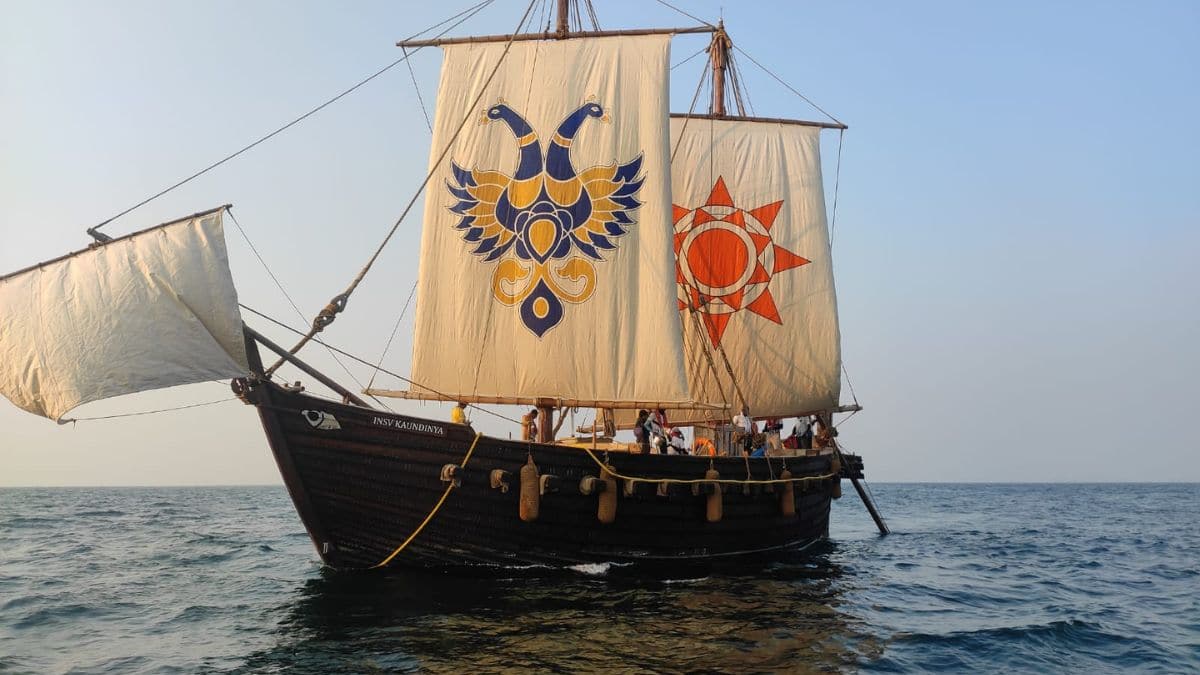
The INSV Kaundinya, a remarkable stitched sail ship, has embarked on its maiden voyage from Porbandar, India, to Muscat, Oman. This journey, which began on December 29, 2025, aims to showcase India’s rich maritime heritage by retracing ancient trade routes that once connected India with West Asia. Built using 5th-century CE techniques, the vessel operates without an engine or modern propulsion, relying solely on wind and sails to navigate the seas.
A Journey Through History
INSV Kaundinya’s voyage is not just a maritime expedition; it is a symbolic journey through history. The ship’s official social media account highlighted its mission, stating, “Charting history across the seas. INSV Kaundinya retraces ancient Indian transoceanic trade routes, sailing from India to Muscat, Oman—showcasing the legacy of stitched shipbuilding and India’s timeless maritime connect with the Indian Ocean world.” This initiative reflects a blend of historical significance, craftsmanship, and modern naval expertise.
The ship is designed to recreate the conditions faced by ancient Indian mariners who undertook long-distance voyages across oceans. By sailing this historic route, INSV Kaundinya aims to revive the memory of the bustling trade corridors that once facilitated the exchange of textiles, spices, and other goods between India, West Asia, and beyond. The journey is expected to shed light on India’s extensive maritime history, which has often been overlooked in historical narratives.
Craftsmanship Behind INSV Kaundinya
INSV Kaundinya was officially inducted into service by the Indian Navy in May 2025 at a ceremony in Karwar, Karnataka. This non-combat vessel is a testament to traditional shipbuilding techniques, drawing inspiration from ancient vessels depicted in the Ajanta Caves and described in historical texts. The ship is constructed using a unique method known as the Tankai technique, where wooden planks are stitched together with coconut coir rope and sealed with natural resins, cotton, and oils. This ancient method, which avoids the use of metal, dates back to the 5th century CE.
Measuring approximately 19.6 meters in length and 6.5 meters in width, INSV Kaundinya has a draft of around 3.33 meters. The vessel is crewed by 15 sailors trained to operate under traditional sailing conditions. The project was initiated through a tripartite agreement involving the Ministry of Culture, the Indian Navy, and Hodi Innovations, with funding from the Ministry of Culture. Skilled artisans from Kerala, led by master shipwright Shri Babu Sankaran, played a crucial role in stitching the vessel.
INSV Kaundinya carries various motifs, including the Gandabherunda, a two-headed eagle from the Kadamba dynasty, and a symbolic Harappan-style stone anchor, reflecting its cultural heritage.
Retracing Ancient Maritime Routes
The route from India to Oman was historically significant as it served as a central trade corridor for Indian merchants and sailors. This maritime highway facilitated the exchange of goods such as copper, carnelian beads, timber, and ceramics between the Indus Valley region and ancient Oman. The decision to undertake this voyage is rooted in historical and symbolic significance, aiming to highlight India’s active role in maritime trade and exploration.
Sanjeev Sanyal, a member of the Economic Advisory Council to the Prime Minister, emphasized the broader historical objectives of the project, stating, “Indian history has often been portrayed as passive, overlooking centuries of maritime activity, trade, and exploration.” He noted that Indians were not merely passive recipients of civilization but were active adventurers and traders long before other civilizations.
The INSV Kaundinya’s journey is a celebration of India’s maritime legacy and a reminder of the rich history of trade and cultural exchange that once flourished across the seas.
