
Iran Unveils Advanced Maritime Simulator for Training
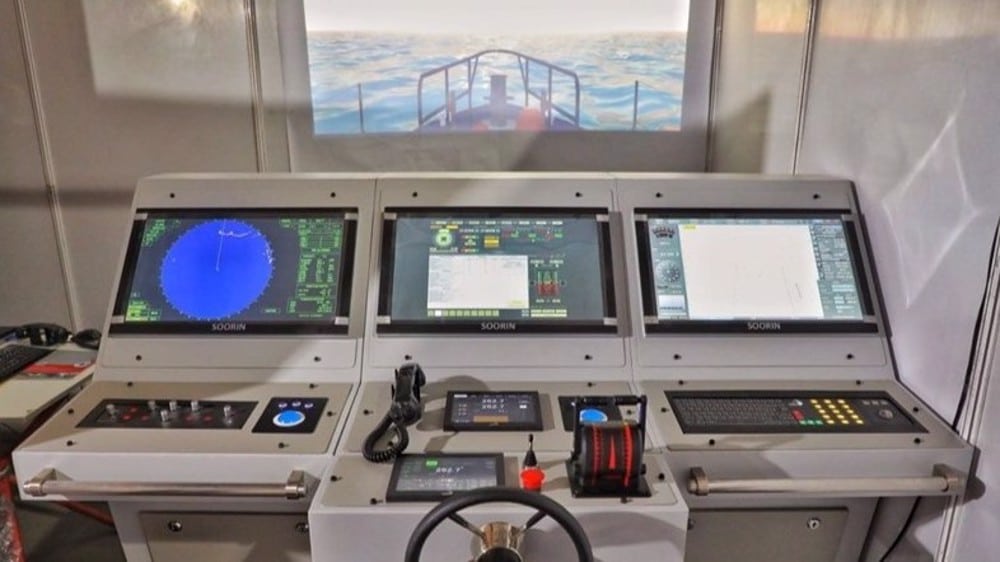
Iran has introduced a state-of-the-art command bridge simulator capable of emulating operations for 300 different civilian and military vessels. This innovative development underscores the nation’s growing expertise in maritime training and simulation technologies. The simulator serves as a vital educational tool for navigation and seafaring, offering a realistic training environment for both military and civilian maritime operations.
Comprehensive Training Capabilities
The newly developed simulator is designed to replicate a wide array of maritime scenarios, enabling trainees to acquire essential skills without the risks and expenses associated with real-life sea training. According to Mohammad-Hossein Kardar, the operator and technical supervisor of the simulator, the system can model various vessels, from lifeboats to large bulk carriers and military warships. Kardar stated, “At present, we have data for 300 light and heavy vessels, covering everything from lifeboats to bulk carriers and warships.”
Four maritime training schools located in the southern and northern port cities of Bandar Abbas, Khorramshahr, Bandar Torkaman, and Chabahar have already integrated this advanced system into their curricula. In addition to its civilian applications, the simulator has been tailored for military use, with two advanced military models featuring a combat information center (CIC) launched for the army in Bushehr and Bandar Abbas. Kardar emphasized that users can master up to 90 percent of the necessary skills in this simulated environment before transitioning to real sea conditions.
Economic and Strategic Significance
The simulator not only enhances training efficiency but also offers significant economic advantages. Kardar noted that the cost of the domestically produced simulator is approximately one-third that of comparable foreign models. This affordability aligns with Iran’s broader strategy to develop indigenous technologies, particularly in transportation, defense, and strategic infrastructure, as a response to international sanctions that have restricted access to foreign equipment.
While the simulator has not yet been exported, current efforts are focused on fulfilling domestic demand from both military and educational sectors. Kardar mentioned that the system is continuously evolving, with plans to incorporate additional features such as an engine room simulator, liquid cargo loading operations, and cargo handling workshops. As Iran continues to invest in its maritime training capabilities, this simulator represents a significant step forward in enhancing safety standards and operational efficiency in both commercial shipping and naval operations.
