
Japan Mobilizes F-2 Fighters Amid Rising Tensions
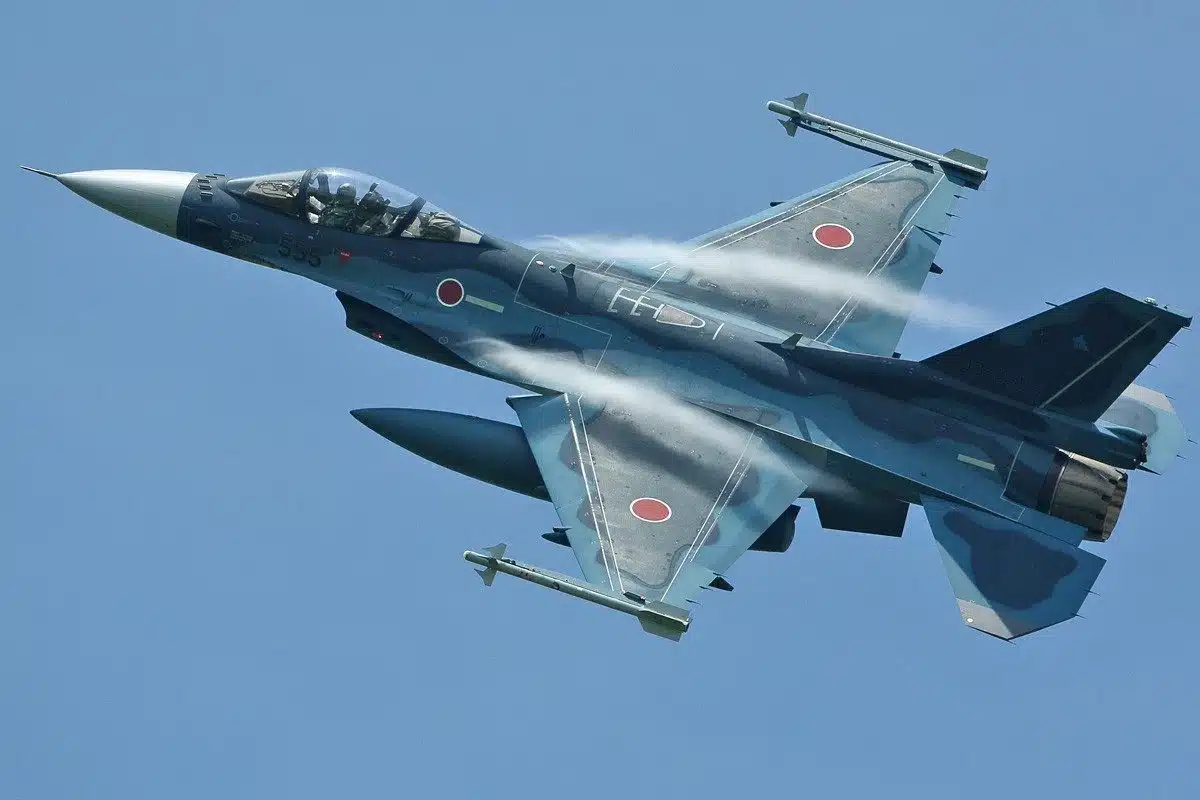
In a significant military response, Japan has deployed a fleet of F-2 fighter jets armed with anti-ship missiles in reaction to increased activities by Chinese naval forces near its waters. On December 9, 2025, the Japan Air Self-Defense Force (JASDF) conducted training flights with 16 F-2 aircraft, each equipped with four ASM-2 missiles. This unprecedented show of force comes as tensions escalate following maneuvers by the Chinese aircraft carrier Liaoning in the vicinity of Kyushu.
Heightened Military Readiness in Response to China
On December 9, 2025, JASDF F-2 fighters were spotted at Tsuiki Air Base in Fukuoka Prefecture, showcasing a total of 64 ASM-2 air-to-ship missiles. The ASM-2, a Japanese-made missile with a range exceeding 140 kilometers, features advanced targeting capabilities, including an imaging infrared seeker and infrared counter-countermeasures. This deployment marks a rare occurrence of F-2 jets being fully loaded with anti-ship armaments, signaling Japan’s intent to deter potential threats from the People’s Liberation Army Navy (PLAN).
The heightened military activity follows the Liaoning’s recent maneuvers, which included transiting the Miyako Strait and altering course towards the Pacific Ocean. On December 7, the carrier’s J-15 fighter jets reportedly illuminated JASDF F-15s with radar, further escalating tensions between the two nations. Japan’s Ministry of Defense views these developments as a serious concern, prompting a reassessment of its defensive strategies in the region.
In light of these events, Japan is not only reinforcing its military presence but also adapting its defense posture. The JASDF is focusing on enhancing its capabilities in the Pacific, an area previously considered a “defense gap.” Plans are underway to deploy mobile air-surveillance radar systems on Kita-Daito Island, with a budget allocation of approximately ¥16 billion (around $102 million) for the necessary infrastructure.
Strategic Enhancements to Naval Capabilities
Japan’s military strategy is evolving in response to the growing threat posed by Chinese naval forces. The Japan Maritime Self-Defense Force (JMSDF) is modifying its two Izumo-class destroyers to operate F-35B fighter jets, a move initiated in 2018 to counter the increasing presence of Chinese bombers in the region. This modification aims to bolster Japan’s operational capabilities in the Pacific, particularly as the PLAN expands its carrier operations.
Luxury Resort Giants Expanding With Luxury Cruises, Private Jet Tours
Currently, Iwo Jima is the only island in the Pacific with a runway suitable for JASDF fighter operations. The Izumo-class modifications are intended to address this operational limitation. Additionally, Japan’s FY2026 defense budget includes plans to establish a new Pacific Defense Concept Office within the Ministry of Defense. This office will focus on assessing the necessary force posture for the Self-Defense Forces in the Pacific theater.
Looking ahead, Japan’s Self-Defense Forces are expected to implement a range of measures to counter potential threats from Chinese naval operations. This includes enhancing radar coverage to monitor Chinese vessels and aircraft, a challenge given the sparse island chain in the Pacific. Expanding the fleet of E-2D airborne early warning aircraft is one viable option to improve surveillance capabilities in the region.
