
Japan’s Strategic Military Response to Chinese Naval Activities
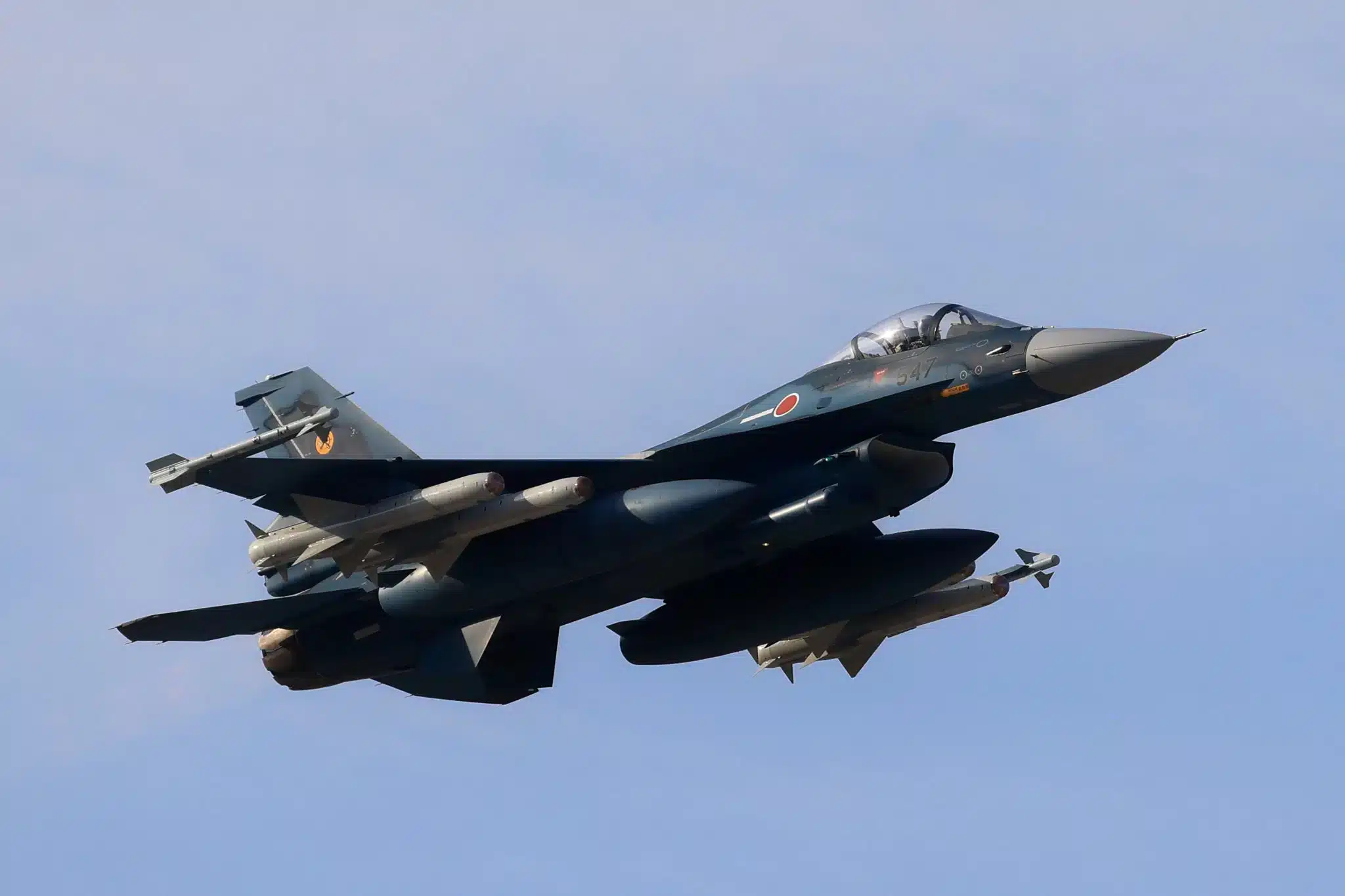
In December 2025, Japan heightened its military readiness in response to increased activities by the Chinese Navy near its waters. On December 9, at Tsuiki Air Base, the Japan Air Self-Defense Force (JASDF) deployed 16 F-2 fighter jets, each armed with four ASM-2 anti-ship missiles. This unusual display of military might involved a total of 64 missiles, signaling a strong deterrent stance against the People’s Liberation Army Navy (PLAN), particularly in light of the aircraft carrier Liaoning’s operations in the region.
The ASM-2 missile, developed in Japan, boasts a range exceeding 140 kilometers and features advanced imaging infrared (IIR) guidance systems, along with infrared counter-countermeasures (IRCCM) and target discrimination capabilities. The presence of these missiles on the F-2s is a notable escalation in Japan’s defense posture, especially given the recent maneuvers of the Liaoning, which transited the Miyako Strait and altered its course towards the waters south of Kyushu.
Tensions escalated further when a J-15 fighter jet from the Liaoning illuminated JASDF F-15 jets with radar, prompting Japan to reassess its military strategies in the Pacific. The situation underscores the growing concerns regarding Chinese naval operations and their implications for regional security.
Strengthening Defensive Capabilities in the Pacific
In light of the evolving security landscape, Japan’s Ministry of Defense is taking significant steps to bolster its defensive capabilities. The recent activities of the PLAN, including the simultaneous deployment of two aircraft carriers, Liaoning and Shandong, in June 2025, have prompted Japan to view these developments as serious threats. The potential operational deployment of China’s third aircraft carrier, Fujian, could further complicate the security dynamics in the East China Sea and the Pacific Ocean.
To address these challenges, the Japan Self-Defense Forces (JSDF) are shifting their focus to enhance their defense posture in the Pacific, an area previously considered a “defense gap.” Plans are underway to deploy a mobile air-surveillance radar system on Kita-Daito Island, southwest of Okinawa, with an allocated budget of approximately ¥16 billion (about $102 million) for the necessary infrastructure.
Additionally, Japan is modifying its Izumo-class destroyers to enable them to operate F-35B fighter jets. This initiative, originally conceived in response to the increasing presence of Chinese bombers in the region, has now taken on a critical role in countering the PLAN’s aircraft carrier capabilities. Currently, Iwo Jima is the only island in the Pacific with a runway suitable for JASDF operations, making the Izumo-class modifications essential for filling this operational gap.
Furthermore, Japan’s FY2026 defense budget includes the establishment of a new Pacific Defense Concept Office within the Ministry of Defense. This office will focus on assessing the necessary force posture for the JSDF to effectively defend the Pacific theater. As Japan prepares to counter imminent threats, the implementation of various measures, including enhanced radar coverage and the expansion of airborne early warning capabilities, will be crucial in addressing the challenges posed by Chinese naval forces.
