
JSW Group Orders Four Cargo Vessels from Wuhu Shipyard
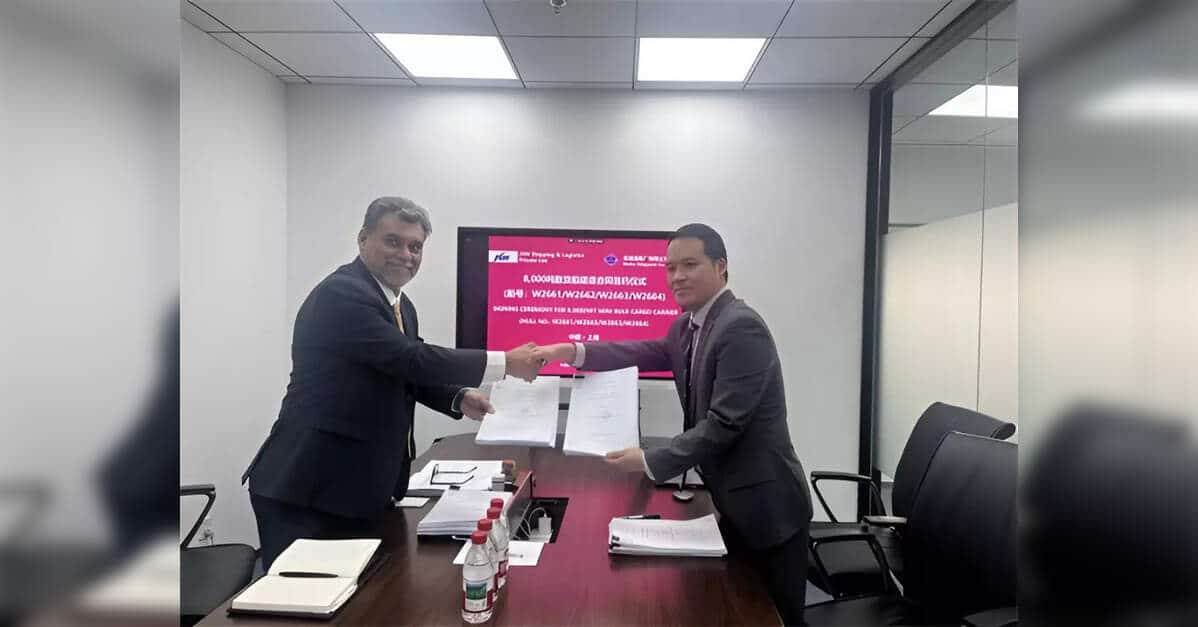
MUMBAI: The JSW Group, led by Sajjan Jindal, has placed an order for four general cargo vessels, each with a deadweight tonnage (DWT) of 8,000, at Wuhu Shipyard Co., Ltd in China. The financial details of the deal remain undisclosed. This order comes as a setback to the Indian government’s initiatives aimed at boosting the domestic shipbuilding sector, particularly following the announcement of a ₹69,725 crore package last year.
JSW Group is now the second major Indian conglomerate to procure ships from China, the world’s largest shipbuilding nation, in recent months. Last year, Ambuja Cements Ltd, owned by the Adani Group, ordered seven conventional bulk carriers, each with a DWT of 9,400, from Nantong Xiangyu Shipbuilding & Offshore Engineering Co., Ltd, in a deal valued at approximately $100 million.
The recent order marks JSW Group’s return to the Sanshan Economic Development Zone in Wuhu City, Anhui Province, where it had previously ordered ten bulk carriers. The new vessels will be classified by the Indian Register of Shipping (IRClass). Wuhu Shipyard expressed confidence in its capabilities, stating that the earlier delivered vessels were recognized for their efficient construction and robust quality.
Specifications and Implications of the New Order
The newly contracted vessels will measure 122 meters in length, with a molded depth of 7.2 meters and a molded breadth of 20 meters. They are designed with double-bottom construction and will utilize conventional diesel-powered propulsion systems. Each vessel will feature a twin-screw, twin-rudder configuration, two cargo holds, and hydraulic folding hatch covers. These ships are specifically tailored for coastal transportation of bulk cargo within India’s near-sea trading areas.
Wuhu Shipyard emphasized that the vessels are expected to enhance JSW Group’s fleet composition and improve its global logistics efficiency. The shipbuilder highlighted its commitment to lean manufacturing standards and strict quality control, ensuring the delivery of high-quality vessels.
However, the decision by JSW Group to source these vessels from a Chinese yard raises concerns for Indian shipbuilders. Industry sources indicate that securing an order from one of India’s largest conglomerates would have significantly boosted the profile of local shipyards in the global market. The preference for a Chinese shipyard underscores the challenges faced by Indian shipbuilders, particularly regarding competitive pricing and delivery timelines.
As the shipbuilding landscape evolves, the implications of this order may resonate throughout the industry, highlighting the ongoing struggles of domestic shipyards to compete with their international counterparts.
