
Maritime Tensions Rise Amid Anti-India Protests in Bangladesh
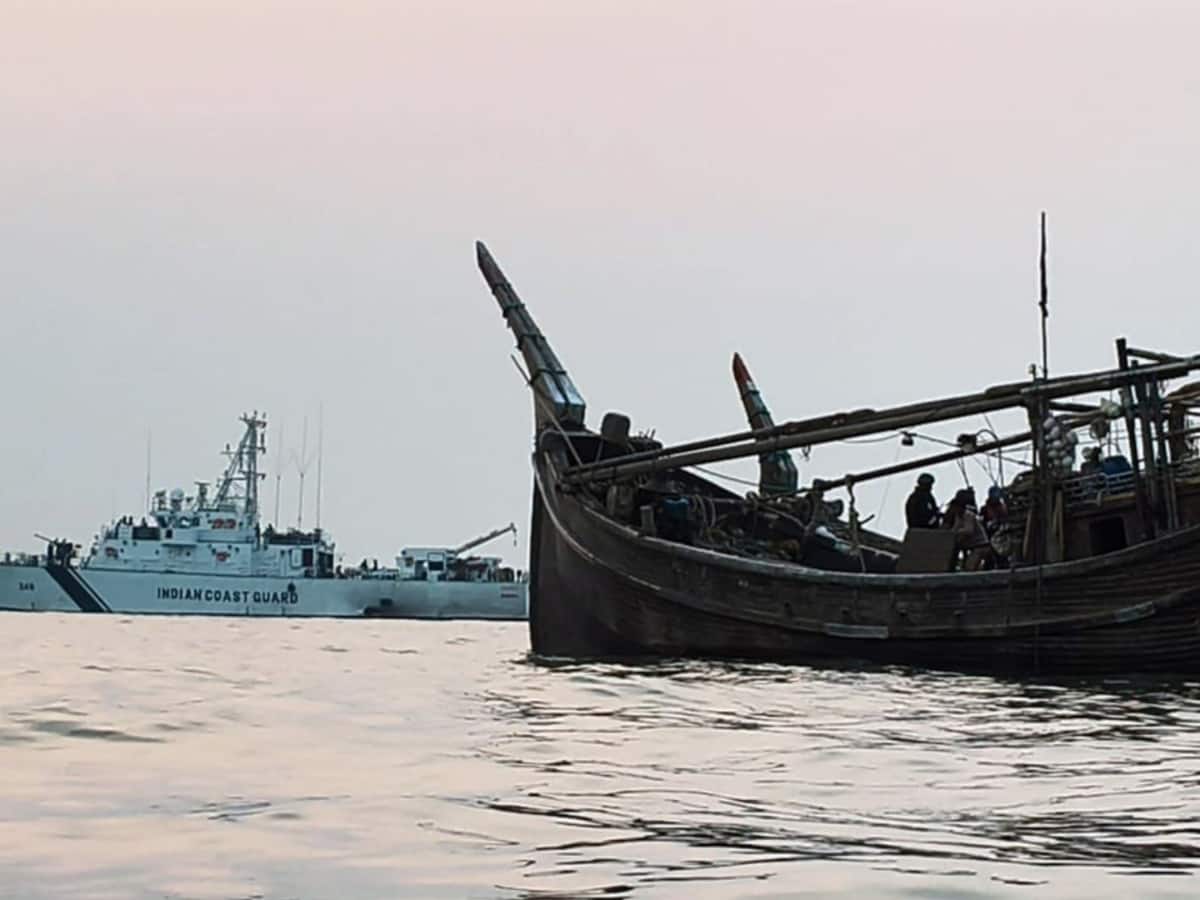
As anti-India protests escalate across Bangladesh, Indian authorities are increasingly alarmed by a series of maritime incidents in the Bay of Bengal. Over the past two months, there has been a significant rise in Bangladeshi fishing vessels straying into Indian waters, raising concerns about security and the safety of fishermen operating near the international maritime boundary. The situation reached a critical point on December 15, when a Bangladeshi navy patrol vessel allegedly collided with the Indian fishing trawler FB Parmita, which was carrying 16 fishermen from West Bengal. The collision caused the trawler to capsize, throwing all crew members into the sea.
The incident occurred against a backdrop of heightened anti-India sentiment in Bangladesh, coinciding with the country’s upcoming general elections scheduled for February. Reports indicate that the Bangladeshi vessel had its navigation lights turned off, making it difficult for the Indian trawler to detect it in the dark. The Indian Coast Guard successfully rescued 11 fishermen the following morning, but five remain missing. Tragically, one fisherman, Rajdul Ali Sheikh, was reportedly killed with a spear-like weapon during the incident. Survivors allege that the Bangladeshi vessel intentionally struck the trawler as the fishermen were preparing to cast their nets. In response, local police have launched an investigation following a complaint from the Sundarban Marine Fishermen’s Workers Union.
Increased Incursions by Bangladeshi Fishing Vessels
The collision is part of a broader trend of Bangladeshi fishing vessels encroaching into India’s Exclusive Economic Zone (EEZ). Just a day after the incident, on December 16, the Indian Coast Guard intercepted two Bangladeshi boats operating illegally in Indian waters, seizing approximately 500 kg of fish and detaining 35 crew members. This incident is not isolated; Indian authorities have apprehended at least eight Bangladeshi boats and detained around 170 crew members over the past two months. The frequency of these incursions, combined with the political climate in Bangladesh, has drawn the attention of Indian security agencies.
Intelligence sources suggest that anti-India groups in Bangladesh are portraying these detentions as harassment of impoverished fishermen, aiming to inflame public sentiment and provoke New Delhi. The situation is further complicated by the rising anti-India rhetoric in Bangladesh, which has intensified since the announcement of the election schedule last month.
Political Climate and Rising Anti-India Sentiment
The increase in maritime incidents coincides with a surge in anti-India sentiment following the announcement of Bangladesh’s election schedule. The interim administration led by Muhammad Yunus has sought to bolster Bangladesh’s influence in the Bay of Bengal, with Yunus previously declaring Bangladesh as the “guardian of the ocean for all of this region.” This assertion has raised concerns among Indian policymakers.
Under Yunus’s leadership, Bangladesh has also strengthened ties with Pakistan and allowed greater space for radical Islamist groups, including the previously banned Jamaat-e-Islami. Notably, the Pakistan Navy chief recently visited Bangladesh, marking the first high-level visit since 1971. A parliamentary committee in India has warned that New Delhi faces its most significant strategic challenge related to Bangladesh since the 1971 war, citing the growing influence of Pakistan and China in Dhaka.
On December 15, protests erupted in Bangladesh following the death of radical leader Sharif Osman Hadi, who was shot by masked assailants. Demonstrators torched the offices of prominent newspapers and surrounded Indian diplomatic missions, voicing anti-India slogans. The unrest escalated earlier in the week when hundreds of protesters attempted to approach the Indian High Commission in Dhaka, demanding the return of Sheikh Hasina, who fled to Delhi in August last year. Inflammatory remarks from student leaders have further exacerbated tensions, prompting India to summon the Bangladeshi High Commissioner to lodge a formal protest against the increasingly provocative statements and developments.
