
Nancy Grace Roman Space Telescope Assembly Completed
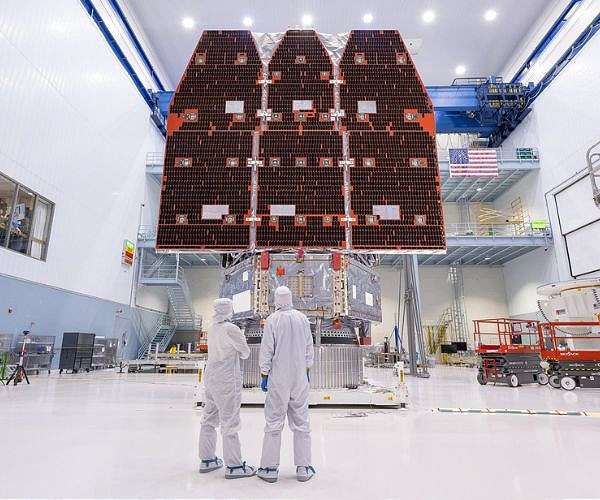
NASA has successfully completed the assembly of the Nancy Grace Roman Space Telescope, marking a significant milestone in its mission to explore the universe. The final integration took place on November 25, 2025, at the Goddard Space Flight Center in Maryland. The telescope is set to launch no later than May 2027, with preparations underway for a potential launch as early as fall 2026 aboard a SpaceX Falcon Heavy rocket from NASA’s Kennedy Space Center in Florida.
Mission Objectives and Scientific Goals
The Nancy Grace Roman Space Telescope is designed to tackle some of the most profound questions about the universe, focusing on dark energy, dark matter, and the search for exoplanets. NASA plans a five-year primary mission during which Roman will conduct extensive surveys of the sky. This includes investigating the acceleration of the universe’s expansion and exploring fundamental aspects of space and time that remain elusive.
According to NASA officials, the completion of the observatory represents a pivotal moment for the agency. “Transformative science depends on disciplined engineering,” stated Amit Kshatriya, NASA’s Associate Administrator. He emphasized the team’s dedication to delivering a sophisticated observatory that will enhance our understanding of the cosmos. Julie McEnery, Roman’s senior project scientist, added that the mission is expected to reveal over 100,000 distant worlds and billions of galaxies within its first five years of operation.
The telescope will utilize two primary instruments: the Wide Field Instrument and the Coronagraph Instrument. The Wide Field Instrument, equipped with a 288-megapixel camera, will capture vast areas of the sky, generating approximately 20,000 terabytes of data—significantly more than the Hubble Space Telescope. Meanwhile, the Coronagraph Instrument aims to directly image planets and dusty disks around nearby stars, enhancing our ability to answer the question of whether we are alone in the universe.
Survey Plans and Data Accessibility
Roman’s observing strategy allocates about 75% of its primary mission to three core surveys. The High Latitude Wide Area Survey will map over a billion galaxies, providing insights into the structure and evolution of the universe. The High Latitude Time Domain Survey will monitor specific regions over time, enabling the study of variable phenomena and offering independent constraints on dark energy. Additionally, the Galactic Bulge Time Domain Survey will focus on the central regions of the Milky Way, searching for microlensing events and expanding our understanding of exoplanets.
IMO Instruments Sub-Committee 10th session (III 10) Summary Report
The remaining 25% of the mission will support competitively selected programs proposed by the scientific community, with an emphasis on open data access. NASA plans to release all mission data without an exclusive use period, allowing multiple research teams to explore various scientific questions using the same datasets. This open data policy is expected to lead to discoveries that extend beyond the core objectives of dark energy and exoplanet research.
The telescope honors Dr. Nancy Grace Roman, NASA’s first chief astronomer, who played a crucial role in the development of space-based observatories. Her legacy continues as the Roman Space Telescope prepares to deliver groundbreaking astronomical imagery that will benefit scientists for decades to come.
