
Russia Deploys Icebreakers to Ensure Baltic Shipping Safety Amid Harsh Winter Conditions
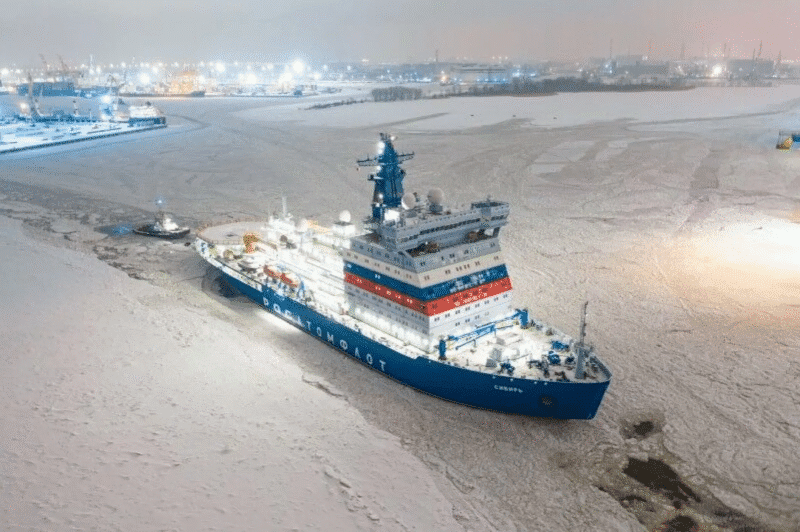
Russia has sent two powerful icebreakers, including the nuclear-powered vessel *Sibir*, to the Baltic Sea to maintain open shipping lanes during one of the most severe ice seasons in over a decade. The Russian Transport Ministry announced on February 10 that both *Sibir* and the conventional diesel-powered icebreaker *Murmansk* are expected to arrive in the Baltic by the end of February. This deployment aims to support four existing icebreakers already operating near Russian ports, ensuring the safe passage of vessels in the region.
The decision to dispatch these icebreakers comes as the Baltic Sea faces heavy ice conditions reminiscent of the notorious winter of 2011, when hundreds of ships were trapped near St. Petersburg. During that crisis, the nuclear icebreaker *Vaigach* was also called from Arctic duties to assist in the Baltic. The current situation has prompted Finland, Sweden, and Estonia to mobilize their icebreaker fleets, with Finland deploying all eight of its state-owned icebreakers and Sweden committing all six of its vessels. In Germany, ice has blocked access to the Mukran LNG terminal, causing significant delays for ships.
Capabilities of the Icebreakers and Their Journey
The *Sibir*, one of Russia’s newest Arktika-class nuclear icebreakers, entered service in 2022. It has spent the past year escorting tankers along the Northern Sea Route, completing four full transits last summer and assisting vessels in the Chukchi Sea during late summer and autumn. The vessel departed the Barents Sea about a week ago, navigating south along Norway’s coastline and is currently passing through the Danish Straits on its way to the Baltic.
Meanwhile, the *Murmansk*, which has been operating in the Yenisei Gulf since mid-November, began its journey west earlier this month and is now rounding Norway’s southwestern tip. Both icebreakers are expected to work alongside existing Baltic icebreakers to escort convoys and maintain navigable channels into Russian ports. Russia operates a fleet of icebreakers in the Arctic, including several nuclear vessels stationed in the Gulf of Ob and Yenisei Gulf.
The harsh winter conditions have led to several incidents, including an oil tanker, *Tony*, striking a berth at the Ust-Luga terminal on February 7, and the bulk carrier *Sfera* grounding near Seskar Island in the Gulf of Finland. Russia heavily relies on winter navigation to facilitate exports from Baltic ports, which handle essential commodities such as oil, coal, fertilizers, and metals. Nuclear icebreakers are particularly vital in extreme winters as they can operate for extended periods without refueling and can break through thicker ice than conventional vessels.
