
Saudi Arabia’s East-West Pipeline Reaches Full Capacity Amid Regional Tensions
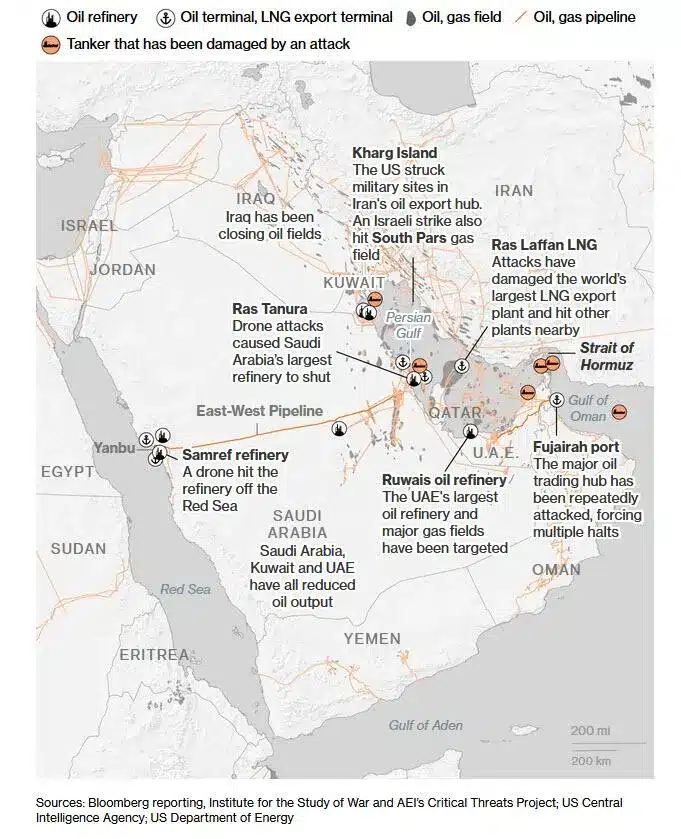
Saudi Arabia’s East-West pipeline, a crucial artery for oil transport, has achieved a significant milestone by reaching its full capacity of 7 million barrels per day. This development comes in the wake of escalating tensions in the region, particularly following the closure of the Strait of Hormuz, a vital shipping route for crude oil. As of now, crude exports via the Yanbu terminal have surged to approximately 5 million barrels daily, alongside an additional 700,000 to 900,000 barrels of refined products. This rapid increase in flow marks a remarkable turnaround, especially considering that prior to the recent conflict, the pipeline was operating at about 1.5 million barrels per day.
The East-West pipeline, also known as the Abqaiq-Yanbu pipeline, spans over 1,000 kilometers (620 miles) across Saudi Arabia. It was originally constructed as a contingency plan during the Iran-Iraq war in the 1980s, designed to mitigate risks associated with potential disruptions in the Strait of Hormuz. Following the onset of hostilities between the U.S., Israel, and Iran, Saudi Arabia swiftly activated this contingency plan, ramping up oil shipments through the pipeline. Despite the record flow, experts caution that this bypass only partially compensates for the loss of supply from the Strait of Hormuz, which previously facilitated the passage of around 15 million barrels per day.
As tankers accumulate near the Yanbu port, the situation underscores the importance of this pipeline in maintaining global oil supply amidst geopolitical instability. The Red Sea has become a waiting area for numerous tankers, highlighting the critical role of Saudi Arabia’s oil infrastructure in the current crisis.
UAE’s Fujairah Port Maximizes Oil Exports Amid Regional Strikes
In addition to Saudi Arabia’s efforts, the United Arab Emirates (UAE) has also ramped up oil exports from its Fujairah port, which lies outside the Strait of Hormuz. Following the resumption of operations after Iranian drone strikes earlier this month, Abu Dhabi National Oil Company (ADNOC) has significantly increased crude loading, reaching approximately 1.9 million barrels per day from March 20 to 24. This figure represents a 57% increase from the previous year’s average of 1.21 million barrels per day.
Fujairah serves as a strategic outlet for oil bypassing the Hormuz Strait, making it a critical site for energy exports. However, the port has faced challenges due to ongoing Iranian attacks, which have targeted its infrastructure multiple times in recent weeks. These strikes have damaged storage tanks and disrupted operations, leading to a cautious approach from shippers. Despite these setbacks, Fujairah continues to work towards restoring full export capacity, particularly for refined products.
The port’s proximity to Iran, located about 80 miles (130 kilometers) south of Hormuz, adds to its vulnerability. Recent attacks have raised concerns among traders, leading some to hesitate in calling at Fujairah. Nevertheless, the UAE’s efforts to maximize oil exports are crucial in maintaining supply levels in a volatile market.
As the situation evolves, the implications for global oil prices and supply chains remain significant. The ongoing conflict and the strategic maneuvers by both Saudi Arabia and the UAE highlight the complexities of energy security in a region fraught with geopolitical tensions.
