
Search for Missing Crew of Devon Bay Concludes
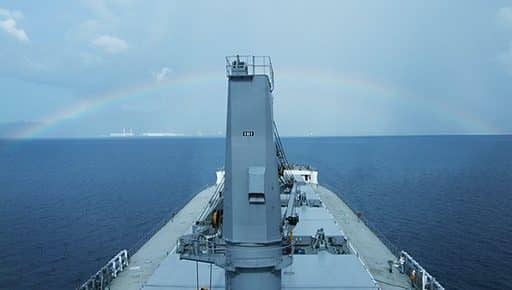
The search and rescue operation for the crew of the bulk carrier Devon Bay officially ended on Sunday night, as confirmed by vessel operator K Line Pte Ltd. This marks a somber conclusion to a multinational effort that lasted over a week. The Singapore-flagged ship sank on January 22 near Scarborough Shoal while transporting 55,000 tonnes of nickel ore from the Philippines to Yangjiang, China.
Rescue Efforts and Casualties
Of the 21 Filipino seafarers aboard the Devon Bay, 17 were rescued during joint operations conducted by the Philippine Coast Guard and the China Coast Guard. Tragically, two crew members later succumbed to their injuries, while four remain unaccounted for. K Line expressed profound gratitude to the Philippine and Chinese authorities, as well as all vessels and crew involved in the rescue efforts. “We extend our deepest condolences to the families of our deceased crew members, and our thoughts remain with the families of the crew members who remain unaccounted for,” the company stated.
Initial reports from survivors suggest that cargo liquefaction may have played a significant role in the sinking. Philippine Coast Guard Commandant Admiral Ronnie Gil Gavan indicated that excessive moisture in the nickel ore cargo likely caused a sudden shift to the port side, destabilizing the vessel amid rough seas. “The moisture content of the cargo caused the shifting of the weight to the left side of the ship or the port side… and the weather was not good. There were big waves,” Gavan noted, emphasizing that these findings are still preliminary.
Nickel ore is classified as a high-risk Group A cargo under the International Maritime Solid Bulk Cargoes Code due to its potential for liquefaction, where solid bulk cargo can behave like a liquid when moisture levels are exceeded. The dry bulk industry group INTERCARGO has long warned about the dangers associated with transporting nickel ore, previously labeling it as “the world’s most dangerous cargo.” Historical incidents between 2010 and 2011 linked liquefaction events involving nickel ore to multiple vessel losses and numerous seafarer fatalities.
Investigation and Future Safeguards
The sinking of the Devon Bay occurred in one of Asia’s most geopolitically sensitive regions. Despite ongoing territorial disputes, Chinese and Philippine authorities collaborated closely throughout the rescue operation. K Line has committed to working with authorities and the ship manager to support affected crew members and their families, while requesting privacy for those impacted by this tragedy.
China and Philippines Rush to Save Seafarers After “K” Line Bulker Sinks
In response to the incident, Singapore’s Maritime and Port Authority has initiated a formal investigation into the loss. K Line has pledged full cooperation but will refrain from commenting on the cause until inquiries are complete. This incident raises critical questions about whether current safety measures are adequate to manage the inherent risks of transporting nickel ore, despite years of regulatory reforms and repeated industry warnings.
