
Seaspan Shipyards Invests in Robotics for Safer Shipbuilding
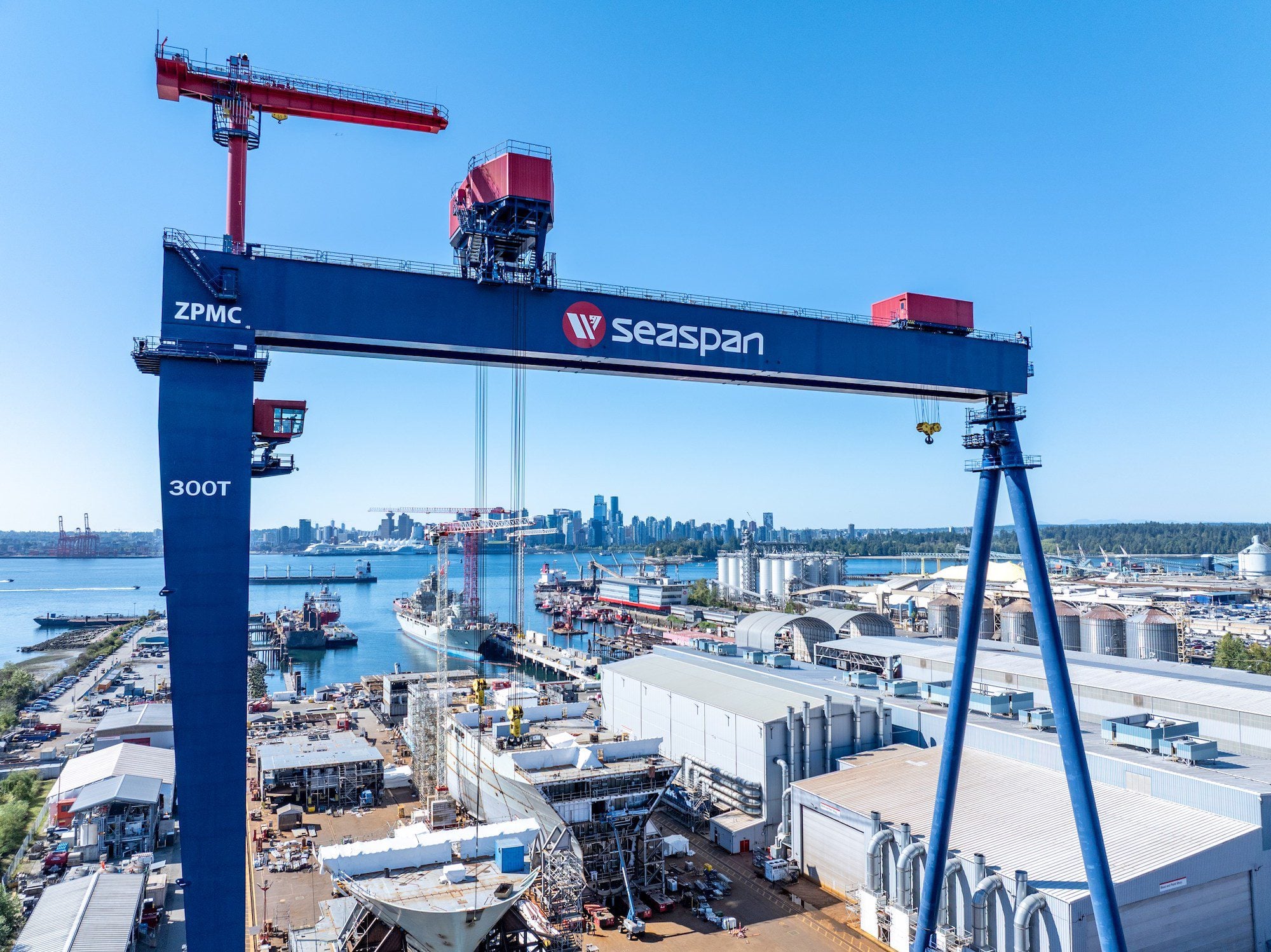
Seaspan Shipyards, based in Vancouver, is taking a significant step towards modernizing shipbuilding by investing in robotics. The company has awarded a $1.5 million contract to Alberta’s Confined Space Robotics (CSR) to create semiautonomous robotic systems aimed at improving blast and paint operations in its ship and submarine programs. This initiative, announced on February 12, seeks to automate one of the most hazardous and labor-intensive tasks in ship construction and maintenance.
Robotic Innovations to Enhance Safety and Efficiency
The new robotic platforms will be equipped with specialized tools such as needle scalers, laser ablation systems, grinders, grit blasters, and spray-coating equipment. Custom software will facilitate path planning and operational guidance, enabling these systems to operate in confined and high-risk environments. This is particularly important as traditional methods expose workers to toxic fumes, harmful particulates, and the risk of repetitive strain injuries.
By automating the repetitive tasks associated with surface preparation and coating, Seaspan aims to significantly reduce the risk of injury for its workforce while enhancing the consistency and efficiency of material use. Ahmed Kawar, Director of Engineering and Projects at CSR, expressed enthusiasm about the partnership, stating, “We are incredibly excited to partner with Seaspan to redefine what is possible in shipbuilding through world-leading robotic technology.” He emphasized that the new systems will not only improve safety but also allow skilled workers to concentrate on more complex, high-value tasks.
Seaspan’s executives view this investment as part of a larger strategy aligned with Canada’s National Shipbuilding Strategy. Dave Hargreaves, Seaspan’s Senior Vice President of Strategy, Business Development, and Communications, highlighted that the strategy aims to create a sustainable and efficient shipbuilding ecosystem. He noted that this collaboration will not only enhance workplace safety but also expand Seaspan’s supply chain into Alberta.
HII Partners with Path Robotics to Revolutionize Shipbuilding
Supporting Canada’s Advanced Manufacturing Goals
Seaspan currently employs approximately 5,000 workers across its facilities in North Vancouver and Victoria. The shipyard is engaged in building vessels for both the Royal Canadian Navy and the Canadian Coast Guard, with four ships already delivered and three more under construction as part of a long-term commitment to produce up to 23 vessels.
Canadian Industry Minister Mélanie Joly praised the investment, stating that it aligns with the government’s efforts to bolster domestic advanced manufacturing. “This partnership between Seaspan Shipyards and Alberta’s Confined Space Robotics shows how Canadian industry continues to push the boundaries of advanced manufacturing,” she remarked.
The move also reflects a broader trend in global shipbuilding, where companies are increasingly turning to automation to address labor shortages and meet stricter safety and environmental standards. For instance, South Korea’s HD Hyundai has initiated humanoid welding robot projects in collaboration with robotics firms in Germany, focusing on welding labor shortages. However, Seaspan’s initiative specifically targets the critical yet often overlooked blast and paint operations, which are essential for both new builds and repairs.
As shipyards worldwide face challenges related to skilled labor, safety compliance, and environmental regulations, the shift towards automation is becoming more pronounced. Seaspan’s investment in robotics indicates that North American shipyards are beginning to adopt these technologies more aggressively, marking a significant evolution in the industry.
