
South Korea Launches Historic Arctic Shipping Trial
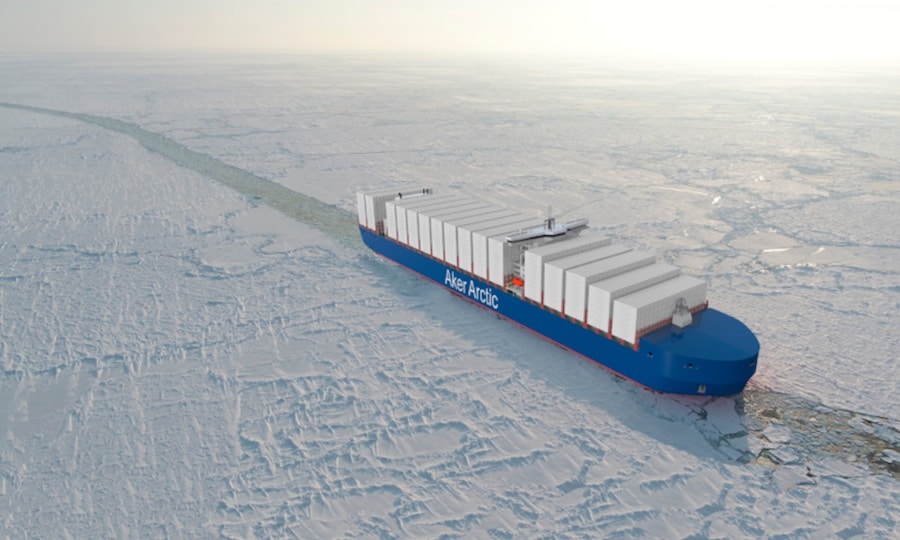
South Korea is set to make waves in Arctic shipping as it prepares for its inaugural container ship trial voyage through the Northern Sea Route later this year. The Ministry of Oceans and Fisheries (MOF) announced plans for a September trial, utilizing a 3,000 TEU-class containership traveling from Busan to Rotterdam. This initiative marks a significant step in the country’s strategic push into polar trade, aligning with the administration of President Lee Jae-myung.
Strategic Timing and Route Advantages
During a recent press briefing at the MOF headquarters in Busan, Acting Oceans Minister Kim Seong-beom emphasized the importance of timing for the trial. He noted that September is considered summer in the Arctic, a period when ice conditions are at their most favorable. “We plan to prepare for trial voyages around that time,” Kim stated, highlighting the urgency of the initiative.
If successful, this Arctic route could drastically reduce transit times between Asia and Europe. The traditional Suez Canal route spans approximately 20,000 kilometers and typically requires around 30 days for a complete journey. In contrast, the Arctic alternative shortens the distance to about 13,000 kilometers, cutting the sailing time down to roughly 20 days. This significant reduction could reshape shipping logistics and enhance trade efficiency for South Korea.
While South Korea has previously tested Arctic shipping with bulk carriers on five voyages to Russia’s Yamal Peninsula, this will be the first time a containership is deployed on the route. Notably, China has already established what it claims to be the world’s first regular Arctic container service, putting additional pressure on South Korea to advance its own Arctic ambitions.
Navigating Geopolitical and Economic Challenges
As South Korea ventures into Arctic shipping, it faces complex geopolitical challenges. A substantial portion of the Northern Sea Route traverses Russian territorial waters, necessitating cooperation with Moscow. Minister Kim acknowledged the delicate balance required, stating, “Russia requires permission for passage through Arctic route waters, so cooperation with the country is crucial.” He also noted that South Korea is aligned with U.S. and European sanctions against Russia, complicating the situation further. Plans for consultations with Russian authorities are expected to take place within the first half of the year.
Commercial viability presents another significant hurdle for South Korea’s Arctic shipping plans. Operations in the Arctic often incur higher insurance premiums, particularly for voyages north of 60 degrees latitude. A previous MOF study estimated that operating a 5,000 TEU-class vessel on this route could lead to additional costs of approximately $435,000 per voyage. To address these financial challenges, Minister Kim indicated that discussions with shipping companies regarding incentives for participants in the trial voyage are underway. “Once economies of scale are achieved through route usage, profitability will align, but some incentives are inevitable before that,” he explained.
As South Korea embarks on this ambitious Arctic shipping initiative, the outcomes of the upcoming trial voyage could have lasting implications for the nation’s role in global trade and its navigation of complex geopolitical waters.
