
South Korea Sets Course for Regular Trans-Arctic Shipping
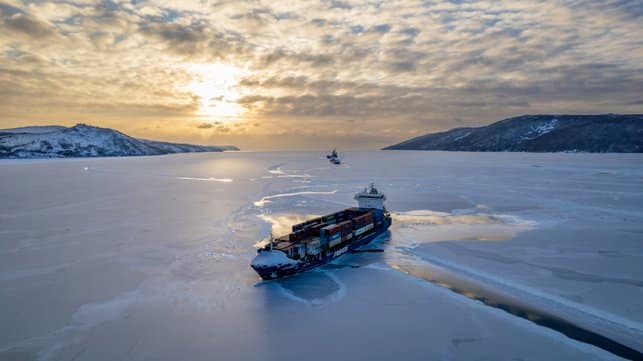
South Korea is poised to become the first Western-aligned nation to establish regular trans-Arctic shipping routes, leveraging Russia’s Northern Sea Route (NSR) to enhance its global trade capabilities. President Lee Jae-myung emphasized the significance of strengthening economic ties and views the NSR as a strategic advantage in competing with China, which has already initiated seasonal services along the route and plans to expand operations in the near future.
Following President Lee’s announcement, the Ministry of Oceans and Fisheries has been tasked with developing a comprehensive plan for Arctic shipping. Acting Minister Kim Sung-bum outlined these plans during a press briefing in Busan on January 5, indicating that the government aims to transition the concept into a formal development program with ministry support. A trial voyage is targeted for September, coinciding with the summer season when ice conditions are expected to be minimal, facilitating safer navigation.
Trial Voyage and Vessel Selection
The South Korean government plans to issue a tender for a 5,000 YEU-class vessel to undertake the trial voyage this year. Selecting the appropriate vessel is the first step in the process, which will involve discussions on financial incentives, a thorough cost analysis, and negotiations with Russia, which oversees permitting for the NSR passages. This voyage will mark South Korea’s inaugural containership transit across the Arctic, with the planned route from Busan to Rotterdam. The government estimates that this new route will reduce travel distance by approximately 35 percent—13,000 kilometers compared to 20,000 kilometers—and cut transit time from 30 days to 20 days.
Historically, South Korea has conducted partial Arctic transits, having sent five bulk carriers from Busan to Russia’s Yamal Peninsula in the Kara Sea. However, this upcoming voyage will represent the first complete transit by a South Korean vessel along the NSR. Acting Minister Kim acknowledged the challenges ahead, particularly in light of South Korea’s participation in Western sanctions against Russia, which could complicate negotiations.
Financial Considerations and Market Dynamics
To support this initiative, the South Korean government is also planning to introduce incentives for shippers and vessel operators. Minister Kim highlighted the anticipated increase in insurance costs, which could reach as high as $435,000. The ministry aims to discuss financial incentives to ensure the service’s profitability, which they believe can be achieved through economies of scale.
India and Russia Collaborate on Direct Cargo Connection via Northern Sea Route
Recent analysis from the Centre for High North Logistics (CHNL) indicates a growing interest in the NSR, with 103 transits recorded between June and November 2025, involving 88 vessels and a total cargo volume of 3.2 million tons. This marks a more than six percent increase in voyages compared to 2024. While bulk carriers have been significant contributors to this growth, containerships are also gaining traction, with an increase in voyages this season.
China continues to view the NSR as a strategic advantage, with Sea Legend Shipping achieving a record voyage in just over 20 days using a non-polar containership in 2025. The company is reportedly planning to operate regular summer voyages along the route by 2026, further intensifying competition in this emerging maritime corridor.
