
Spanish Investigators Uncover Nuclear Components in Ursa Major Sinking
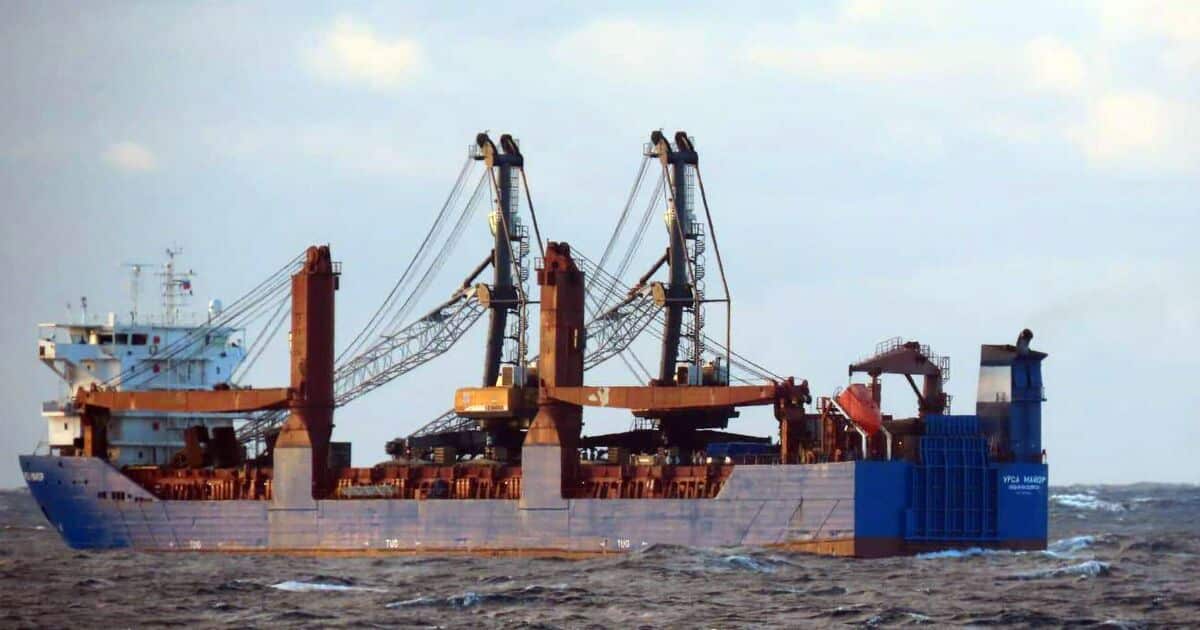
A year after the Russian cargo ship Ursa Major sank in the Mediterranean, Spanish authorities have revealed that the vessel was allegedly transporting nuclear submarine reactor components, potentially intended for North Korea. The Ursa Major, operated by Oboronlogistika—a subsidiary of the Russian Ministry of Defence—sank on December 23, 2024, following a series of explosions approximately 57 miles off the coast of Almeria, Spain. While Spanish rescue services managed to evacuate 14 of the 16 crew members, two sailors remain missing and are presumed dead.
Initially, Russian officials and the ship’s owner claimed that the Ursa Major was carrying equipment for the Rossiya, a new nuclear-powered icebreaker under construction, with Vladivostok as its destination. However, recent reports from Spanish media outlets, including La Verdad and The Maritime Executive, indicate that the cargo was not what it seemed. Investigators have determined that the two large, blue-tarped objects on the ship’s stern were not parts of an icebreaker but rather components consistent with unfueled VM-4SG Soviet-era naval reactor casings, critical for nuclear-powered submarines.
Suspicion of Sabotage and Geopolitical Implications
The investigation has raised serious concerns regarding the intended destination of the reactor parts. Authorities suspect that these components were meant for North Korea, which is actively expanding its nuclear ballistic-missile submarine program. Analysts have noted that North Korea has recently showcased significant advancements in its nuclear submarine capabilities, including the development of an 8,700-ton submarine hull. This situation is further complicated by Russia’s potential obligation to North Korea for supplying artillery shells during the ongoing conflict in Ukraine.
The narrative surrounding the sinking of the Ursa Major has also evolved. Initially attributed to engine room failure, Captain Igor Vladimirovich Anisimov later described the cargo as icebreaker components. When pressed for more details, he requested time to reconsider his response, ultimately claiming that the heavy, shielded objects were merely “manhole covers.” However, he later acknowledged a 20-inch hole in the hull, suggesting an external impact rather than an internal explosion. The shipowner reported three successive blasts on the starboard side, raising suspicions of possible sabotage or an underwater strike aimed at preventing the sensitive cargo from reaching its destination.
Russian Military Sealift Ship Sinks After Engine Room Explosion
The vessel’s route through the Mediterranean, which deviated from a direct path to Vladivostok, along with its history of military logistics, has fueled further suspicion. The Ursa Major, previously known as Sparta III, had been sanctioned by the United States for transporting military equipment. In January 2025, the Russian oceanographic research ship Yantar, often regarded as a spy vessel, visited the wreck site, raising concerns that it may be involved in efforts to recover or destroy evidence of the reactors resting on the seabed.
The implications of this incident extend beyond a maritime accident, suggesting potential state-sponsored nuclear proliferation. The transfer of reactor technology would violate international sanctions and heighten concerns over escalating nuclear capabilities amid ongoing geopolitical tensions. Spanish authorities are leading the investigation, but as of now, there has been no official response from either Moscow or Pyongyang.
