
St. Lawrence Seaway Closes for Winter Amid Icy Conditions
The Montreal-Lake Ontario section of the St. Lawrence Seaway officially closed on January 5, marking the end of the commercial shipping season. This closure is notable as it is the latest recorded since the Seaway’s inception in 1959. The decision to shut down the vital shipping corridor came after a series of icy conditions that left several vessels stranded along the shores of Jefferson and St. Lawrence counties. These ships were forced to anchor while waiting for improved conditions to navigate through the two U.S. and five Canadian locks that comprise this critical waterway.
The Seaway is expected to reopen for commercial traffic in March, allowing vessels to resume operations after the winter freeze. The closure highlights the challenges faced by maritime operations during the winter months, particularly in regions prone to severe weather conditions.
Final Vessels Navigate the Seaway Before Closure
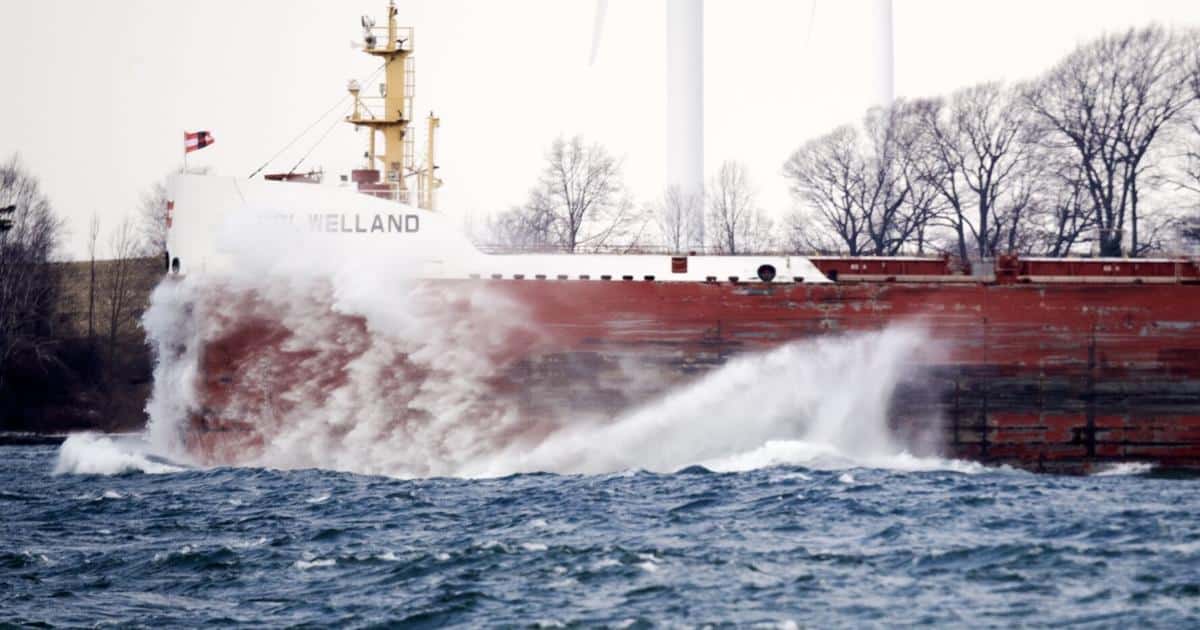
As the shipping season drew to a close, several vessels made their final transits through the Seaway. Among them was the CSL Welland, a bulk carrier flying the Canadian flag, which passed through the Thousand Islands on its way to Lake Ontario. The vessel, measuring 225.5 meters in length and 23.79 meters in width, cleared Clayton shortly before noon on Sunday. Following the CSL Welland was the Algoma Equinox, also under the Canadian flag, which was transporting iron ore to Hamilton, Ontario.
The last downbound vessel to navigate the U.S. locks for the season was the Noelle G, a bulk carrier loaded with corn destined for Londonderry in the United Kingdom. This final transit underscores the importance of the Seaway for international trade, particularly for agricultural products.
The closure of the Seaway not only affects shipping companies but also has broader implications for the economy, as it limits the movement of goods during the winter months. As the region prepares for the reopening in March, stakeholders will be closely monitoring weather conditions to ensure a smooth transition back to full operational capacity.
