
Suez Canal Traffic Remains Stagnant Post-Houthi Attacks
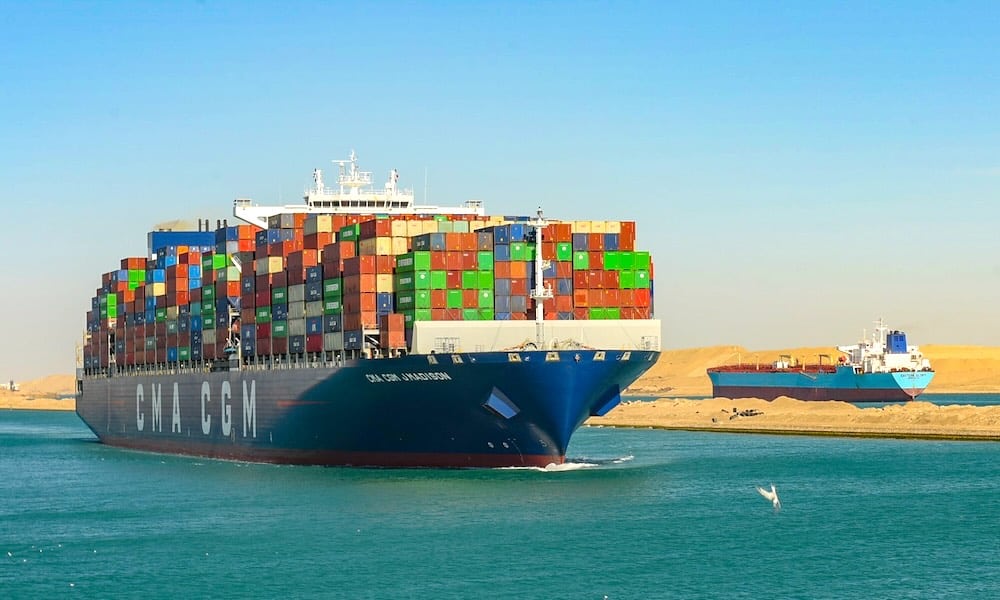
Traffic through the Suez Canal continues to lag significantly, over three months after the last Houthi attack on a commercial vessel. Despite the Houthis declaring an end to aggression, ship operators have been slow to resume transit through the critical Red Sea route, with volumes still down by nearly 60% compared to the same period last year. Industry experts are closely monitoring the situation as the impact on shipping patterns becomes increasingly apparent.
Declining Transit Volumes Highlight Ongoing Concerns
According to BIMCO, it has been 100 days since the Minervagracht was attacked on September 29, 2023. Following this incident, the Houthis announced they would cease attacks 43 days later. However, the anticipated recovery in Suez Canal traffic has not materialized. In the first week of 2026, transits through the canal remained around 60% lower than during the same week in 2023, coinciding with a noticeable shift of vessels around the Cape of Good Hope, as noted by Niels Rasmussen, BIMCO’s chief shipping analyst.
Since November 2023, nearly 100 vessels have been attacked or hijacked, with the most significant decline in Suez traffic occurring in January 2024. Quarterly deadweight capacity through the canal has consistently shown reductions between 51% and 64% compared to previous years. By the close of 2025, Suez Canal transits for container ships were down an alarming 86% from 2023 levels, while other categories like bulkers and crude tankers reported decreases of 55% and 32%, respectively.
Interestingly, product tankers have been an exception in this trend. Incentivized by higher freight rates, this segment saw transits only 19% lower than in 2023, a marked improvement from a 45% drop experienced in 2024. As market conditions evolve, some shipping lines are cautiously re-entering the Suez Canal. CMA CGM announced plans to reinstate its MEDEX and INDAMEX services starting January 2026, while Maersk made a tentative return in December with the Maersk Sebarok becoming the first of its vessels to transit the canal since early 2024.
Potential for Recovery Amid Market Shifts
As the situation develops, lower war risk premiums may encourage a resurgence of maritime traffic through the canal. Reports from S&P Global indicate that Red Sea premiums have dropped to approximately 0.2% of hull value, the lowest since November 2023. Rasmussen expressed cautious optimism, stating that a normalization of ship transits is more likely now than at any point in the past two years, although the pace of recovery remains uncertain.
A return to the Suez Canal would benefit shipping companies by reducing operational costs. However, it could simultaneously decrease demand for tonnage, with BIMCO estimating that a complete normalization could cut containership demand by around 10%, while other sectors might face reductions of 2% to 3%. The shipping industry will be watching closely to see how these dynamics unfold in the coming months.
