
Thacker Pass: A Lithium Project on the Fast Track
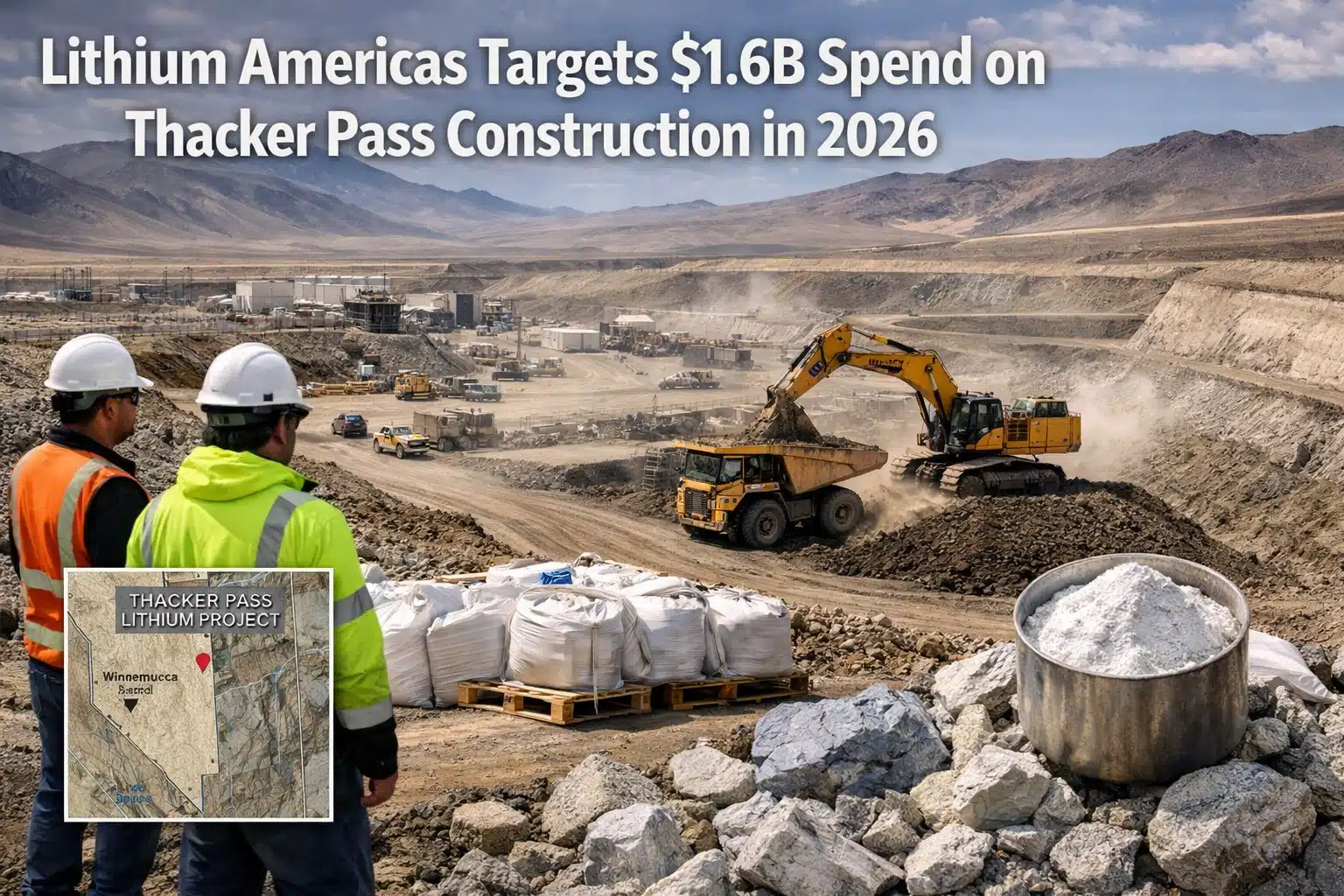
The Thacker Pass lithium project in Nevada is breaking new ground in domestic mineral production, with Lithium Americas committing between $1.3 billion and $1.6 billion to its Phase 1 construction this year. Unlike many mining ventures that face delays, Thacker Pass is on an accelerated timeline, with engineering nearly complete and a significant workforce expansion underway. This project is backed by a historic $2.23 billion loan from the Department of Energy, marking a pivotal moment in U.S. strategic resource policy.
The Construction Timeline Nobody Expected
Thacker Pass is not just progressing; it is accelerating. By the end of 2025, detailed engineering design is expected to reach 93% completion, with procurement at 60%. Foundation work is already underway across multiple processing facilities, and structural steel is being erected. Major equipment, which typically takes 18 months to fabricate and ship, is set to arrive in the first half of 2026.
The construction schedule is ambitious: major concrete work is slated for completion in the third quarter, with early plant commissioning beginning in the fourth quarter. A high-voltage power line is expected to go live in the second quarter of 2026. This timeline is not built around optional phases; it is a determined march toward mechanical completion by late 2027.
By the end of 2026, the workforce is projected to peak at 1,800 skilled craft workers, nearly doubling from 2025 levels. This is significant in a region where skilled labor is in high demand. Other lithium projects in North America are watching Thacker Pass with a mix of envy and disbelief as it sets a new standard for construction timelines.
What $1.6 Billion Actually Buys
Of the anticipated $1.3 billion to $1.6 billion capital expenditure for 2026, approximately $1.2 billion to $1.5 billion will be allocated directly to construction costs. The remaining funds will cover capitalized development costs and interest payments on the DOE loan. This construction budget encompasses multiple facilities, including crushing and grinding circuits, a sulfuric acid plant, and lithium carbonate precipitation and drying units, all being developed simultaneously.
This synchronized approach to construction is a significant departure from traditional sequential development, allowing for efficient use of resources across the expansive high desert site. Once operational, Thacker Pass is designed to produce 40,000 tonnes of battery-grade lithium carbonate annually, enough to supply approximately 800,000 electric vehicles each year. This output could account for about 15% of North America’s projected lithium demand by the end of the decade, marking a substantial contribution to the domestic supply chain.
The DOE Bet That Changed Everything
The $2.23 billion loan from the Department of Energy is more than just project financing; it represents a strategic industrial policy shift. The U.S. government now holds a 5% stake in Lithium Americas, signaling its commitment to domestic lithium production as a critical national infrastructure. This loan is the largest ever extended by the DOE’s Loan Programs Office to a mining company, surpassing commitments to solar or battery manufacturing.
This financing structure reduces the risks associated with Thacker Pass construction at the federal level. Lithium Americas gains access to capital under terms that would be unattainable in commercial markets for a pre-production mining asset. Meanwhile, the DOE secures domestic supply and the political benefits of reshoring critical mineral supply chains.
However, the government’s stake means that project performance will be closely monitored, adding a layer of accountability. If Thacker Pass fails to meet its timelines or production targets, it will not only be management that faces scrutiny but also the DOE, which must justify its investment to Congress. This pressure may be a driving force behind the project’s accelerated progress.
Why Nevada Matters More Than Anyone Admits
Located in Humboldt County, Nevada, Thacker Pass benefits from straightforward geology, with lithium hosted in clay formations. This simplicity allows for a less complex extraction process compared to hard rock mining, resulting in lower energy and reagent costs, as well as reduced technical risks. Additionally, Nevada offers regulatory certainty, having completed permitting and secured water rights, while the state government actively supports critical mineral development.
This environment contrasts sharply with other jurisdictions where lengthy indigenous consultations and environmental reviews can delay projects for years. Nevada’s stable regulatory landscape makes it an attractive location for mining investments, providing a reliable framework for development that is often lacking elsewhere.
The Competition That Isn’t Coming
Thacker Pass operates in a market characterized by a chronic shortage of lithium supply and increasing demand, while other major lithium projects in North America are either still in feasibility studies, facing permitting challenges, or struggling to secure construction capital. This situation is exacerbated by the dominance of Chinese lithium producers, who control approximately 70% of global refining capacity.
Thacker Pass represents a significant effort to establish a domestic production capacity that can mitigate the risks associated with reliance on foreign supply chains. This project aims to provide a reliable source of lithium that is insulated from geopolitical tensions and supply chain disruptions.
What Happens If This Works
If Thacker Pass successfully achieves its late 2027 mechanical completion target and ramps up to full production by 2028, the implications extend beyond the financial success of Lithium Americas. It would validate the DOE loan model for mining, potentially paving the way for similar federal support for other critical mineral projects that struggle to attract private investment.
Moreover, it would provide U.S. battery manufacturers with a domestic source of lithium, offering strategic advantages in an increasingly uncertain global supply landscape. This could lead to a shift in how automakers approach their supply chains, prioritizing domestic sources even if lithium prices remain low.
Finally, Thacker Pass could demonstrate that accelerated construction timelines are achievable in North American mining, challenging the norm of lengthy project development. The urgency of the electric vehicle transition necessitates that mining projects keep pace with market demands, and Thacker Pass aims to set a new standard.
The Risks Nobody’s Pricing
Despite its ambitious plans, Thacker Pass faces several risks. Technical challenges during equipment commissioning are common in mining projects, and labor availability in Nevada may become constrained as competition for skilled workers increases. Additionally, fluctuations in lithium prices could impact the project’s economics upon startup.
However, the DOE loan structure provides a level of downside protection that many pre-production developers lack. This financing is designed to prioritize supply security over immediate equity returns, ensuring that the project remains viable regardless of short-term market conditions.
The 2026 Inflection Point
2026 marks a critical turning point for Thacker Pass as it transitions from a development project to an operational asset. The projected capital expenditure represents the peak spending year before revenue generation begins. By December 2026, the project is expected to have 1,800 workers on-site, major construction completed, and early commissioning activities underway.
The timeline is aggressive, with a target for mechanical completion in late 2027. In an industry where delays are common, this ambitious schedule reflects the strategic priority placed on the project by the federal government. The outcome of Thacker Pass will either validate the model for government-backed critical mineral development or serve as a cautionary tale for future projects seeking federal support.
