
The Titanic’s Tragic Legacy: A Misunderstood Location
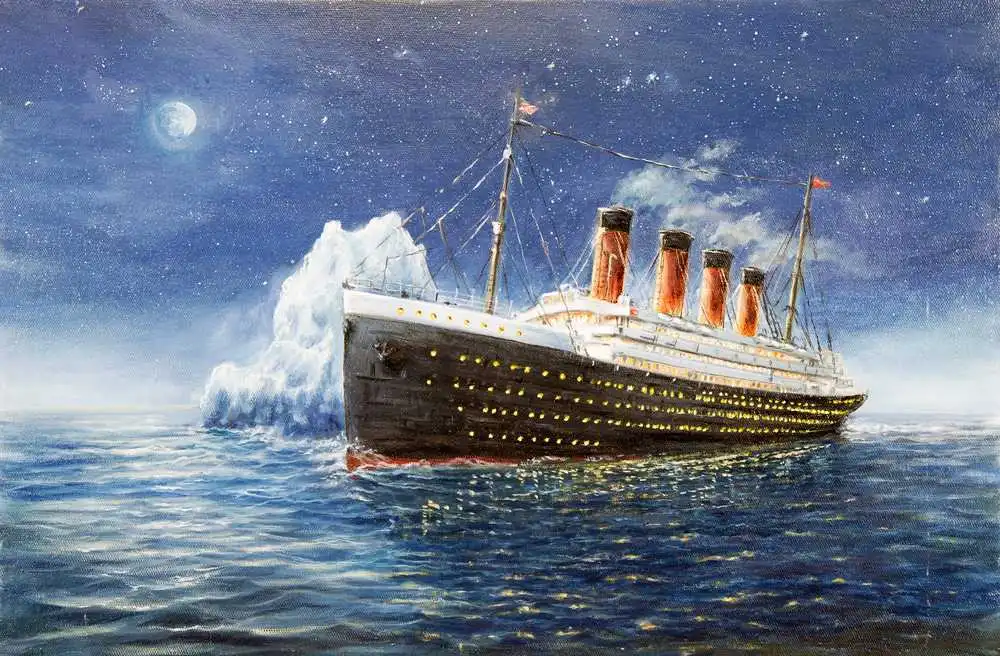
The Titanic disaster, a tale etched in history, has long been clouded by misconceptions regarding its exact location. Recent revelations, particularly in light of the OceanGate Titan submarine incident, have clarified that the ill-fated ocean liner sank much closer to North America than previously believed. This new understanding has sparked renewed interest in the Titanic’s story, revealing that it met its tragic fate approximately 640 kilometers from Newfoundland, Canada, rather than deep in the Atlantic Ocean as many had imagined.
For over a century, the Titanic has been a symbol of maritime tragedy, with over 1,500 lives lost on that fateful night of April 15, 1912. The ship, once hailed as unsinkable, embarked on its maiden voyage from Southampton, England, destined for New York City. After stops in Cherbourg, France, and Queenstown (now Cobh), Ireland, the Titanic set sail across the Atlantic. However, just four days into the journey, disaster struck when it collided with an iceberg, leading to its catastrophic sinking.
The True Location of the Titanic’s Final Resting Place
For decades, the Titanic was thought to have sunk in the middle of the Atlantic, far from land. However, recent maps and studies have revealed that the wreck lies much closer to the North American coast. The ship sank after covering over 3,200 kilometers across the ocean, just 640 kilometers from Newfoundland. This revelation has changed the narrative surrounding the disaster, as many now realize that the Titanic was not as far from safety as once believed.
The increased accessibility of detailed maps showing the wreck’s location has contributed to this shift in understanding. The Titanic now rests at a depth of approximately 3,810 meters, with its two main sections lying about 790 meters apart on the ocean floor. This depth poses significant challenges for exploration, making it a perilous endeavor even with modern technology.
Understanding the Causes of Death on the Titanic
Of the 2,201 individuals aboard the Titanic, official records indicate that 1,489 perished in the icy waters. For years, it was assumed that drowning was the primary cause of death. However, a 2003 study introduced a different perspective, suggesting that immersion hypothermia was the leading cause of fatalities. The water temperature that night was a chilling -2.2°C, meaning those who entered the frigid waters would succumb to hypothermia within minutes, rather than drowning.
The Titanic’s story continues to resonate, particularly following the recent OceanGate Titan submarine tragedy, which brought the wreck back into the public eye. The loss of all five individuals aboard the Titan during their expedition to the Titanic’s remains underscored the extreme conditions surrounding the wreck. As interest in the Titanic persists, the lessons learned from its tragic fate remain relevant, reminding us of the ocean’s unforgiving nature.
