
The US Navy Is Betting On A Foreign Design For Its New Medium Landing Ship
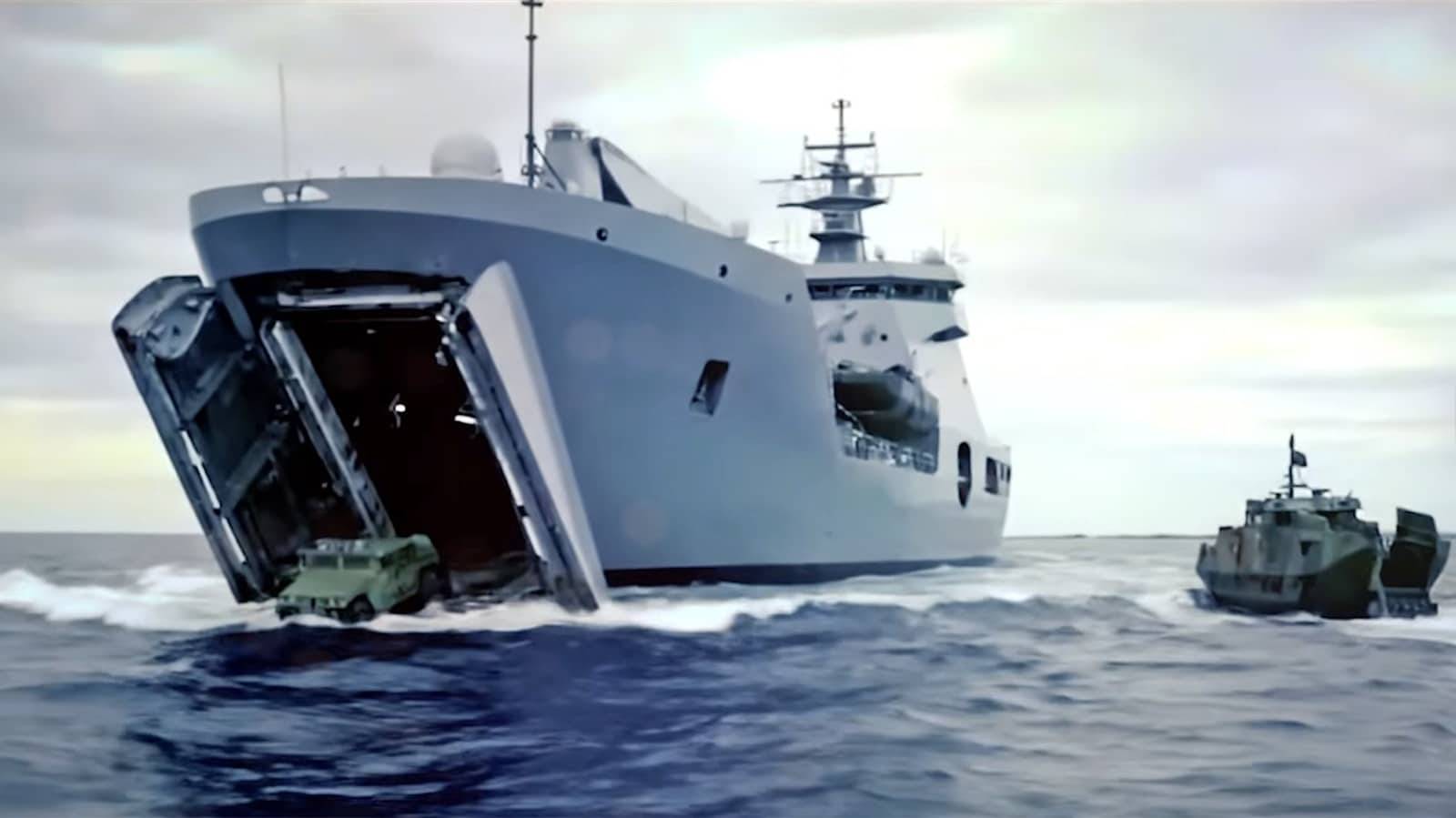
The U.S. Navy is undergoing significant modernization of its fleet, with a focus on enhancing its capabilities through new ships and aircraft. Among the latest developments is the selection of the LST-100, a medium landing ship designed by the Dutch company Damen. This decision, made in December 2025, aims to expedite production and deployment while ensuring affordability and efficiency in construction.
Understanding the LST-100 Class
The LST-100, classified as a landing ship medium (LSM), is engineered to deploy expeditionary forces directly onto shore without the need for a port. Its design features a rear loading ramp and clamshell doors at the bow, allowing it to offload over 230 soldiers and their vehicles swiftly. Each ship will weigh approximately 4,000 tons and boast a range of around 3,400 nautical miles. Additionally, the LST-100 will include a helipad on its stern for helicopter or drone operations.
Although the U.S. Navy will own and operate these vessels, their primary mission is to transport U.S. Marine Corps forces, who typically do not manage their own naval ships. The Marines played a crucial role in the design selection process, collaborating closely with Navy officials. The urgency behind this project is heightened by ongoing tensions with China in the Indo-Pacific region, where the LST-100s are expected to play a vital role in potential combat scenarios.
Streamlining Shipbuilding for the Future
The LST-100 project is not only about enhancing naval capabilities but also about improving the efficiency of shipbuilding processes. The Navy’s choice of Damen’s established design aims to mitigate the delays and cost overruns that have plagued recent ship construction efforts. Issues such as supply chain disruptions have led to significant setbacks, including delays in the construction of the upcoming aircraft carrier USS Enterprise.
The construction of the LST-100s will be undertaken by a yet-to-be-selected American shipbuilder or a consortium of builders. The Navy anticipates that work on the first ship will commence in 2026, with the initial delivery expected by 2029. Ultimately, the Navy and Marines aim to integrate at least 35 of these new landing ships into their fleet, marking a significant step toward the modernization and expansion of the U.S. Navy’s operational capabilities.
